
Iran's Energy Sovereignty
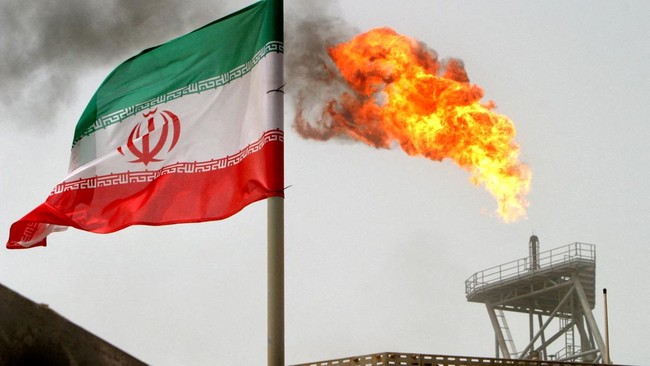
Iran’s energy sovereignty is being tested by war, economic blockages, and the struggle for control over global oil trade routes, causing energy to shift from a source of revenue to an instrument of national defence.
In this context, energy sovereignty cannot be understood merely as the ability to produce oil and gas, but also as a state’s capacity to maintain access to resources, control strategic infrastructure, guarantee domestic consumption, and utilise energy as an instrument of foreign policy.
Iran holds a vital position in the global energy structure as one of the world’s largest oil producers and a key member of OPEC. Before the escalation of war, production stood at approximately 3.3 million barrels of crude oil per day, supplemented by about 1.3 million barrels per day from condensates and other liquids.
This position makes energy strategically significant for Tehran, as oil is not merely an export commodity, but a source of state revenue, a diplomatic instrument, and the foundation of Iran’s ability to maintain strategic autonomy amidst United States pressure.
Iran’s energy sovereignty issues have become increasingly complex since the conflict with the United States and Israel disrupted production, transport, exports, and Iran’s access to international markets, which have been targeted by sanctions regimes for years.
Iran was previously able to maintain some exports through alternative trade networks, particularly towards China, but military pressure and the United States blockade in 2026 have caused this capability to shrink sharply.
Trade data illustrates the scale of this pressure, as Iranian crude oil and condensate exports fell below 300,000 barrels per day in May 2026, reaching the lowest level in at least six years, according to shipping data and analysis cited by Reuters.
By early September, the pressure intensified further, with Iranian oil loading reported to be around 220,000 to 260,000 barrels per day, compared to much higher levels before the blockade was imposed.
These figures highlight the primary paradox of Iran’s energy sovereignty: a nation with vast hydrocarbon reserves is experiencing difficulty converting its natural wealth into economic power when export routes and international financial access are under pressure.
Thus, energy sovereignty does not automatically arise from large oil and gas reserves, as sovereignty requires the ability to control the entire energy chain, from production, processing, transport, and financing to trade and domestic consumption.
The Strait of Hormuz and Iran’s Energy Politics
Amidst the pressure on oil exports, the Strait of Hormuz remains one of the most important strategic instruments within Iran’s capability to influence the international energy system.
This narrow waterway holds global significance as approximately one-fifth of the world’s LNG trade passes through it; over 110 billion cubic metres of LNG traversed the region in 2025, and about 80 per cent of oil and petroleum products passing through Hormuz are destined for Asian markets.
This dependency makes Hormuz the intersection of Iran’s national sovereignty and global energy security, as any disruption to shipping can increase energy costs, insurance, transport, and the risk of inflation in various countries.
For Iran, the ability to influence traffic through Hormuz provides geopolitical leverage far greater than its own economic capacity, as a single disruption to that route can trigger a chain reaction in international energy markets.
Recent data shows that vessel traffic through Hormuz experienced a sharp decline following renewed escalation in early September 2026, with only a small number of commodity ships recorded passing through the area on 3 September compared to previous averages.
This condition demonstrates that the conflict has resulted in what can be called the ‘securitisation of energy’, where commercial shipping is no longer determined primarily by economic considerations, but by military risk and security calculations.
However, using Hormuz as a tool of pressure also creates a dilemma for Iran, as prolonged closures or disruptions could harm Gulf nations while simultaneously reducing Iran’s own space for exports.
While Iran can increase costs for the United States and its allies through threats to shipping lanes, overly aggressive actions could encourage a broader international coalition to secure Hormuz and strengthen the legitimacy of pressure against Tehran.
Consequently, Iran’s energy politics possesses both defensive and offensive characteristics operating simultaneously within a single strategic space. Iran maintains production and export capabilities to secure revenue, while simultaneously using its geographical position to demonstrate that global energy security is inseparable from Iran’s own security.
This dilemma illustrates an important shift in the concept of modern energy sovereignty, as it is no longer sufficient for a nation to control resources within its territory if access to international markets can be severed by external powers.
Iran’s energy sovereignty ultimately faces the larger question of who possesses the ability to determine energy flows, trade routes, payment systems, and the security rules that underpin the global oil market.
Energy Sovereignty, Economy, and the Future of Iran
Pressure on energy exports has created direct consequences for the Iranian economy, as reduced oil revenues mean a decrease in the supply of foreign exchange needed to finance imports, stabilise the currency, and sustain economic activity.