
Iran’s Economy on the Brink of Collapse: Inflation Hits 90% as the Rial Plunges
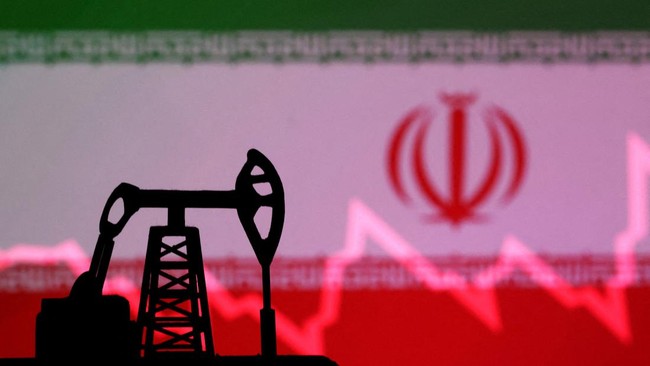
Jakarta, CNBC Indonesia – Iran’s economy has deteriorated further after eight months of war and economic pressure from the United States (US).
Its currency continues to fall and the prices of everyday necessities have surged, while oil exports, one of the country’s main sources of income, have been halted by a US blockade.
Iran is now facing one of the worst economic crises in its history. The current pressure is even greater than during previous rounds of US economic sanctions.
Iran is not only struggling to sell oil abroad, but also finding it increasingly difficult to bring in goods needed by the public. State revenues are shrinking while the prices of food, medicines and other essentials continue to rise.
The US blockade is beginning to weaken Iran’s economy. But mounting pressure has not persuaded the Iranian government to end the war or meet Washington’s demands.
Iran’s security chief, Mohsen Rezaei, has reportedly warned his colleagues that the country is going through one of the most difficult periods in its history.
Rial plunges as inflation hits 90%
One of the clearest signs of Iran’s worsening economy is the performance of its currency, the rial.
The rial has continued to fall against the US dollar, reaching an extremely low level. The war has restricted Iran’s foreign-currency earnings, while demand for foreign currency remains high.
Refinitiv data show that on Thursday, 8 October 2026, the rial stood at 1,768,000 to the US dollar.
That is far weaker than at the start of 2026, when the exchange rate was 762,100 rials to the dollar.
The rial has therefore lost around 56.90% of its value against the US dollar, while the number of rials needed to buy one dollar has risen by about 132%.
Pressure is even greater on the free market, where the rial is reportedly trading at around 2.7 million to the dollar, according to The Economist.
The currency’s weakness is a serious problem because Iran still needs a range of imported goods. As the rial depreciates, the government and Iranian businesses must spend more of it to buy goods priced in dollars, pushing domestic prices higher.
The Central Bank of Iran tried to ease the pressure by injecting US$2 billion in foreign currency into the market last September.
The move briefly slowed the rial’s decline, but did not bring about a sustained recovery.
The effects are being felt directly in prices. Annual inflation in Iran reached 90% in September 2026, its highest level since the Second World War.
Food and transport prices rose by more than 115% year on year, while clothing prices increased by 97%. Cooking oil, eggs and rice saw even steeper rises, of more than 200%.
The price surge has further eroded people’s purchasing power. Some pensioners have held demonstrations, saying their benefits are no longer enough to cover living costs.
Healthcare workers are facing similar difficulties. Iran’s nursing association said some members had quit because their salaries are now worth only about US$100 a month.
US blockade halts Iran’s oil exports
Pressure on Iran’s economy has intensified after the US tightened its blockade of the country’s oil shipping routes.
Iran had previously managed to maintain oil sales despite economic sanctions. Even in 2020, when Donald Trump’s administration pursued a maximum-pressure policy and the world was hit by the Covid-19 pandemic, Iran still sold more than 440,000 barrels of oil a day.
The situation has now changed. The US has deployed warships to blockade Iranian ports and has reportedly disabled or sunk at least eight oil tankers during September.
As a result, new crude oil loading for export from Iran fell to zero in September, the first time this has happened since 1979.
Iran can still sell oil to China using supplies stored before the blockade on tankers outside the restricted area, particularly in Asia.
But those reserves are dwindling. Estimates by data firm Kpler, cited in the report, put Iran’s oil stock outside the blockade at around 10 million barrels, far below the more than 120 million barrels held before the war.
Without additional supplies, the stock could run out within weeks. Payments from earlier oil sales may continue to arrive until December, but after that Iran’s income is at risk of falling further.
Exports to China also slump; aluminium falls 96%
Iran’s trade problems extend beyond oil. Non-oil exports to China, one of its biggest trading partners, have also fallen sharply.
In normal circumstances, China buys more than US$4 billion worth of Iranian non-oil products each year, ranging from plastics to pistachios.
But from January to August 2026, China’s imports of non-oil goods from Iran totalled just US$746 million. That was 67% lower than in the same period a year earlier and 74% below the figure for 2024.
The decline has affected a range of industrial goods. Chinese customs data show that the value of Iranian aluminium exports to China fell 96% in January-August 2026 compared with the same period in 2024.
Exports of iron and steel fell 84%, organic chemicals 80%, mineral ores 71% and plastic products 70%.
Iran has tried to find alternative trade routes across land borders and the Caspian Sea, but these have not been able to replace shipments through ports in the Persian Gulf.
Freight lorries have to queue for days at border crossings, while port and shipping capacity on the Caspian Sea remains limited.
Iran has even tried sending oil to China by rail. But transporting as much oil as a large tanker carries would require about 2,800 tank wagons.
Trade pressure has also spread to aviation after the US imposed sanctions on foreign companies serving Iranian aircraft.
In the two weeks after the sanctions took effect on 23 September, Iran’s international flight activity fell from 989 to just 153 arrivals and departures, compared with the same period a year earlier.
This also threatens medicine supplies, as about 60% of Iran’s medical-product imports arrive by air. Medicine prices in the country have already risen by around 150% this year.
Iran’s economy under pressure: will it yield?
As economic pressure mounts, the Iranian government is seeking a way forward through diplomacy.
Iranian Foreign Minister Abbas Araghchi reportedly held indirect talks with US officials during the United Nations General Assembly in September.
Iran offered to reopen the Strait of Hormuz within seven days if the US met several conditions. This was a shorter timeframe than an earlier agreement, which allowed 30 days.
US President Donald Trump rejected the offer.
The rejection leaves the prospects for ending the conflict unclear. Iran has reportedly stepped up attacks on commercial ships in the Strait of Hormuz, with at least ten attacks in the past two weeks.
December could prove to be a pivotal month. Iran’s oil reserves are dwindling, while the final payments from some earlier sales are expected to arrive that month.
Despite the severe economic pressure, there is no certainty that the Iranian government will yield.
Central Bank of Iran Governor Abdolnasser Hemmati once responded to predictions that the country’s economy would soon collapse with a Persian proverb.
‘Chickens are counted at the end of autumn,’ Hemmati said, as quoted by The Economist.
The proverb suggests that the final outcome can only be judged once the process is complete.
Autumn ends on 21 December. By then, Iran’s economic situation may provide a clearer picture of how far the country can withstand US pressure.
Source: jawawa.id (https://jawawa.id/newsitem/irans-economy-on-the-brink-of-collapse-inflation-hits-90-as-the-rial-plunges-1791525061)
Originally published by CNBC Indonesia (https://www.cnbcindonesia.com/research/20261009102215-128-774661/ekonomi-iran-di-ambang-kehancuran-inflasi-tembus-90-rial-ambruk), translated from Indonesian