
Iran's Economy Faces Deepening Crisis Amid Ongoing Conflict and Soaring Inflation
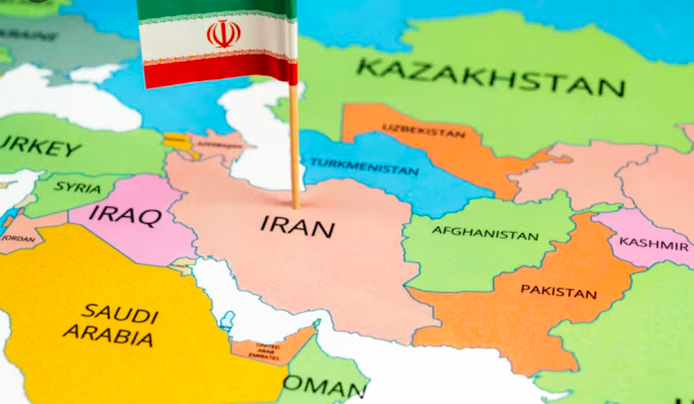
Three weeks after Iran and the United States signed a memorandum of understanding to extend a ceasefire, the security situation in the region remains far from stable. Continuing tensions are fuelling concerns that Iran’s economic recovery will be a lengthy process, even if a permanent peace is achieved. In the last two days, three oil tankers have reportedly been targeted in the Strait of Hormuz, incidents occurring as Tehran and Washington were scheduled to resume third-party-mediated talks to end the conflict, following the funeral procession of Supreme Leader Ayatollah Ali Khamenei. The conflict escalated on Wednesday (8/7) when the US military launched massive airstrikes on several areas in southern Iran. In retaliation, the Islamic Revolutionary Guard Corps (IRGC) and the regular Iranian military fired missiles and drones targeting US military interests in Bahrain and Kuwait. Both nations accuse the other of violating the ceasefire agreement reached last month.
Although there is hope that international sanctions on Iran could one day be lifted if a peace deal is reached, economists believe the country’s economic condition will not recover quickly. For years, Iran has faced pressure from a combination of factors, including government mismanagement, corrupt practices, Western and UN economic sanctions, and the impact of two wars in a single year against the United States and Israel. The situation has been worsened by deadly nationwide demonstrations last January and prolonged internet blackouts. The latest data from the Statistical Centre of Iran shows the economic strain is intensifying. In the month of Khordad, the third month of the Persian calendar ending on 21 June, the annual inflation rate reached 88.6%, an increase of nearly 6% from the previous month. This figure is among the highest since World War II, when Iran experienced a food crisis due to the Allied occupation. The sharpest price increases were in the food group, with food inflation hitting nearly 134% year-on-year. Prices for cooking oil and fats soared by more than 278%, while red meat and poultry prices rose by over 178%. Bread and cereal product prices increased by nearly 139%. These price surges continue to erode public purchasing power and push more citizens into poverty.
In the labour sector, the official unemployment rate is recorded at 7.5% for the current calendar year. However, the labour force participation rate is only around 40%, indicating that a large portion of the working-age population is not active in the formal job market. This group includes students, pensioners, informal sector workers, and those who have stopped seeking work. The quality of employment is also under scrutiny, with more than 38% of formal workers clocking over 49 hours per week, while youth unemployment remains above 20%. Meanwhile, the minimum monthly wage is equivalent to just about 95 US dollars based on the free market exchange rate in Tehran. The rial has continued to weaken, reaching around 1.75 million rials per US dollar, approaching its all-time low of 1.9 million rials recorded last May. Budgetary constraints mean the Iranian government can only provide social assistance in the form of cash subsidies worth a few dollars each month, supplemented by electronic vouchers for basic necessities.
A Central Bank of Iran report released at the end of June indicates a worsening economic situation. Gross domestic product (GDP) for the calendar year ending 20 March contracted by 0.7%. Gross fixed capital formation, a key indicator reflecting investment and production capacity, plummeted by nearly 12%. Foreign trade activity also declined, with the value of imports falling by 16.6% and exports decreasing by almost 5%. The damage from nearly 40 days of bombing, the longest nationwide internet shutdown ever imposed by the Iranian government, and a US naval blockade of major ports in southern Iran are further compounding the pressure on the national economy. The International Monetary Fund (IMF) forecasts that Iran’s economy will contract by a further 6.1% throughout 2026. However, some economists see a potential for recovery if the security situation genuinely improves. Mahdi Ghodsi, a senior economist at the Vienna Institute for International Economic Studies, noted that many of the recent job losses could potentially be reversed if the military escalation stops. “In that case, some of the temporary layoffs in the services, retail, transport, construction, and small business sectors could be reversed relatively quickly, because these activities are highly sensitive to uncertainty and disruption, rather than to the destruction of productive capacity,” he told Al Jazeera. Ghodsi added that recovery would be faster if transport routes return to normal, energy supplies stabilise, internet systems are restored, and payment services can function optimally again. Nonetheless, analysts believe that Iran’s economic recovery will remain a major challenge, with the impact of war, high inflation, weak investment, and looming sanctions expected to continue limiting the country’s economic growth for years to come.