
Iran's Ambassador Reveals Secret Strength of Tehran's Missile Technology, Unafraid of US-Israel
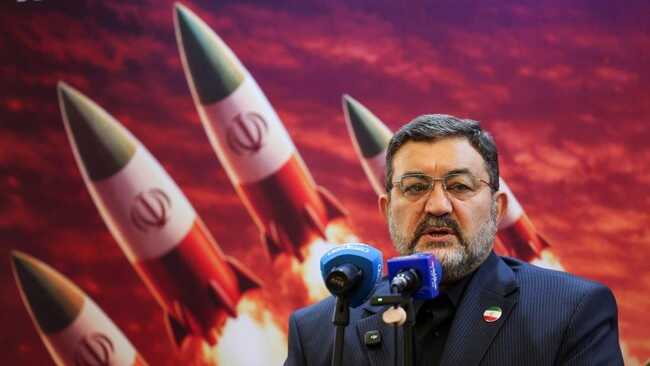
Jakarta – Iran’s Ambassador to Indonesia, Mohammad Boroujerdi, has affirmed his country’s increasingly robust position amid mounting global geopolitical tensions. Boroujerdi emphasised that for decades, Iran has built complete self-sufficiency, particularly in defence and military technology, which has become the nation’s primary strength without reliance on foreign assistance.
Iran’s military capability has reportedly reached a point where superpowers no longer possess informational advantage over Tehran’s military equipment. According to Boroujerdi, mastery of technology at the national level represents the result of consistent efforts to stand independently for nearly half a century.
“What I can convey is that for the past 47 years, our country has stood on its own feet and has also mastered various military technologies nationally,” Mohammad Boroujerdi stated in an official statement at his residence in Jakarta on Monday 2 March 2026.
Boroujerdi explicitly stated that Iran’s military technology independence poses a significant challenge to the United States and Israel. This is because Iranian armaments are developed entirely domestically, meaning the West lacks both intelligence data and technical control over independently produced weapons.
“And this is precisely what presents a challenge and difficulty and problem for the United States and the Zionist Regime of Israel, because they are powerless against weapons they did not export and whose technology does not originate from them. Because they do not recognise the weapons Iran produces, and this is the capability of Iranian weapons that can weaken the enemy,” he asserted.
Regarding diplomatic prospects, Boroujerdi explained that negotiations require a strong foundation of trust as a fundamental principle. He referenced Iran’s bitter experience in negotiating the Joint Comprehensive Plan of Action (JCPOA) nuclear agreement, which was betrayed by Washington unilaterally despite being backed by international resolution.
“For those who understand politics, those with a background in political science, or those who simply understand politics and the political stage, it is known that the first step and fundamental principle of any negotiation is building trust. Certainly we have done this with the United States. Building trust comes from fulfilling various types of commitments,” he said.
“We negotiated with the United States and reached an agreement called the JCPOA or Iran Nuclear Agreement. The JCPOA was endorsed by a Security Council resolution to strengthen this agreement. But what happened? The United States unilaterally withdrew from the agreement.”
Iran’s disappointment deepened as follow-up negotiation efforts consistently ended with physical attacks on the ground just as agreements began showing promise. Boroujerdi revealed that diplomatic processes were repeatedly destroyed by military aggression from opposing forces during negotiation rounds.
“After that, we conducted negotiations with the United States five times or through five rounds. We came very close to an agreement, but before the sixth round, the Zionist Israelis and Americans attacked us. And again after that, recently we have held two negotiations. Before the attack, we held two negotiations with the United States. Before the third round of negotiations, the same thing happened – an attack on Iran. This occurred at a time when various parties involved in negotiations reported significant progress,” Boroujerdi explained.
Now Iran questions what security guarantees exist if it must return to the negotiating table with a party deemed inconsistent. Boroujerdi assured that whilst Iran seeks diplomatic and democratic channels, they refuse to become trapped in negotiation scenarios used merely as a deception tactic to launch military attacks.
“And I want to ask you: if you were a person wishing to make a decision to negotiate with a person or government possessing the characteristics I have described above, as I mentioned previously, would you continue to negotiate or not? Certainly safeguards are needed. What are the guarantees? How can trust be restored? What guarantee exists that an agreement will not be exploited again and misused?”
“Certainly we are a party that hopes for negotiation, desires democracy, but at the same time we do not wish to be the party deceived by negotiation. Negotiations are conducted but result in attacks,” he concluded.