
Iranian President Warns of Decisive Response if US Continues Attacks
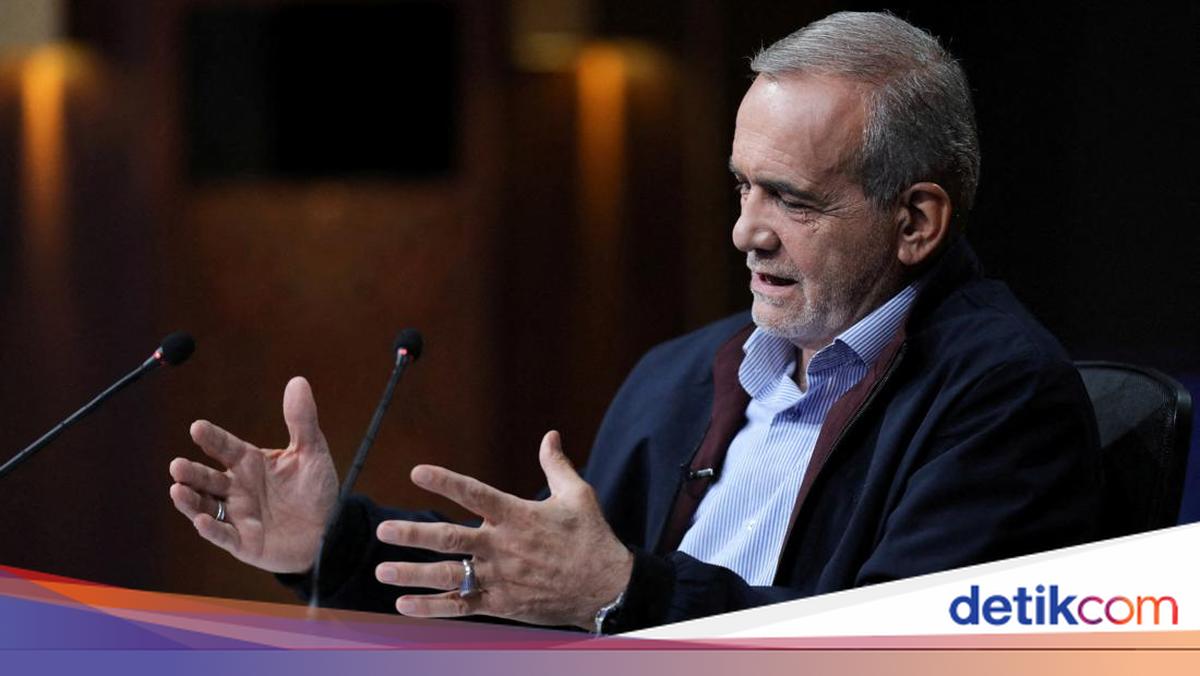
Iranian President Masoud Pezeshkian has warned that Tehran will respond decisively if the United States (US) attempts to continue attacks. Pezeshkian also reaffirmed that Iran does not choose war and does not desire conflict.
“We never start wars, but if they wish to continue fighting against us, we will respond harshly and decisively,” Pezimskian warned the US during an interview with Fox News journalist Bret Baier, as reported by Press TV on Saturday (26/9/2026).
The interview with the US media outlet was conducted by Pezeshkian on the sidelines of the UN General Assembly in New York, USA, this week.
He stated that Iran is forced to defend itself every time it comes under attack.
“We do not choose war. War is imposed upon us. We do not want war. On the contrary, every time they attack us, we are forced to defend ourselves,” Pezeshkian said during the interview.
The Iranian President also rejected pressures aimed at forcing Tehran to surrender outside the framework of international law.
“And currently, the pressure they continue to exert on us aims to force us to surrender outside the framework of international law; that is something impossible,” he said.
The war, which has been raging since late February following joint US and Israeli attacks on Iran, continues to persist despite a period of fragile ceasefire. In June, both nations signed a Memorandum of Understanding (MoU) to end the war permanently.
However, the MoU collapsed after both sides accused each other of violations. Fighting has since reignited, with the US and Iran launching reciprocal attacks. Intense disputes over control of the Strait of Hormuz have further exacerbated the conflict and complicated diplomatic efforts.
When asked about recent indirect negotiations between Iranian Foreign Minister Abbas Araghchi and US Special Envoy for the Middle East Steve Witkoff on the sidelines of the UN General Assembly, Pezeshkian emphasised that Tehran’s position remains grounded in international law.
“What is being discussed and negotiated is within the framework of international law, and covers matters that are our legitimate rights under international law,” he said, adding that Iran is “willing” to follow up on the previously signed MoU.
Furthermore, Pezeshkian touched upon the primary obstacle in negotiations with the US, which is the “deep mistrust” that has emerged between the two nations. He linked this to President Donald Trump’s unilateral withdrawal of the US from the 2015 nuclear deal.
“Your President tore up that deal,” he remarked.
“If we cannot trust each other within the framework of dialogue, how can we hope that these issues will ever be resolved?” Pezeshkian asked.