
Iranian President Masoud Pezeshkian's Love Letter to the American People
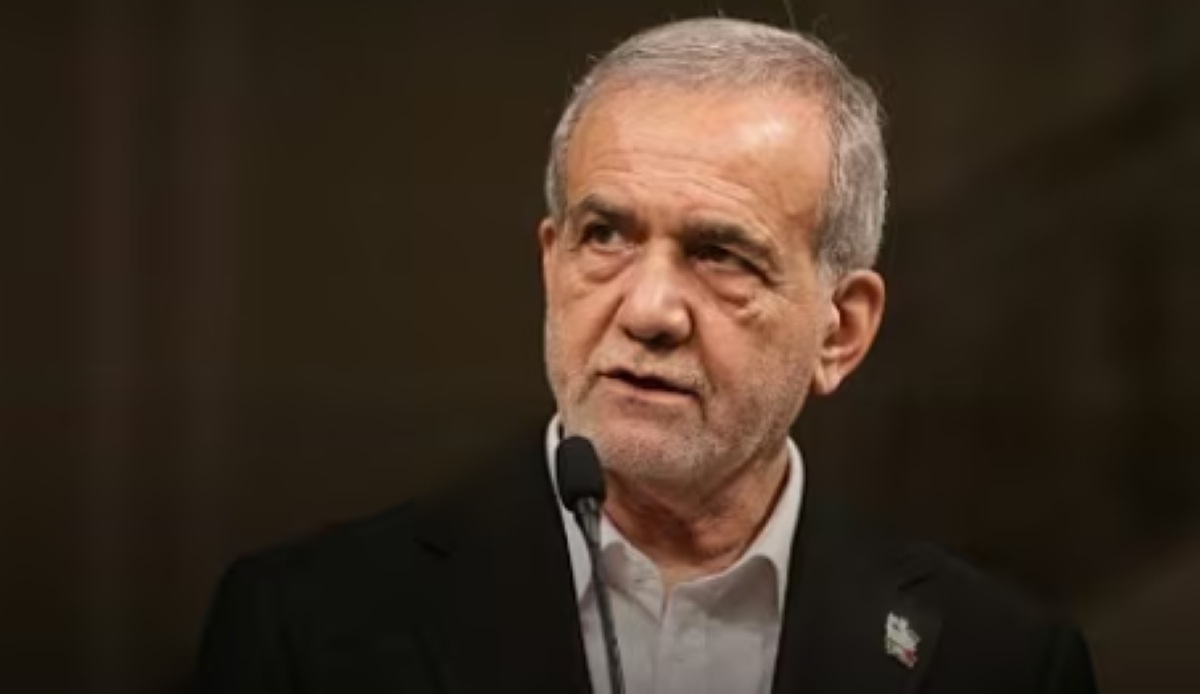
Iranian President Masoud Pezeshkian has delivered an open message to the people of the United States (US) and the global community amid escalating tensions between Iran, the US, and Israel. The message was shared via a post on platform X on Wednesday (1/4).
In his statement, Pezeshkian affirmed that Iran does not view the American people as enemies, but rather opposes government policies deemed detrimental to his country. He also stressed that Iran, as one of the world’s oldest civilisations, has never initiated a war in the modern era.
“Despite possessing military superiority over many of its neighbouring countries, Iran has never started a war. However, Iran has firmly and courageously resisted those who attack it,” Pezeshkian wrote, as quoted by CNN on Friday (3/4).
He added that the Iranian people do not regard other nations as foes, including Americans, Europeans, or Arab countries. According to him, this stance is deeply rooted in cultural values.
“This is a principle deeply embedded in Iranian culture and collective consciousness, not a temporary political posture. Therefore, portraying Iran as a threat does not align with historical reality or observable facts today,” he continued.
Pezeshkian also assessed that the image of Iran as a global threat is shaped by certain political and economic interests. He accused such narratives of being used to justify military dominance and international pressure on Iran.
“In such an environment, if a threat does not exist, one is created. Within the same framework, the US has concentrated much of its forces, bases, and military capabilities around Iran, a country that, at least since the founding of the United States, has never initiated a war,” he wrote.
Furthermore, he emphasised that Iran’s actions to date constitute legitimate self-defence, not aggression.
“What Iran has done is a measured response based on legitimate self-defence, and in no way an initiation of war or aggression,” he stated.
In his message, Pezeshkian also referenced the initially non-hostile history of Iran-US relations. However, ties deteriorated following the US-backed coup in 1953.
“Relations between Iran and the US were initially not hostile, and early interactions between the Iranian people and Americans were not marked by enmity or tension,” he added.
He noted that mistrust deepened due to various Washington policies, including support for the Shah regime, backing of Saddam Hussein during the 1980s war, prolonged sanctions, and unprovoked military aggressions launched twice amid negotiations with Iran.
“This mistrust has deepened with US support for the Shah regime, its support for Saddam Hussein during the war imposed in the 1980s, the imposition of the longest and most comprehensive sanctions in modern history, and finally, unprovoked military aggression launched twice in the midst of negotiations against Iran,” he wrote.
Despite the pressures, Pezeshkian assessed that Iran continues to demonstrate progress in various sectors, such as education, technology, health, and infrastructure.
“This is a measurable and observable reality that stands on its own, independent of fabricated narratives,” he said.
He also criticised attacks on Iran’s energy and industrial facilities, which he said directly impact civilians and exacerbate global instability.
“They create instability, increase human and economic costs, and perpetuate a cycle of tension that sows seeds of hatred that will last for years. This is not a demonstration of strength. It is a sign of strategic confusion and inability to achieve sustainable solutions,” he asserted.
In the closing of his message, Pezeshkian alluded to Israel’s role in influencing US policy towards Iran and diverting global attention from the Palestinian issue.
“Is America First truly among the current US government’s priorities?” he questioned.
He urged the international community to assess the conflict objectively and choose dialogue over confrontation.
“Today, the world stands at a crossroads. Continuing down the path of confrontation is more costly and futile than ever before. The choice between confrontation and engagement is real and significant. Its outcome will shape the future for generations to come,” he stated.
Concluding his statement, Pezeshkian affirmed Iran’s resilience throughout history.
“Throughout its thousands of years of proud history, Iran has outlasted many aggressors. What remains of them are only names tarnished in history, while Iran endures, resilient, dignified, and proud,” he concluded.