
Iranian Media Publishes List of 13 World Leaders as Revenge Targets
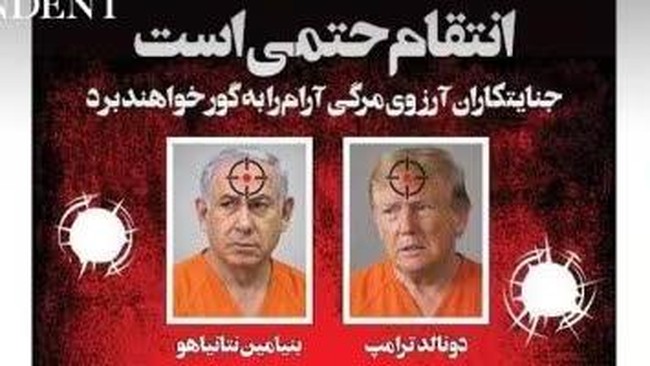
A prominent Iranian mass media outlet, Hamshahri, has openly released a list of 13 world leaders designated as targets for revenge following deadly airstrikes by the United States and Israel. The publication of the controversial infographic has triggered global security alarms as it includes the names of heads of state and senior officials from the US, Israel, and several European countries.
The daily newspaper owned by the Tehran City Government published the threat list immediately after the funeral procession of Iran’s Supreme Leader Ali Khamenei, who was killed in an airstrike on 28 February. The publication came shortly after Mojtaba Khamenei, who has now succeeded his father as Supreme Leader, vowed to avenge the blood of the martyrs who fell in the war.
International intelligence apparatuses and observers assess that Hamshahri’s move reflects extreme conservative messaging driven by the hardline groups currently dominating Tehran’s city government. Through a written message disseminated widely to the public, Iran’s new leadership authority asserted that the demand for revenge executions is based on the strong will of all levels of society. “We promise to avenge your holy blood and all the martyrs who fell in these two wars. This revenge is the demand of our people and must be executed,” Mojtaba stated in his written message following Khamenei’s funeral.
“Revenge is inevitable,” read the main banner of the Persian-language infographic, which also added the threatening message: “The criminals will carry the hope of a peaceful death to their graves.” The list of 13 primary targets was positioned in a special digital infographic featuring artificial intelligence-generated visualisations in which all targets wore orange prison uniforms. On the top row, the media placed Israeli Prime Minister Benjamin Netanyahu and US President Donald Trump side by side, complete with weapon sights aimed directly at their foreheads.
On the second and third rows, the threat list was filled with senior military and diplomatic officials supporting US and Israeli foreign policy. These names included Israeli Defence Minister Israel Katz, US Central Command Chief Brad Cooper, US Defence Secretary Pete Hegseth, US Secretary of State Marco Rubio, US Ambassador to Israel Mike Huckabee, Israeli Military Chief Eyal Zamir, and Israeli Foreign Minister Gideon Sa’ar. Not only targeting Washington and Tel Aviv, top leaders from the European continent were also included in the final rows of the execution target list. Italian Prime Minister Giorgia Meloni, German Chancellor Friedrich Merz, French President Emmanuel Macron, and British Prime Minister Keir Starmer were specifically positioned as wanted targets.
Tehran accused these European countries of direct involvement in criminal actions for refusing to condemn the US-Israeli attacks and for allowing their airspace to be traversed by US military aircraft. However, it has not yet been officially confirmed whether the list of 13 figures released by the local media has received formal approval and sanction from Iran’s central government authorities. Meanwhile, a sharp diplomatic response was immediately issued by the Israeli Ministry of Foreign Affairs through an official statement shared on their X social media account. Israel strongly condemned the threat visualisation and accused the Iranian government of deliberately exploiting their political desperation to incite a new wave of violence at the international level. “The Iranian regime, which slaughtered 40,000 of its own citizens demanding freedom, is now inciting violence against the leaders of democratic countries,” the Israeli Ministry of Foreign Affairs condemned in its official statement on platform X.
Source: jawawa.id (https://jawawa.id/newsitem/iranian-media-publishes-list-of-13-world-leaders-as-revenge-targets-1783957981)
Originally published by CNBC Indonesia (https://www.cnbcindonesia.com/news/20260713131307-4-750380/media-iran-rilis-daftar-13-pemimpin-dunia-jadi-target-balas-dendam), translated from Indonesian