
Iranian Expert Says Strait of Hormuz Will Not Return to Previous State
Tehran (ANTARA) - The situation in the Middle East region and the Strait of Hormuz will not return to the previous state (status quo ante), which could further provoke the anger of the United States (US), said an Iranian expert.
After weeks of conflict and US-Israel aggression against Iran, the country shows no signs of weakness or surrender, Abas Aslani, an Iranian foreign policy expert based in Tehran, told Xinhua in a recent interview.
Currently, their goal is to reopen the Strait of Hormuz, Aslani said, emphasising that the US-Israel attacks on Iran’s civilian infrastructure indicate their failure to achieve military and strategic objectives in this war.
The US and Israel targeted Iran’s energy, scientific, medical, and industrial infrastructure, which indicates that they have not yet been able to achieve their military and strategic goals, he said.
On 28 February, Israel and the US launched a joint attack on Tehran and several other Iranian cities, killing Iran’s then-supreme leader, Ali Khamenei, along with several senior military commanders and civilians.
Describing the US-Israel attacks on Iranian infrastructure as war crimes and violations of international law, he said they even targeted Iran’s peaceful nuclear facilities, including the active Bushehr nuclear power plant, which could have serious consequences for Iran and the region if significant damage occurs.
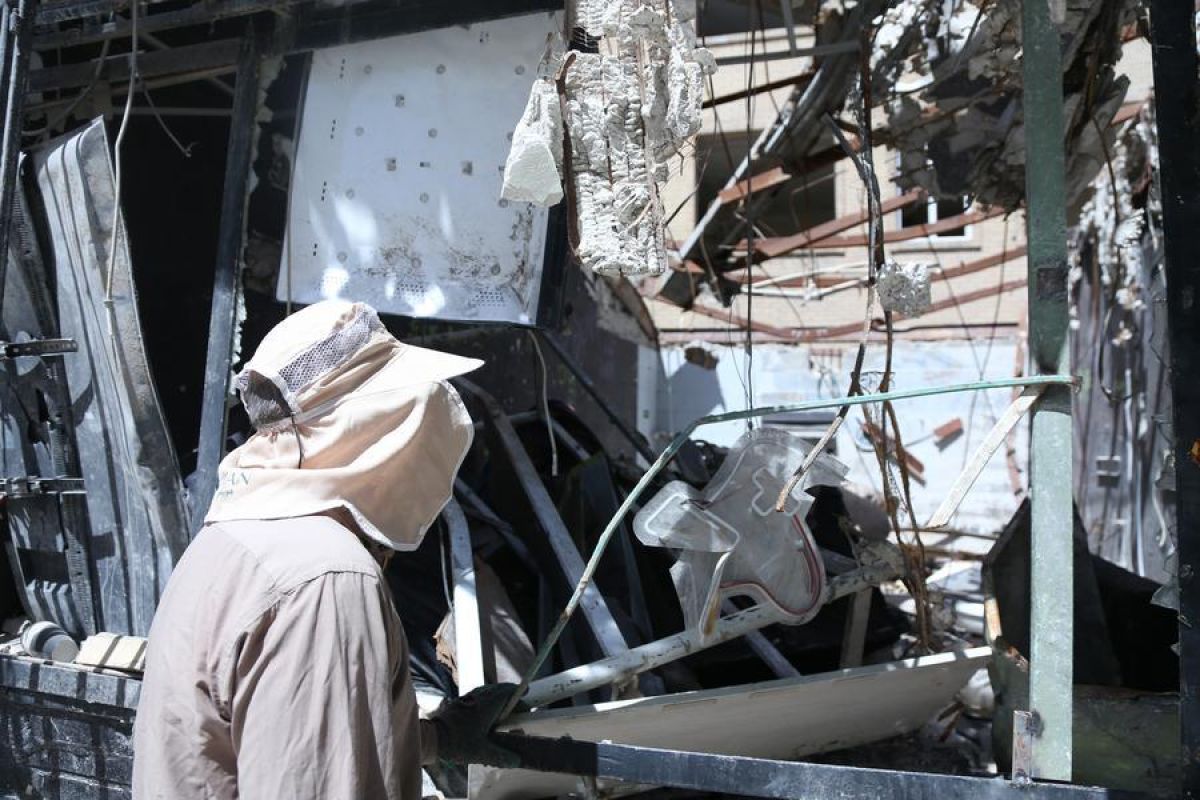
Iran responded by launching waves of missile and drone attacks targeting Israel as well as several US bases and assets in the Middle East, and civilian and energy infrastructure across the Gulf region, including in Qatar and the United Arab Emirates. In recent weeks, the US and Israel have intensified their attacks on Iran’s civilian infrastructure, including universities, petrochemical complexes, roads, railway lines, and bridges, as well as research and scientific centres.
Aslani said the attacks on Iran’s civilian infrastructure aim to impose costs and damage on the country’s society, pressure Iran, and make governance extremely difficult in the country.
Describing the US-Israel attacks on Iranian infrastructure as war crimes and violations of international law, he said they even targeted Iran’s peaceful nuclear facilities, including the active Bushehr nuclear power plant, which could have serious consequences for Iran and the region if significant damage occurs.
“We remember that they came to Iran with the aim of changing the country’s political order as well as destroying its military capabilities and infrastructure. However, we see that Iran has recently targeted several American fighter jets and has been able to respond to those attacks,” he said.
Aslani also stated that these developments show that such a change in order has not occurred, and Iran still possesses military capabilities.
This proves that the main US calculations before launching the “aggression” against Iran were “very wrong,” he said, emphasising that the US approached Iran with a model and mindset like that of Venezuela, but what it faced in the real world and on the ground was something entirely different.
He said this war is widely believed not only to impact global energy markets and the US military but also to damage US credibility and image in the long term.