
Iranian Armed Forces Issue National Directive Preparing for Three Scenarios, Including Total War
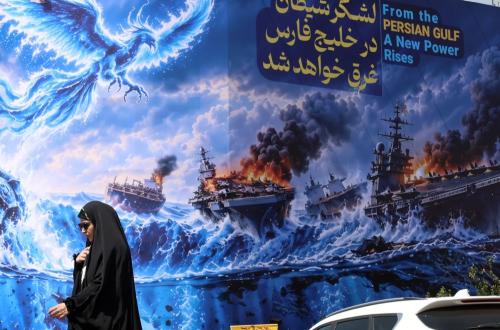
TEHRAN – The General Staff of the Iranian Armed Forces has issued a national passive defence directive setting out broad preparations for three possible scenarios: end of war, ceasefire, and large-scale war. Chief of Staff Major General Ali Abdollahi issued the ten-point instruction for Iran’s 2026 Passive Defence Warning Programme, as quoted by Fars News on Tuesday (15/9/2026).
Under the large-scale war scenario, large public gatherings and assembly events are temporarily banned, with activities instead focused on preparation operations, the continuation of essential services, resource management, public assistance, and coordination among relevant bodies. In the event of a ceasefire without a definitive end to hostilities, the directive prioritises public readiness, vigilance against hybrid warfare and information security, whilst the end-of-war scenario is reserved for the full implementation of planned drills, training and public programmes.
The directive also states that operational plans will be updated based on the experience of what it describes as Iran’s “second and third wars”.
In 2024 and 2025, Iran issued similar national directives focused on preparation and the protection of critical infrastructure. However, the current directive comes amid the ongoing war with the United States and explicitly sets out approaches for three distinct conflict scenarios.
Earlier, Iranian President Masoud Pezeshkian said he did not support continuing the war with the US, whilst calling for strengthening Iran’s resilience to face the next phase. The remarks were made during a meeting with Iranian university leaders on Friday (11/9/2026), according to the local news agency Mehr News Agency.
“I do not support the continuation of the war, but we must strengthen the country’s resilience in the face of forthcoming developments,” Pezeshkian said when asked about the conflict with Washington.
According to him, strengthening national resilience must be carried out through steps that do not force Iran to negotiate with the “enemy” from a position of weakness. He also asked universities to support the government in this effort.
The Iranian president said economic policy must take account of existing social conditions. He warned that poorly calculated measures could actually cause harm rather than provide solutions.
“We must harness the contribution of Generation Z students to solve society’s problems, and ensure they participate in providing solutions rather than becoming involved in protests,” he said.
Pezeshkian stressed that, as president, he has no political affiliation with any particular group. He said he was open to working with all political groups and anyone who contributes to resolving the crisis facing Iran.
The US and Israel launched a war against Iran on 28 February, prompting Tehran to fire missiles at Israel and attack US targets and bases in several countries in the region. Iran also announced the closure of the Strait of Hormuz to shipping, causing widespread disruption to global energy and trade flows.
On 18 June, Washington and Tehran reached a memorandum of understanding to end military operations, including guarantees for commercial vessels to transit the Strait of Hormuz and the start of negotiations to reach a final agreement within 60 days.
However, the understanding subsequently failed to hold and clashes resumed in July. The US again launched attacks on a number of targets in Iran and reimposed a naval blockade on Iranian ports.