
Iran War Triggers Fertiliser Crisis and Threatens Global Food Prices
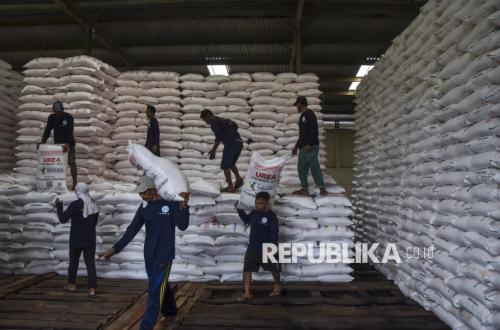
REPUBLIKA.CO.ID, JAKARTA – The war between the United States (US) and Israel with Iran has the potential to devastate various sectors. Iran’s blockade of the Strait of Hormuz in response to attacks by the US and Israel is not only triggering an energy crisis but also threatening the agricultural and food sectors.
The blockade is weakening fertiliser supplies that farmers desperately need, as they already face numerous challenges, from rising temperatures to increasingly unpredictable weather. This risks driving up food prices worldwide.
Deputy Executive Director of the United Nations World Food Programme (FAO) Carl Skau stated that the poorest farmers in the northern hemisphere rely on fertiliser imports from the Persian Gulf. The weakening of fertiliser supplies is occurring just before the planting season begins.
“In the worst-case scenario, it will reduce yields and cause crop failures in the next season. In the best-case scenario, it will increase production costs, which could push up food prices next year,” Skau said, quoted from AP, Saturday (28/3/2026).
Punjab, India rice farmer Baldev Singh said small farmers in his country might not survive if the government does not subsidise fertiliser during the peak demand period in June. “Right now, we are waiting and hoping,” he said.
The Strait of Hormuz is not only the route for one-fifth of the world’s oil and gas trade. This narrow passage is also the route for one-third of the world’s fertiliser trade.
On Friday (27/3/2026), Iran’s Ambassador to the UN in Geneva, Ali Bahreini, said Tehran has received a UN request to allow humanitarian aid ships and agricultural commodity ships to pass through the Strait of Hormuz, even as Iran faces attacks on its nuclear facilities.
This aid shipment plan marks the first foreign voyage in those narrow waters since the war began last month. While markets and governments in various countries focus on oil and gas supplies, restrictions on fertiliser supplies could threaten global food security.
The two main nutrients in fertiliser, nitrogen and phosphate, are at risk of not being distributed due to the blockade in the Strait of Hormuz.
Nitrogen supplies, including urea—the most traded fertiliser that aids plant growth and increases yields—are the hardest hit due to delivery delays and surging prices of liquefied natural gas, a key ingredient for nitrogen production.
Researcher from commodity consultancy CRU Group, Chris Lawson, noted that the Iran war has already limited 30 percent of global urea trade. Meanwhile, University of Texas economist Raj Patel said several countries are already short of urea.
He cited Ethiopia, where 90 percent of nitrogen fertiliser comes from the Persian Gulf via Djibouti, a supply route that was already limited even before the US and Israel war in February. “It’s planting season now, and there’s no fertiliser there,” Patel said.
Phosphate supplies, needed for plant roots, are also under pressure. Lawson said Saudi Arabia is the world’s fifth-largest phosphate producer and exports 40 percent of the world’s sulphur, a key ingredient and by-product of oil and gas refining.
Analyst from Argus Consulting Services Owen Gooch said that after the war ends, producers in the Gulf will still need security guarantees to pass through the Strait of Hormuz. As a result, insurance costs will also surge sharply.
The Indian government is prioritising urea supplies for domestic needs and providing about 70 percent of natural gas requirements for fertiliser producers. Some factories are still operating below capacity, leading to reduced production.
“The food system is fragile and depends on stable fertiliser supply chains to ensure farmers can produce the food the world needs,” said Hanna Opsahl-Ben Ammar from Yara International, one of the world’s largest fertiliser companies.
Fertiliser is usually used before or during planting. Therefore, when fertiliser is not delivered on time, it damages plant growth and yields.
The impact of the war on fertiliser supplies is already being felt in the US and Europe, where the planting season is still ongoing. This issue is also expected to hit Asia when the planting season in the region takes place in the coming months.
“Crops in the fields need nitrogen right now, the sooner the better, so they can grow well, develop, and build reserves for the summer harvest,” said Dirk Peters, an agricultural engineer managing a farm outside Berlin.