
Iran War Pushes Gulf States to Seek New Allies, What About the "Muslim NATO"?
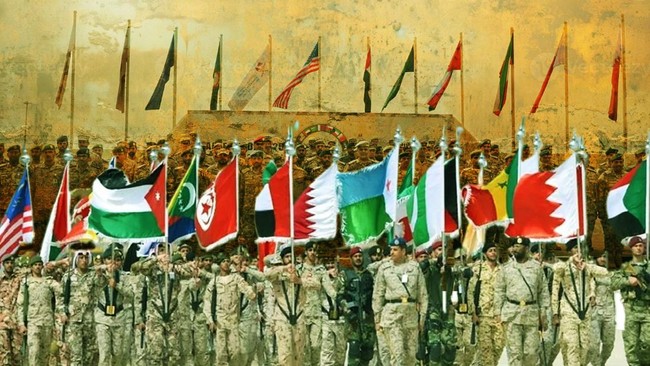
Gulf states are beginning to review their security strategies following the war between the United States and Israel against Iran, which has shaken regional stability and damaged the economy. In addition to accelerating recovery, they are also considering adding new defence partners amid rising tensions with Tehran.
Regional leaders recognise that the threat from Iran has not fully dissipated, particularly with the remnants of the country’s missile arsenal. The presence of US military bases in the Gulf region even makes those countries targets for Iranian retaliatory strikes following the joint Washington-Israel operation.
However, Gulf states assert that they cannot accept Iran maintaining control over the Strait of Hormuz, a vital route through which much of their trade passes.
In this week’s ceasefire agreement, Iran insisted on retaining the positions it took during the war in those waterways, potentially giving Tehran the ability to pressure Gulf states at any time. The future of the strait has become one of the main disputes in negotiations between the US and Iran in Islamabad, scheduled to begin as soon as Friday.
Gulf states claim success in intercepting most Iranian missile and drone attacks during the five-week conflict, as evidence of their ability to defend themselves.
Nevertheless, experts assess that these countries are divided in determining future relations with Iran. A harder-line group is led by the United Arab Emirates (UAE) and Bahrain, while others hope to ease tensions through renewed relations with Tehran.
Iranian state media on Wednesday accused the UAE of possibly being behind an attack on oil facilities on Lavan Island just hours after the ceasefire announcement, with Iran reportedly retaliating. If true, it would be the only known offensive action by a Gulf state during the conflict.
Meanwhile, Saudi Arabia and Iran held their first official contact since the conflict began on Thursday through a phone conversation between their foreign ministers. In the talks, they “discussed ways to reduce tensions to restore security and stability in the region”.
Professor at Kuwait University, Bader Mousa Al-Saif, said Gulf states need to reconsider their security architecture by forging partnerships with countries like Turkey and other middle powers, rather than relying solely on the US. He assessed that the region must move away from the risk of recurring conflict to rebuild its economic foundations.
“This is an obligation for all countries in the region to rethink the model,” said Al-Saif, quoted by The Guardian on Friday (10/4/2026). “The question is how to protect the region as a whole from being dragged into an endless war.”
Countries like Turkey and Pakistan, which have large militaries, are expected to play a larger role in the Gulf. Moves in that direction were already evident before the war.
In recent months, Saudi Arabia signed a defence pact with Pakistan, while the UAE announced a defence partnership with India. During the conflict, Saudi Arabia, the UAE, and Qatar also signed defence agreements with Ukraine to counter Iranian drone threats.
The idea of forming a “Muslim NATO” has surfaced, but it is considered highly unlikely to materialise. A new alignment formed in March involves Saudi Arabia, Turkey, Egypt, and Pakistan in a format called “Step”.
However, rivalries among those countries, as well as uncertainty over whether they are focused on confronting Iran or Israel, complicate the relationship. Turkey and Pakistan also share direct borders with Iran and do not want confrontation with Tehran.
The UK, which helped defend Gulf airspace during the war, could also become more involved. Upon arriving in Jeddah on Wednesday, Prime Minister Keir Starmer discussed with the Saudi crown prince “how the UK and Saudi Arabia can deepen defence industry cooperation to enhance mutual capabilities and security”.
Professor of political science at the UAE, Abdulkhaleq Abdulla, said he expects security relations with the US to deepen further, while more countries follow the UAE’s lead in establishing relations with Israel, including military and intelligence cooperation.
The UAE is said to have been the most affected by Iranian attacks, becoming the target of 2,256 drones and over 563 missiles, with more than 90% successfully intercepted, according to local authorities. That figure compares to around 850 projectiles fired by Iran at Israel.
“Iran has emerged over the last 40 days as public enemy number one for the UAE and other Arab countries,” said Abdulla. “With a public enemy number one like that, you really have to be vigilant 24 hours a day, seven days a week.”
Director of the Gulf project at the International Crisis Group, Yasmine Farouk, assessed that Saudi Arabia is in a better position to recover, thanks to its oil pipelines and Red Sea ports, vast territory, and energy infrastructure that was not as impacted as that of other Gulf states. Nevertheless, reconstruction costs could affect Riyadh’s ambitions to diversify its economy by 2030.
“Saudi Arabia has strategic depth and resources to recover. Its geography is very helpful,” said Farouk.
Meanwhile, associate professor at King’s College London, Andreas Krieg, said Gulf states will not replace US protection but will add security partnerships with others, particularly Europe.
He predicts that Gulf states will increase investments in air and missile defence, strengthening ports and desalination plants, maritime surveillance, and alternative export routes.
“The United States remains the only external power
Source: jawawa.id (https://jawawa.id/newsitem/iran-war-pushes-gulf-states-to-seek-new-allies-what-about-the-muslim-nato-1775836247)
Originally published by CNBC Indonesia (https://www.cnbcindonesia.com/news/20260410180318-4-725833/perang-iran-dorong-teluk-cari-sekutu-baru-apa-kabar-nato-muslim), translated from Indonesian