
Iran War Poses Major Test for India's Multi-Bloc Diplomacy
However, the Iran war is testing India’s diplomatic capabilities. Indian Prime Minister Narendra Modi appears to be starting to feel the pressure. Modi is scheduled to begin a seven-day diplomatic visit to the United Arab Emirates and four European countries. The trip will begin on Friday, May 15.
For New Delhi, the conflict in Iran is not just an energy crisis happening in another region. This conflict is a direct challenge to the basic assumptions behind India’s foreign policy in the Middle East, namely the belief that India can maintain its own strategic autonomy while maintaining relations with every major power in the region, regardless of the competition between them.
India’s efforts to maintain balance are now ‘more difficult’
Amitabh Mattoo, Dean of the School of International Studies at Jawaharlal Nehru University, Delhi, says that India has spent decades building harmonious relations with warring countries in the Middle East, adhering to the principle of ‘pragmatic realism’.
“However, the Iran conflict has made the geopolitical map much tougher. Strategic autonomy works most effectively in a fluid multipolar world order,” Amitabh told DW.
“The situation becomes more difficult when competing camps simultaneously demand political loyalty, compliance with sanctions, and security alignment,” Amitabh continued.
However, Mattoo knows exactly what will be sacrificed first when the pressure reaches its peak.
“If circumstances force it, India’s first instinct will always be to protect economic stability and energy security. No government in New Delhi can withstand prolonged oil price shocks, disruptions to shipping in the Strait of Hormuz, or a surge in domestic inflation,” he said.
Amitabh’s analysis does not imply that New Delhi’s relations with Washington and Tel Aviv are strained.
“The United States remains indispensable for India’s larger strategic future: technology, defense, Indo-Pacific balance, and access to global capital. Israel remains an important partner in defense and intelligence. The Gulf region plays a central role in energy, remittances, and diaspora stability. Meanwhile, Iran is important in terms of geography and land access,” said Amitab, who also believes that this crisis reveals something bigger than just a policy dilemma.
“India is no longer an observer in West Asia. Its dependence on the region means that every escalation now directly tests India’s ambitions as a major power. Strategic autonomy is no longer just a slogan. It is a test of resilience,” he continued.
In Amitabh’s view, the paradox was born from India’s success.
“New Delhi wants strategic autonomy. However, the deeper its global integration, the more difficult it is for India to remain geopolitically neutral when major conflicts break out. Neutrality in a polarized West Asia is no longer a position, but a luxury,” he said.
The principle of a multi-bloc approach
Not everyone agrees that the multi-bloc diplomatic strategy is on the verge of collapse. T.S. Tirumurti, a retired diplomat and India’s first representative to the Palestinian Authority, believes that the Iran war is a reason for New Delhi to maintain its existing diplomatic policy.
“So far, our multi-bloc policy, including in West Asia, has provided great benefits, such as expanding the space for independent decision-making. If we deviate from the multi-bloc approach and lean towards one side, our strategic space will shrink,” Tirumurti told DW.
He also rejects the notion that India faces a black-and-white choice between energy security and strategic partnership.
“In fact, in recent years we have been able to navigate such issues while still securing energy supplies and maintaining good relations with Israel and the United States. Recent history shows that India’s energy security policy has been implemented with great care and wisdom,” he said.
The pressure increases as India’s oil reserves begin to dwindle
India’s ability to maintain a multi-bloc diplomatic strategy also depends on economic resilience. New Delhi will be increasingly overwhelmed by the financial impact of a prolonged regional conflict.
The Gulf states supply most of India’s crude oil and natural gas needs. More than nine million Indians live and work in the Gulf region, while their remittances are closely linked to India’s domestic economy.
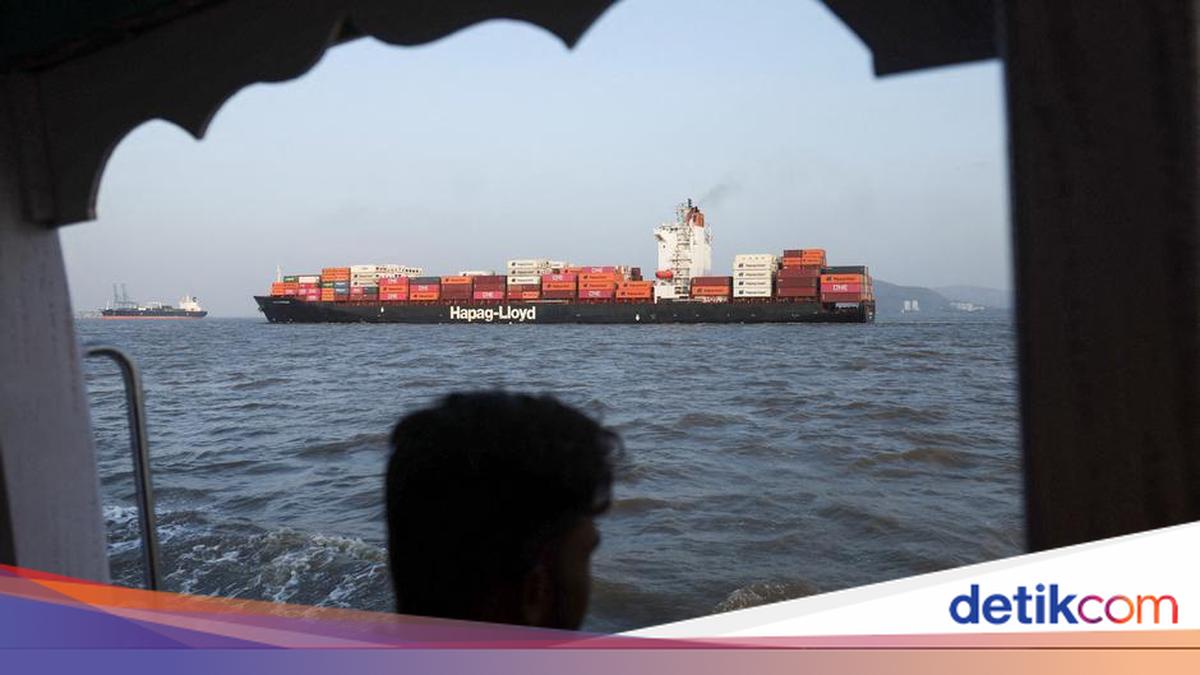
The Strait of Hormuz is the most obvious point of pressure. Even a slight disruption could shake India’s import calculations, insurance costs, inflation, and financial stability.
New Delhi is responding to the situation by diversifying its energy suppliers and deploying the Indian Navy to protect commercial shipping lanes. However, both steps are not cheap. India’s strategic oil reserves may be able to cushion temporary shocks, but are not designed to withstand a prolonged Gulf conflict.
Former Indian Ambassador to Iran: India must remain neutral
Gaddam Dharmendra, former Indian Ambassador to Iran, said that in recent years India has consistently expanded its “historically close” relations with the member states of the Gulf Cooperation Council (GCC), namely Saudi Arabia, the United Arab Emirates, Qatar, Kuwait, Oman, and Bahrain.
“Therefore, New Delhi will avoid taking sides in the new lines of division that are beginning to emerge,” Gaddam told DW.
“As a clean energy importing country, India’s strategic priority is to strengthen its hydrocarbon supply chain. Disruptions in the Strait of Hormuz and damage to energy infrastructure in the Gulf region have put great pressure on India’s dependence on the region,” Gaddam continued.
Gaddam believes that India is likely to make adjustments to its multi-bloc diplomatic strategy, but not completely abandon it. He added that India’s foreign policy is based on pragmatism and national interest, and that New Delhi will continue to pursue its own path, even if it means diverging from the positions of other major powers.