
Iran War Marks Turning Point for China as US Dominance Faces Growing Scrutiny
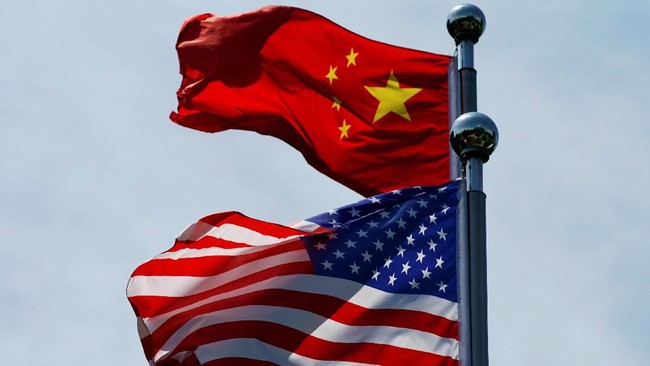
Nearly four months after the war between the United States, Israel, and Iran shook the Middle East, China’s diplomatic position is seen as increasingly robust on the international stage. As Washington faces questions regarding the effectiveness of its intervention, Beijing has managed to present itself as a force promoting peace while maintaining economic stability amid a global energy crisis.
When American and Israeli bombs began striking Iran in late February, Chinese leaders faced the serious possibility of the collapse of their allied government in Tehran, similar to what had occurred in Venezuela weeks earlier. However, almost four months later, the situation has changed dramatically. The US and Iran managed to reach a provisional agreement following a series of peace talks, while the Iranian government remained intact. The conflict has also given rise to the view that the war exposed the limits of American power.
On the other hand, Beijing’s diplomatic influence appears to have increased. China received visits from various world leaders, positioned itself as a supporter of peaceful resolution, and even received repeated praise from US President Donald Trump for its stance during the conflict. Furthermore, the world’s second-largest economy managed to cope with the war-induced energy crisis better than many other nations. This resilience was supported by large strategic oil reserves and a transformation towards green energy and electric vehicles.
China’s Ministry of Foreign Affairs this week welcomed the agreement reached between Washington and Tehran. Spokesperson Lin Jian stated that Beijing is ready to play an active role in restoring regional stability. When asked whether Beijing was directly involved in reaching the agreement, Lin did not provide specific confirmation but stressed that China had worked tirelessly to encourage an end to the war, including through a four-point peace proposal announced by President Xi Jinping in April.
Recognition of China’s role did not only come from Beijing itself. President Trump publicly expressed his appreciation to Xi Jinping during a press conference on the sidelines of the G7 summit in France, thanking him for remaining neutral and not using naval power to oppose the American blockade of Iranian ports. Throughout the conflict, China adopted a cautious diplomatic position, criticising the US and Israeli attacks on Iran while continuing to purchase Iranian oil despite American sanctions, all while maintaining communication with all parties involved.
A number of world leaders visited Beijing during the war, including President Trump last month, Iranian Foreign Minister Abbas Araghchi days earlier, and Pakistani leaders who acted as key mediators in the conflict. In the early stages of negotiations, Iran reportedly sought China’s support as a guarantor for a peace deal, but Beijing showed no interest in taking on such a formal role due to potential diplomatic complications. On Wednesday, Chinese Foreign Minister Wang Yi spoke by phone with Araghchi, emphasising the importance of managing the situation in the Strait of Hormuz and noting that the dawn of peace had appeared.
It remains unclear to what extent China used its diplomatic influence behind the scenes to help achieve the memorandum of understanding signed on Wednesday, which opens a 60-day negotiation period for a final agreement between the US and Iran. Nevertheless, the series of high-level visits to Beijing is seen as reinforcing the message that while other nations wage war, China seeks to present itself as a responsible global power capable of acting as an intermediary.
As negotiations enter the next phase, many observers are beginning to question what the United States actually gained from a conflict that incurred massive global economic costs. In China, academics and political analysts are also debating the impact of the conflict on America’s global position, with some suggesting it could become a ‘Suez moment’ for Washington. The term refers to the 1950s Suez Crisis, which symbolised the decline of British influence and the emergence of the United States as the dominant world power.
Sun Degang, director of the Centre for Middle East Studies at Fudan University in Shanghai, raised the question in an article for the Global Times, asking whether the spectre that haunted the British Empire during the Suez Crisis is now repeating itself for the United States in the Strait of Hormuz. He argued that since the end of the Cold War, the United States has been the world’s sole superpower, but this time the outcome is different. Sun wrote that US military power did not prove as strong as Washington had imagined and that the lack of support from several key allies shows the US-led global alliance system is displaying increasingly evident signs of fragmentation.