
Iran War Enters Third Month as Oil Prices Swing Wildly with No End in Sight
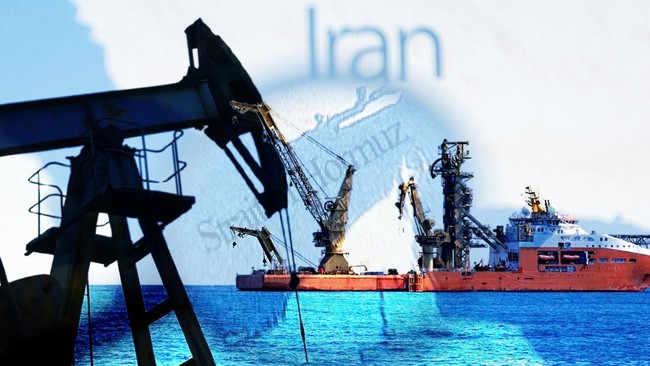
The Iran war, now in its third month, has triggered significant volatility in oil prices. Since the conflict erupted on 28 February 2026, oil markets have entered their most volatile phase in years. In less than three months since the war began, Brent crude prices surged from around $70 to $126 per barrel before sharply reversing in recent days. On Tuesday morning (26 May 2026), July Brent crude stood at $98.12 per barrel, while West Texas Intermediate (WTI) was at $91.77. This remains significantly higher than February’s pre-conflict levels, though market sentiment shifted following reports of US-Iran peace talks. Oil price movements during the conflict have been highly volatile. A single comment from Washington can trigger double-digit rallies, while diplomatic signals from Doha can slash prices within days. On 18 May, Brent touched $112.10 per barrel, then plummeted to $96.14 by 25 May—a sharp correction after markets anticipated the Strait of Hormuz reopening. However, the downward trend has stabilised as investors recognise major hurdles in US-Iran peace talks, including asset freezes, Tehran’s nuclear programme, and Israel’s role in regional negotiations. US President Donald Trump has urged negotiators not to rush a deal, while Washington maintains its blockade on Iranian vessels in the Strait of Hormuz until a formal memorandum is signed. Markets are now reassessing global supply risks. In this conflict, the Strait of Hormuz has become the epicentre of global energy panic. This narrow passage carries about a fifth of global oil trade; disruptions cause immediate physical market tensions, with risk premiums surging across the energy chain—from crude oil and LNG to tankers and refined products. Price data reveals the brutal market shifts: Brent has risen 44.3% since the war began—far exceeding the 15.6% surge in the first 58 days of the Russia-Ukraine conflict. Brent has also recorded extreme swings during the conflict. WTI has followed suit: on 7 April, it plummeted 16.41% in a single day, while its largest rally occurred in late April as markets anticipated broader Middle East supply disruptions. From March to April, oil markets moved primarily on three factors: Hormuz supply threats, US-Iran military actions, and Washington-Teheran diplomatic moves. OPEC’s monthly report details physical oil market pressures. Its April 2026 report cited distribution disruptions and trade flow changes causing tight prompt supplies, with Asian and European refineries scrambling for spot cargoes due to Middle East oil flow disruptions. OPEC also noted global refinery intake fell by 5 million barrels per day in March 2026 from the previous month—the largest drop since April 2020. Around 67% of this decline stemmed from geopolitical constraints and crude oil flow changes due to the war. In derivatives markets, hedge funds amplified price pressures. OPEC highlighted a sharp rise in bullish speculative positions in March as markets anticipated tighter global supplies. This explains why Brent briefly spiked to $126.41 per barrel on 30 April 2026. Oxford Economics previously estimated Brent could stay above $100 if around 10 million barrels per day of oil distribution were disrupted at the Strait of Hormuz—a scenario that materialised as tanker and Gulf shipping activities faltered in March-April. However, since mid-May, markets have shifted positions. Trump’s comment that Washington and Tehran had ‘largely negotiated’ a peace memorandum triggered massive sell-offs in energy markets, with investors betting that Hormuz reopening would reduce geopolitical risk premiums. Despite the correction, markets remain unsettled. MST Marquee analyst Saul Kavonic said markets see potential for energy distribution normalisation, but war-related infrastructure damage means supply recovery will not be swift. Geopolitical risk premiums remain embedded in oil markets. This is evident in current prices: Brent has fallen from its peak but remains around $98 per barrel—well above February’s pre-war range of $66-$70. Conditions are even hotter in LNG and natural gas markets. LNG Japan Korea Marker (JKM) stood at $18.81 per MMBtu on 22 May 2026, up 14.77% monthly and over 50% year-on-year. German gas remained high at €49.79 per MWh, a 33.65% annual increase. Gas market pressures stem from incomplete LNG distribution recovery in the Gulf. Japan, South Korea, and other Asian nations are aggressively seeking additional supplies to safeguard energy security ahead of summer. This has also kept thermal coal demand high. Amid all volatility, one thing is clear in global energy markets: even as diplomacy opens, oil prices have not fully normalised. While tanker routes can be negotiated, market fears of supply disruptions are far harder to erase. OPEC’s March and April 2026 Monthly Oil Market Report also showed robust global oil demand amid the war. OPEC maintained