
Iran War Drains Over Half a Quadrillion from US Funds
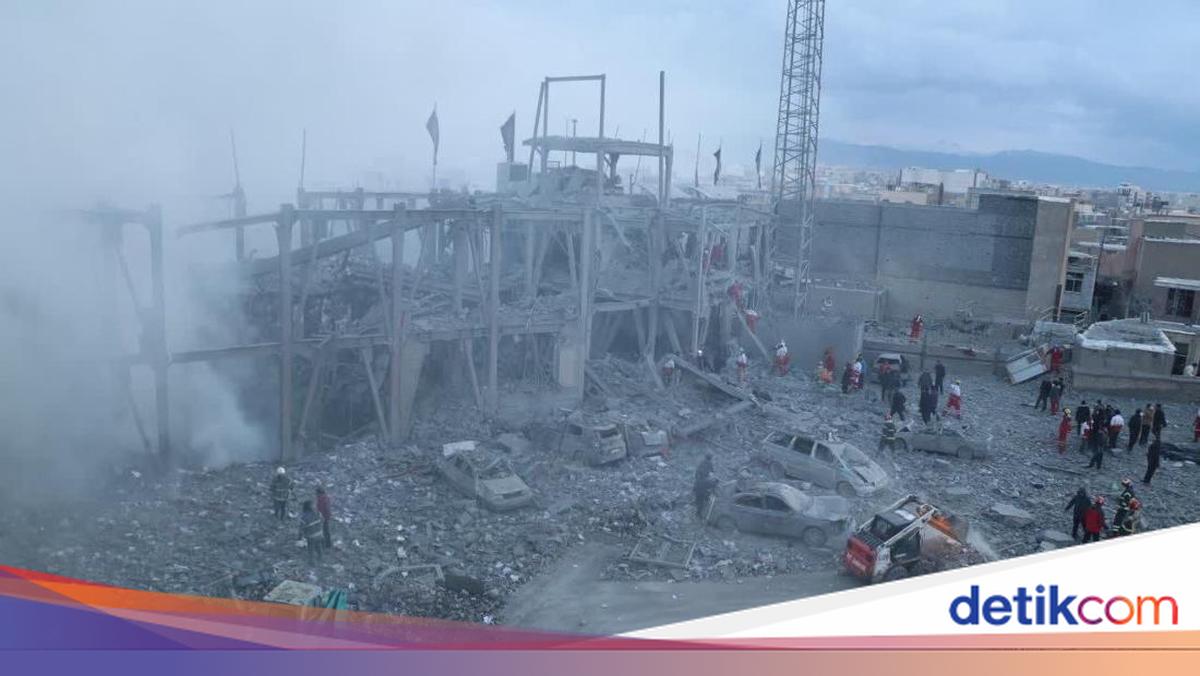
The war between the United States and Iran is significantly draining the coffers of the ‘Uncle Sam’ nation. It has been recorded that over half a quadrillion [IDR] has been exhausted due to this conflict.
As is well known, the US war against Iran is still ongoing. The Iranian government has refused to engage in talks with the US to end the war. This was stated after US President Donald Trump expressed openness to continuing discussions regarding the war in the Middle East.
“Do not be distracted by the mixed signals of the US president—from ‘no negotiations’ to ‘we are ready to talk’,” wrote the Secretary of Iran’s Supreme National Security Council, Mohsen Rezaei, on the social media platform X, as reported by AFP on Tuesday (15/9/2026).
“The stakes regarding oil and the strait have changed. Damage control will not stop what is coming. There will be no talks until Iran’s conditions are met. Period!” he asserted.
This follows Trump’s statement on Monday (14/9) local time, where he indicated openness to holding talks with Iran. This came after weeks of Trump stating it was too early to reach an agreement to end the war.
“The struggling nation of Iran wants to make a deal, quickly and urgently. I will determine whether the US will choose to engage or not—a concept that is open to us,” Trump wrote on his Truth Social platform.
Iran has repeatedly listed several demands, including war reparations and the lifting of sanctions, as prerequisites for ending the war and the blockade of the Strait of Hormuz.
Draining US Funds
The war waged by the US against Iran has cost approximately US$38 billion, or the equivalent of IDR 671.9 trillion, as of 1 August. The cost of the war has the potential to continue increasing by up to US$3 billion (IDR 53 trillion) every month, provided the conflict persists.
The report regarding the costs of the Iran war, as reported by AFP on Wednesday (16/9/2026), was presented by the Congressional Budget Office (CBO), a non-partisan agency, on Tuesday (15/9) local time.
“As of 1 August 2026, the armed conflict with Iran has cost approximately US$38 billion (for the US Department of Defense),” the CBO stated in its report, referring to the war that began with joint US and Israeli attacks on Iran on 28 February.
The CBO added in its report that depending on the intensity of the violence, monthly war costs could range between US$2 billion (IDR 35.3 trillion) and US$3 billion (IDR 53 trillion), or even more, if the conflict continues.
Costs for Ammunition Replacement
The overall figure, according to the CBO, reflects the cost of replacing ammunition used and equipment lost in battle, as well as increased fuel costs for the US military, among other factors.
The cost of replacing ammunition used up to 1 August is estimated to reach US$21.7 billion (IDR 383.7 trillion). The CBO noted that this ammunition replacement is the largest cost component borne by the US Department of Defense or the Pentagon in this conflict.
Furthermore, according to the CBO report, the “primary opportunity cost” for the Pentagon is the depletion of interceptor missile stocks, which has caused US supplies to dwindle for the coming years.
The CBO further warned that comparing the expenditure reports for interceptor missiles to the total amount purchased by the Pentagon indicates that the US “has likely used between half to two-thirds of those ammunition supplies since June 2025”.
War Triggers Inflation
This CBO report was prepared following a request from senior members of the US House Appropriations Committee, Brendan Boyle, from the Democratic Party, along with several other Democratic lawmakers.
In July, US Secretary of Defense Pete Hegseth estimated that the war against Iran had cost US$37.5 billion (IDR 663 trillion).
The CBO, in its report, estimates that the primary impact of the Iran conflict on the US economy is inflationary pressure due to disruptions in the supply of oil and natural gas. Iran has responded to US-Israeli attacks by blocking the Strait of Hormuz, a vital waterway for global energy supplies, thereby triggering price surges.