
Iran War Changes Market Dynamics, Oil Now Driving US Bonds
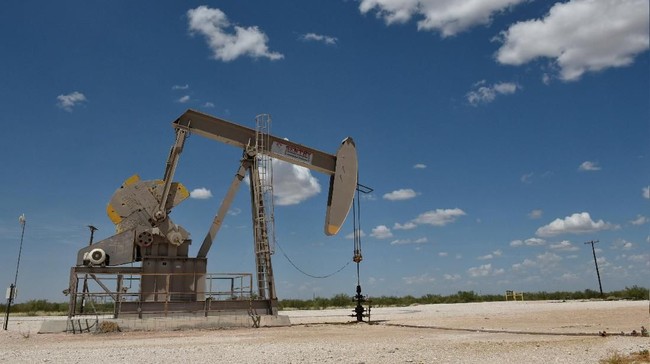
Oil prices and US government bond yields are once again moving upward in tandem. This movement demonstrates how energy prices are exerting a stronger influence on global bond markets.
According to Refinitiv data, Brent crude prices ended trading on Wednesday (3/9/2026) with an increase of 0.92% to US$103.53 per barrel. West Texas Intermediate (WTI) crude also strengthened by 1.16% to a position of US$90.42 per barrel.
The increase occurred after US-Iran peace negotiations failed to produce progress, while US gasoline and distillate inventories declined. Consequently, the market is once again pricing in the risk of tighter energy supplies.
The rise in oil prices has moved in parallel with 10-year US Treasury yields. During the same trading session, yields closed at 5.293%, an increase of 3.8 basis points compared to the previous close of 5.255%.
This movement serves as the latest example of the tightening link between oil prices and the US bond market. When oil rises, inflation concerns intensify, leading to expectations of high interest rates, which in turn puts pressure on bond prices and pushes yields higher.
Quoting the Financial Times, the correlation between WTI oil prices and 10-year US Treasury yields reached 65% in September, based on data from derivatives firm Cboe. This figure is only slightly below the record 66% recorded in 1990 following the Iraqi invasion of Kuwait. Cboe data regarding the relationship between these two assets has been available since 1985.
Bond Investors Now Following Oil Prices
Bond investors typically monitor economic growth data, inflation, employment, and central bank statements. However, the conflict in the Middle East has shifted market attention towards oil prices.
“Essentially, we are just becoming oil traders,” said Mike Riddable, a fund manager at Fidelity International, as quoted by the Financial Times.
This shift is related to the significant role of the Strait of Hormuz in global energy trade. This narrow passage in the Middle East typically handles approximately 20% of global oil exports. Disruptions to shipping traffic in the region could reduce supply and cause oil prices to surge. Rising energy costs then risk driving inflation and prompting central banks to maintain high interest rates for a longer period.
A similar movement is visible in Europe. Bond yields in countries more vulnerable to energy price hikes have also been moving in line with oil.
“Yields have been following oil prices this year,” said Richard Woolnough, a fund manager at M&G, quoted from the Financial Times.
Oil Rises by US$1, Yields Follow
Oil prices have been highly volatile during the ongoing conflict. Global benchmark oil prices briefly exceeded US$100 per barrel but later dropped towards US$70 per barrel following developments in peace prospects.
The magnitude of oil’s influence is evident in calculations by analysts at TS Lombard. Every US$1 increase in WTI prices is estimated to add nearly 0.02 percentage points to the 10-year US Treasury yield.
In Monday’s trading, oil prices surged by 4.5%. At the same time, the 10-year US Treasury yield rose by 0.09 percentage points.
US 10-year bond yields have touched their highest levels since 2007 this year. In addition to the US-Iran conflict, the robust US economy has added to concerns that inflation will be difficult to lower in the near future. This condition has prompted market participants to increase expectations that the Federal Reserve may still need to raise interest rates.
Energy Prices Increasingly Determining Fed Moves
At the start of the conflict, investors hoped that the central bank would view inflation rises caused by energy supply disruptions as temporary pressure. That hope is fading as the war has continued since February. Rising energy prices are now seen as capable of prolonging inflationary pressures that are already above the central bank’s target.
Fed Chair Kevin Warsh stated this month that inflation remains too high and has persisted for too long. This statement was made as the US central bank raised interest rates for the first time since 2023.
Peter Schaffrik, a global macro strategist at RBC Capital Markets, assessed that the drivers of short-term bond yields have changed. Energy prices are now one of the primary factors used by the market to forecast the direction of central bank policy.
As a result, economic growth data and several other indicators are no longer the sole focus of bond investors.
Mandy Xu, head of derivatives market research at Cboe, assessed that the developments of the conflict could further determine market direction if the oil-bond relationship persists.
“The direction of yields will depend more on the situation in Iran,” said Xu, as quoted by the Financial Disks.
According to her, the situation in Iran could exert a greater influence on the direction of yields than the decisions of the Fed.
Europe Also Under Pressure from Gas Prices
Energy pressure in Europe does not come solely from oil. European natural gas prices have surged by approximately 160% throughout this year, reaching the highest levels since the period following the large-scale Russian invasion of Ukraine.
Gas has a significant impact on European household living costs. Price increases can directly add to the cost of heating, electricity, and goods production.
European Central Bank (ECB) President Christine Lagarde has also cited rising gas prices as one of the risks that could drive inflation higher. This statement was made as the ECB raised interest rates at the beginning of this month.
The Direction of the War Remains Unpredictable
The problem is that there is no certainty regarding when the conflict will end or where oil prices will move next.
US President Donald Trump said on Saturday that he had rejected an Iranian offer to hold a new seven-day ceasefire. Developments…