
Iran War Ceasefire: These Stocks Breathe a Sigh of Relief
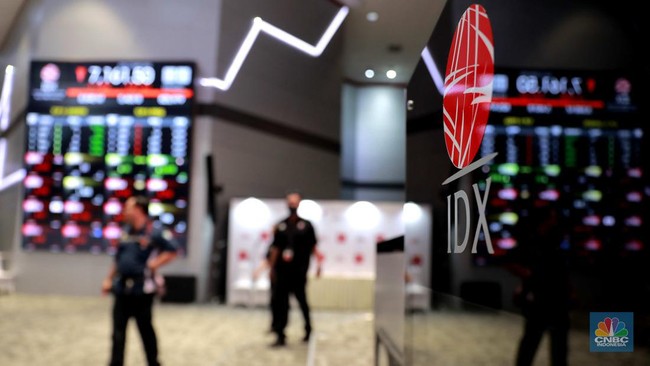
The Jakarta Composite Index (JCI) closed the first trading session today with an impressive gain of 3.39%, firmly holding at 7,207.16. This positive sentiment is driven by the easing of geopolitical tensions and expectations of achieving a global ceasefire. This situation brings the certainty that market players have been awaiting, triggering capital flows and providing room for commodity price adjustments that serve as catalysts for various fundamental sectors on the exchange. Below is a summary of the financial performance and market valuations of five issuers that are in focus due to their potential to benefit significantly from the reduced escalation of the war in the Middle East at present, based on full-year 2025 reports: PT Bank Mandiri (Persero) Tbk (BMRI) The easing of conflict escalation automatically brings macroeconomic certainty to the market. With this certainty, the risk appetite of businesses and individuals will increase again. Society and corporations will become bolder in taking risks for business expansion or consumption through credit uptake. This condition is a very positive sentiment for major banks like BMRI. The increase in credit disbursements is expected to be evenly distributed across various segments, from corporate credit for capital expenditure to consumer financing. Adequate banking liquidity will enable BMRI to respond to this demand without sacrificing asset quality. In terms of performance, BMRI achieved solid results with revenue of Rp 164.4 trillion and net profit of Rp 56.29 trillion in 2025. This performance is supported by a net profit margin of 34.2%. At a price of Rp 4,660, BMRI shares are trading at a rational valuation with a PER of 8.29 times and PBV of 1.43 times, as well as a return on equity (ROE) of 17.19%. PT Unilever Indonesia Tbk (UNVR) The decline in global crude oil prices brings specific benefits to the FMCG sector. As an issuer that mass-produces consumer goods, UNVR heavily relies on crude oil derivatives for plastic packaging raw materials. Falling oil prices mean a significant reduction in the cost of goods sold for the company. Relief from supply chain pressures provides additional flexibility for the company to avoid immediate price increases for retail consumer products. Maintaining prices is a crucial strategy to preserve market share and sales volume amid tight industry competition. This efficiency is reflected in the company’s performance, where UNVR recorded a net profit of Rp 7.64 trillion from revenue of Rp 31.9 trillion throughout 2025. The company posted a high ROE of 170.75%, justifying a premium PBV valuation of 19.52 times at a share price of Rp 1,935. PT Alamtri Minerals Indonesia Tbk (ADMR) Sentiment from the return of several Asian industrial countries using coal to ensure domestic energy resilience continues to be the main support for coal commodity price movements. Although there has been an annual adjustment, ADMR still demonstrates resilient fundamental quality. The company’s focus on metallurgical coal, which is essential for steel production, also provides its own protection against general energy price fluctuations. A low-debt balance sheet allows ADMR to fund downstream projects without excessive interest burden pressure. Throughout full-year 2025, the company secured revenue of Rp 16.3 trillion with a net profit of Rp 4.55 trillion. The very healthy capital structure is reflected in a debt-to-equity ratio (DER) of 0.68 times. With a net profit margin of 27.9%, ADMR offers high efficiency amid commodity price cycles. PT Archi Indonesia Tbk (ARCI) Prospects for precious metal issuers like ARCI currently rely more on the thesis of a weakening US dollar exchange rate or DXY index. Gold price movements have proven highly volatile; it once rocketed to US$5,400 at the start of the conflict, sharply corrected to US$4,100 mid-crisis, and now rebounding to the US$4,800 level. Consolidation of gold prices at a relatively high level still provides solid operational cash flow certainty. As long as global interest rates do not rise aggressively, gold assets will remain in demand as a hedge, supporting the company’s valuation in the long term. These fluctuations are maximised by ARCI, which recorded a surge in net profit to Rp 1.7 trillion from revenue of Rp 8.3 trillion in 2025. This profitability drives ARCI’s ROE to break through 28.06%, supported by a manageable debt ratio of DER 1.83 times. PT Samudera Indonesia Tbk (SMDR) The maritime logistics sector, particularly SMDR, is currently gaining double benefits from global market conditions. World oil prices have fallen from around US$109 to US$93 per barrel as ceasefire prospects improve. The drop in oil prices drastically cuts ship fuel costs, while global sea freight rates remain at high levels. The widening spread between declining operational costs and premium service rates will directly impact the company’s margin expansion. This provides positive cash flow visibility for SMDR to allocate towards fleet renewal or dividend payouts. Based on the 2025 report, SMDR recorded a net profit of Rp 873.5 billion. At a price of Rp 348 per share, this stock is trading at a very cheap valuation with a PBV of only 0.44 times and PER of 6.60 times.