
Iran War Brings Oil Disaster, Electric Vehicles Feast
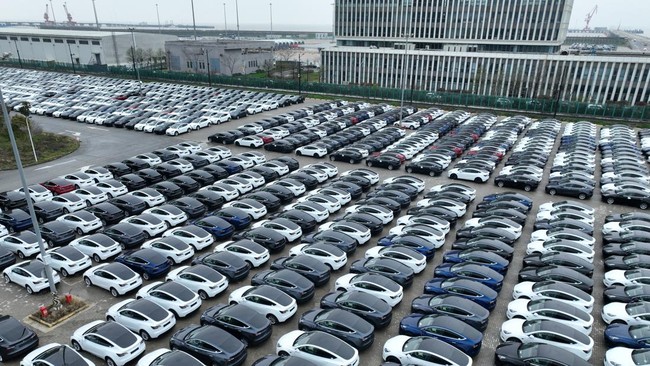
The conflict in the Middle East between the United States, Israel, and Iran is beginning to have widespread impacts on the global energy sector. The surge in energy prices due to supply disruptions is also driving demand for electric vehicles (EVs) in various countries.
The rise in petrol and diesel prices is causing operational costs for conventional vehicles to soar, prompting consumers to switch to EVs, which are considered more economical. The effects are evident in increased sales and rising prices for used EVs in several markets.
Rosco Jewell, a Sydney-based entrepreneur running the Amazing EV platform, reports a drastic change in recent weeks. Previously, he sold one used EV every two months; now, sales have increased to one unit every two weeks.
“It is now very difficult to find used EVs in the US$20,000 to US$50,000 (Rp340 million-Rp850 million) range. We are also seeing prices rise by 10% to 15%, and in some cases up to 20%,” said Jewell, as quoted by Al Jazeera on Monday (27/4/2026).
This surge in demand is not limited to Australia. In the world’s two largest economies, the United States (US) and China, EV sales are also showing recovery after weakening in 2025.
In China, monthly sales jumped 82.6% in March, according to the China Passenger Car Association. Meanwhile, in the US, EV sales reached 82,000 units last month, up more than 20% from February, though still lower year-on-year, according to Cox Automotive.
In Southeast Asia, Vietnam recorded significant growth. Local manufacturer VinFast reported a 127% annual surge in sales in March.
Analyst Euan Graham from the energy think tank Ember believes the war in Iran is accelerating the EV adoption trend, particularly in developing countries vulnerable to energy price volatility.
“We are now in the 2020s period where there have been two consecutive fossil fuel shocks,” said Graham, also referring to the energy crisis from the Russia-Ukraine war.
“What usually happens is that countries seek alternative solutions, and now EVs are becoming an increasingly competitive option,” he added, noting that this situation could create permanent changes in electric vehicle adoption across various countries.
Similar surges are occurring in Japan, South Korea, and Europe. Japan recorded nearly triple annual EV sales, while South Korea saw a 172% jump. In Europe, from France to Nordic countries like Norway, Sweden, and Denmark, significant increases have been observed, particularly for Tesla brands.
In Australia, battery electric vehicles accounted for 14.6% of total vehicle sales in March, almost double the same period last year. This surge is happening amid growing concerns over energy supplies. Although known as a major energy exporter, Australia still imports about 80% of its fuel needs and has reserves for only about one month.
On the other hand, the New South Wales government is responding to the situation by allocating US$71 million (Rp1.2 trillion) in investment to expand electric vehicle charging infrastructure in regional areas. With global energy price pressures unrelenting, the shift to electric vehicles is expected to continue strengthening in the near future.