
Iran War Becomes a Political Liability for the White House
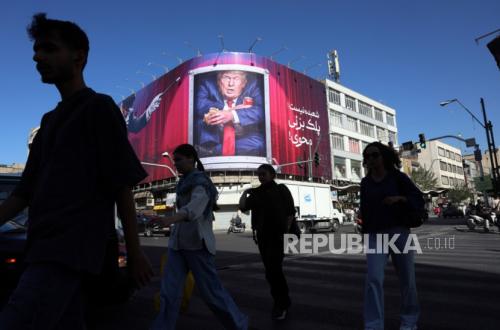
JAKARTA — The Iran war is becoming a serious political liability for US President Donald Trump ahead of the mid-term elections on 3 November 2026. Amid rising energy prices, falling public support and fears that the Republican Party could lose control of Congress, Trump has unexpectedly said Washington will not launch new military strikes against Iran before the vote.
Trump made the statement on his Truth Social platform on Thursday (8 October 2026), as Washington and Tehran continued to seek a way out of the conflict, which began last February. He claimed the two countries were holding productive talks, but stressed that the US blockade of Iranian ports would remain in place.
“We are having productive discussions with the Islamic Republic of Iran,” Trump said, as quoted by Reuters. He assured the public that the United States would not attack Iran before the 3 November mid-terms, a statement that immediately drew attention from energy markets and political circles in Washington.
The decision marks a significant shift in Trump’s approach to a war that he had repeatedly threatened to widen. However, his promise to delay strikes does not mean Washington is ending its military and economic pressure on Tehran, nor does it rule out the possibility of escalation once the election is over.
A day before Trump’s announcement, Axios reported that the Pentagon had instructed US Central Command (CENTCOM) to complete preparations for a possible resumption of major combat operations against Iran. Citing several US officials, the report said strike options could include energy facilities, strategic infrastructure and Iranian nuclear targets.
The instruction did not specify a date for any operation, and Trump has not made a final decision to launch an attack. A Pentagon official said the Department of Defence’s role was to prepare various military options for the president to consider.
The contrast between the Pentagon’s military preparations and Trump’s promise to postpone strikes illustrates the complexity of Washington’s position. The White House must maintain pressure on Iran while confronting the risk that renewed escalation could worsen the US economy just as Republicans need voters’ support.
The pressure is reflected in a Reuters/Ipsos poll showing that around 60 per cent of Americans disapprove of Trump’s handling of the Iran conflict. About a quarter of respondents who identified as Republican supporters also expressed dissatisfaction with the president’s policy on the issue.
The figures show that opposition to the handling of the war is not confined to the Democratic opposition. Discontent has also emerged among some of Trump’s political base, although the poll results do not necessarily mean Republican voters will switch their support to Democratic candidates.
The problem is compounded by the close connection between the Iran war and rising fuel and living costs for Americans. A conflict that Washington initially presented as an effort to counter a security threat from Tehran is now being felt increasingly in people’s everyday spending, particularly as petrol and diesel prices rise.
An Associated Press poll conducted with the NORC Center for Public Affairs Research and released on 1 October offered a broader picture of the economic pressure. Only 17 per cent of American adults approved of Trump’s handling of the cost of living, while approval of his overall management of the economy stood at 26 per cent.
The poll, which surveyed 2,140 adults from 24 to 28 September, also found that 65 per cent of Americans considered Trump’s policies more responsible for high prices than factors beyond his control. The findings do not separate all the effects of the Iran war from those of tariffs and other economic factors, but they show that the White House is facing an increasingly heavy political burden in the eyes of the public.
The unease has even surfaced within political circles traditionally close to Trump. Texas Attorney General and Republican Senate candidate Ken Paxton privately acknowledged that the Iran war and rising fuel prices had made his campaign more difficult.
In a recording of a meeting with donors and lobbyists obtained by Axios and reported on Wednesday (7 October 2026), Paxton identified the war and petrol and diesel prices as major issues hindering his campaign. He acknowledged that higher fuel costs then feed through into food and other necessities, while a Senate candidate has no direct control over White House decisions on war.
Source: jawawa.id (https://jawawa.id/newsitem/iran-war-becomes-a-political-liability-for-the-white-house-1791532352)
Originally published by Republika (https://news.republika.co.id/berita/tmlt4u451/perang-iran-jadi-beban-politik-gedung-putih), translated from Indonesian