
Iran War and US-China Confrontation Dominate ASEAN Meeting
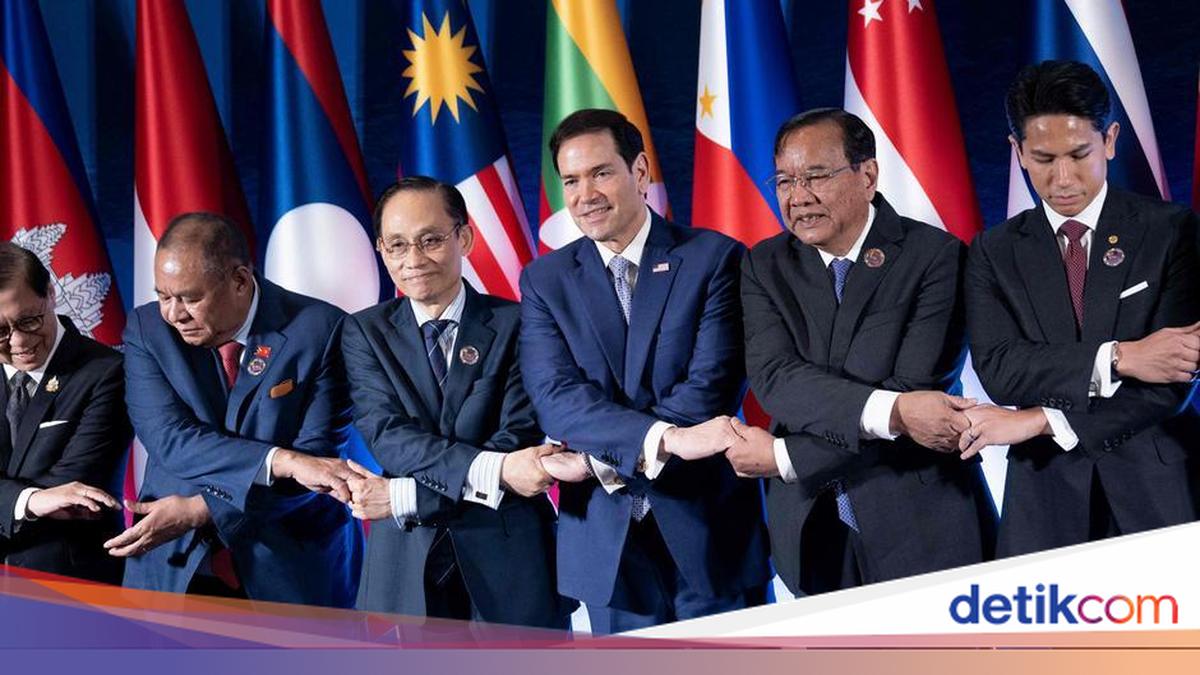
United States Secretary of State Marco Rubio on Wednesday warned Asian leaders that Iran’s demands to control and levy fees on shipping in the Strait of Hormuz would threaten the world economy and the principle of freedom of navigation. Rubio made the statement at the opening of the annual meeting of ASEAN foreign ministers and partner countries in Manila, the capital of the Philippines. ASEAN countries had previously expressed concern over the re-escalation of the war in the Middle East, which has also had a significant impact on the Southeast Asian region. Although Washington’s attention is currently largely consumed by the conflict in the Middle East, Rubio asserted: “We fully support ASEAN.”
“If we create a precedent in the Middle East where a country can decide to control an international shipping lane, levy fees, and if unpaid they will attack ships passing through, then we have created a very dangerous precedent. It could be repeated in other parts of the world, including in this region,” he said. The top diplomats from the United States, China, Russia, and several other countries are in Manila this week to attend the meeting of Southeast Asian foreign ministers. The newly appointed British Foreign Secretary, Ed Miliband, was also scheduled to arrive on Wednesday. The meeting will continue until Friday.
In Manila, Rubio held a meeting with the foreign ministers of the Quad Partnership member countries, which consists of the United States, Australia, India, and Japan. During the meeting, they discussed various shared priorities, including cooperation in technology, humanitarian assistance, emergency response, as well as maritime and transnational security. The four countries subsequently issued a joint statement reaffirming their commitment to various maritime security initiatives aimed at counterbalancing China’s growing influence in the region. “We are united in the belief that peace and stability in the Indo-Pacific maritime region are the foundation for the region’s security and prosperity,” the leaders’ joint statement read.
The administration of US President Donald Trump has repeatedly criticised China’s increasingly aggressive actions in the South China Sea, which are deemed detrimental to smaller claimant states such as the Philippines, America’s oldest treaty ally in Asia. Territorial disputes in the South China Sea, which also involve Taiwan and several ASEAN member states such as Vietnam, Malaysia, and Brunei, were a key agenda item during the three-day talks that began on Tuesday in Manila. US Secretary of State Marco Rubio is set to meet with Chinese Foreign Minister Wang Yi on Wednesday. The two are expected to discuss the possibility of a summit meeting between the leaders of both countries.
“If those waters fall under the control of a power willing to use trade as a geopolitical weapon, both the United States and ASEAN countries will face serious new threats to their sovereignty, security, and economic future,” Rubio wrote. Beijing claims sovereignty over almost the entire South China Sea through a map line that cuts through the exclusive economic zones of Brunei, Indonesia, Malaysia, the Philippines, and Vietnam, and is the centre of protracted disputes over various islands and geographic features in the area. Australian Foreign Minister Penny Wong stated that an incident on Monday involving the Chinese coast guard and Philippine naval personnel in the South China Sea had raised real concerns about “risky and destabilising” behaviour.
Meanwhile, Rubio also took the time to meet with Indian Foreign Minister Subrahmanyam Jaishankar. According to a US State Department spokesperson, the two discussed various regional issues, the Iran war, and the progress of trade agreement negotiations that are nearly complete. The deal aims to reduce tariffs imposed by US President Donald Trump on Indian goods. “Secretary Rubio and Minister Jaishankar agreed on the importance of promptly concluding the interim trade agreement, which is now nearly finalised,” said State Department spokesperson Tommy Pigott.
Regarding the situation in Myanmar, junta leader and President Min Aung Hlaing will make an official visit to Thailand on 6-7 August. This was conveyed by the Thai Foreign Minister on Wednesday, marking the latest effort by the conflict-torn country’s new government to gain international legitimacy. The visit plan comes after ASEAN foreign ministers met with their Myanmar counterpart and separately with opposition groups in Thailand last week. During the visit, Min Aung Hlaing is scheduled to meet with Thai Prime Minister Anutin Charnvirakul. “Of course, I have hopes, but I must be realistic. Let us continue to move forward,” Thai Foreign Minister Sihasak Phuangketkeow told AFP regarding the situation.