
Iran Urges China to Step In Against the US, Wants Xi Jinping to Do This
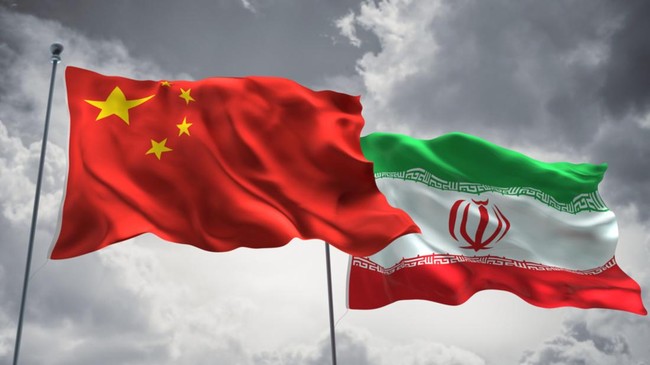
Jakarta, CNBC Indonesia - Iran is reportedly urging China to take a more significant role as a mediator in the nuclear deal to end the war with the United States (US). Tehran is even opening the door for Beijing to take over supervision of their enriched uranium reserves amid the deadlock in negotiations with the Donald Trump administration.
Citing a Newsweek report on Monday (27/04/2026), although a ceasefire has successfully calmed the war that once shook the global economy due to disrupted oil exports, talks between Washington and Tehran remain at an impasse.
Both sides are insisting on maximum demands, with the Trump administration demanding a total halt to uranium enrichment and support for regional proxies, while Iran demands compensation for bombings carried out by the US and Israel since the war broke out on 28 February.
Philanthropist and businessman with close contacts to Iranian negotiators, Mohamed Amersi, revealed that the Iranian side is under extraordinary economic pressure to reach an agreement. Amersi conveyed that Iran openly wants deeper Chinese involvement to end the conflict.
“100%, absolutely, Iran wants China. If China really wants to be respected as a rising power, they need to roll up their sleeves and do something. This doesn’t mean siding with Iran. They need to deliver the bitter truth to Iran and also go to the United States and say: ‘Listen, we are in a position trusted by Iran,’” said Amersi.
At a conference at the Center for China and Globalization (CCG) in Beijing last weekend, Mohamed Amersi outlined specific details regarding China’s potential role. He stated that Beijing could take over custody of Iran’s high-level uranium, which is now just one step away from nuclear weapon production, and provide guarantees for a new nuclear framework linked to development investments in Iran.
Amersi added that this proposal could be a key point in the planned meeting between Trump and Chinese leader Xi Jinping next month. As of this report, China’s Foreign Ministry, the US State Department, and Iran’s Foreign Ministry have not provided official comments.
On the other hand, President Trump earlier this month gave credit to China for helping bring Iran to the negotiating table. Although his claims regarding the reopening of the Strait of Hormuz have not fully materialised, Trump expressed confidence that Xi Jinping would welcome him warmly at the upcoming meeting.
“We are working together smartly and very well!” Trump said.
CCG founder Henry Huiyao Wang assessed that China’s position is highly strategic for ending the conflict because Beijing is now a global stakeholder directly affected. According to Wang, stability in Iran is crucial for all parties, especially regarding energy supplies.
“What is happening in Iran is not really helping anyone. We are now stakeholders like the rest of the world. Everything must be under control. If there is a desire on both sides to calm down—the US wants calm and Iran wants calm too—perhaps it would be very easy for China to come in as a third party and mediate to soothe both sides,” said Wang.
Although Trump’s attacks on Iran and its allies disrupted China’s energy imports, experts in Beijing see China emerging stronger as the Iran war drags on. This is because China’s reliance on crude oil is being offset by the massive use of electric vehicles domestically.
Associate Professor at Beijing Language and Culture University, Shou Huisheng, assessed that although Iran is close to China due to energy factors, Beijing’s top priority remains maintaining relations with Washington to avoid major conflicts between major powers.
“Iran is, of course, very close to China. But that’s mainly because of energy. Beyond that, I don’t see anything else that’s very crucial for China to hold very close ties. There is no reason for China to help them, because that would surely hurt China by angering America. Iran, no matter how critically you talk about it for China, the US is more important for China. China’s top priority is dealing with the US and ensuring the two countries won’t have major problems,” said Huisheng.
Meanwhile, Director of the Center for International Security and Strategy at Tsinghua University, Da Wei, opined that the power dynamics have shifted. He assessed that the US’s international position has actually weakened due to the Trump administration’s war policies, which indirectly makes China feel safer from Western pressure than two years ago.
“You could say China is in a stronger position. My view is that the Trump administration has actually weakened their own international position in this war. I think Pax Americana has been ended by President Trump. This is not just because of this war; many things have happened in the last few years,” said Wei.
The summit meeting between Trump and Xi in Beijing is expected to determine the direction of this conflict. Shou Huisheng added that the deadlock in Iran actually puts Trump in a weaker bargaining position when facing China.
“The situation in Iran puts Trump in a weaker position. The longer this situation drags on, the weaker Trump’s position in negotiating with China,” continued Huisheng.
Regarding this, Henry Huiyao Wang from CCG emphasised that the US currently needs China’s help to get out of diplomatic difficulties in the Middle East. He implied