
Iran Unbowed Despite Onslaught, Trump Running Out of Options
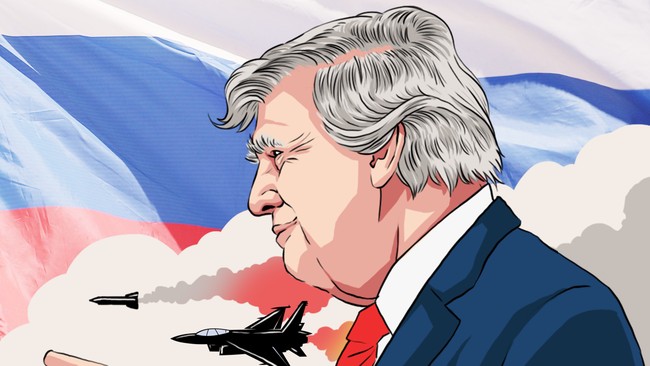
President Donald Trump has repeatedly portrayed Iran as defeated, even calling it “completely defeated” on Wednesday (10/6/2026). The problem is, Iran is not behaving like a defeated party. After more than 100 days of attacks and blockades by the United States and Israel, Iran has still managed to down an American helicopter, strike Israel, and launch missiles at Gulf states. Rather than showing signs of surrender, Tehran appears to be continuously seeking ways to raise the stakes. The longer the conflict drags on, the clearer it becomes that Trump’s problem is not how to start a war, but how to end one.
Trump now faces three problems simultaneously. Iran continues to threaten global energy traffic through the Strait of Hormuz, one of the world’s most critical oil shipping lanes. Israel is still pursuing its own security agenda. Meanwhile, in Washington, hawks are pushing for more aggressive action against Tehran. These three pressures point in different directions, yet all demand a response from the White House.
If the goal of war is to force the opponent to accept peace terms, the signs are not yet visible. This week, Iran shot down an American helicopter, attacked Israel, and launched missiles at Gulf states. This series of actions shows that Tehran’s rulers are still willing to risk a wider conflict. For Trump, this creates an uncomfortable dilemma. Greater pressure risks triggering new escalation, but without pressure, the chance of forcing Iran to accept Washington’s terms grows even smaller. Consequently, the Trump administration is still trying to keep negotiation channels open, even as the conflict has not truly subsided.
To pave the way for a broader agreement, Washington needs a calmer regional situation. However, Israel has calculations that do not always align with America’s. Trump wants to lower tensions, while Benjamin Netanyahu needs to appear resolute amid domestic political pressure ahead of elections. As a result, steps that Washington considers helpful for diplomacy are not necessarily seen as advantageous in Jerusalem. For Iran, this divergence creates opportunity. The harder it is for the US and Israel to move in the same direction, the more room Tehran has to hold out.
So far, oil prices have moved in response to developments in the Middle East, but the increases remain far from the worst-case scenarios feared by markets. There are several reasons for this. China and other major importers have managed to curb growth in energy demand. The United States and other exporting countries have increased production. Some nations have also begun tapping their energy reserves to cushion supply disruptions. This combination has helped keep markets relatively stable. The problem is that nothing lasts forever. Fuel demand typically rises during the summer, and energy reserves will continue to shrink if the conflict drags on. The buffers that are absorbing shocks today could turn into new sources of pressure in a few months.
At this point, the issue is no longer who holds the upper hand on the battlefield. What is at stake is global energy stability. Iran still possesses the ability to disrupt shipping traffic in the Strait of Hormuz. The longer the uncertainty persists, the greater the risk to oil supply, inflation, and energy prices paid by consumers across many countries. The impact may not yet be fully felt today, but energy markets share a habit with geopolitical conflicts: the risk often looks small, until suddenly it is not.
The longer the war continues, the clearer it becomes that Trump has few genuinely good options. Increasing military pressure risks magnifying global energy disruption. Letting the situation drift also carries mounting costs. Meanwhile, the more ambitious war aims look increasingly difficult to achieve. As a result, a space for compromise that previously seemed unattractive is starting to look more realistic—not because it is a good option, but because the alternatives appear worse.
Wars often begin with clear objectives. The problem is that those objectives rarely remain intact after months of conflict, political pressure, and accumulating economic consequences. What is becoming increasingly visible now is that the cost of war is not borne solely by the parties on the battlefield. It is also paid through energy prices, market uncertainty, and more fragile economic growth. In the end, the best possible outcome may not be the grand victory promised at the start, but rather an agreement that is just enough to prevent things from getting worse.
Source: jawawa.id (https://jawawa.id/newsitem/iran-unbowed-despite-onslaught-trump-running-out-of-options-1781265157)
Originally published by CNBC Indonesia (https://www.cnbcindonesia.com/research/20260612155015-128-742432/iran-tak-takluk-meski-digempur-trump-kehabisan-opsi), translated from Indonesian