
Iran Truly Wins the War Against the US, Here is the Evidence
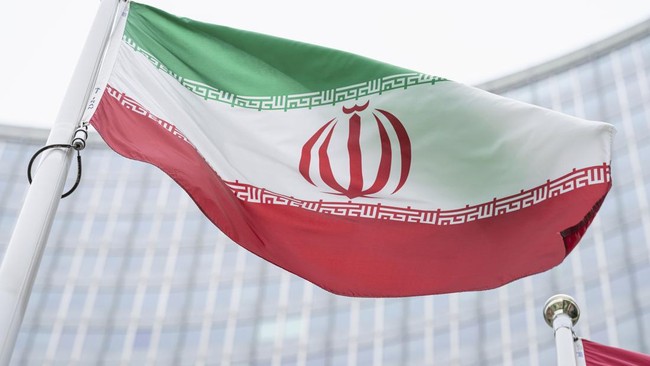
Tensions between the United States (US) and Iran have entered a new phase following the official announcement of a two-week ceasefire agreement. However, behind Washington’s narrative of de-escalation, the situation on the ground reveals a starkly different reality, where Uncle Sam’s country is considered to have failed in imposing its will through military force.
Donald Trump’s sudden move is viewed not as a sign of victory, but rather as an emergency manoeuvre to avoid greater political and economic losses for the US itself.
This sharp perspective is offered by the President of the Middle East Studies Centre and Guest Lecturer at HSE University in Moscow, Russia, Murad Sadygzade. According to him, what is happening now is not the end of the conflict, but merely a “breathing space” in the midst of an unfinished war.
“What is actually happening is a forced interruption, achieved under pressure and surrounded by incompatible interpretations between Washington and Tehran,” Sadygzade stated in his analysis, published by RT on Thursday (9/4/2026).
For many international observers, Iran has emerged as the winner in this phase of the battle. Tehran is seen as having withstood the onslaught, retaliated with strength and dignity, and refused to surrender.
“The US and Israel hoped to dictate the rules of the conflict and then present Iran’s forced retreat as proof of their own victory. What happened in practice was the opposite,” Sadygzade explained.
Washington’s Ordered Retreat
The US strategy, relying on maximum pressure and intimidation rhetoric, is said to have hit a dead end. Sadygzade assesses that Iran has proven that a major country with a resilient political system cannot be broken by a single cycle of attacks, even if they cause significant damage.
“Donald Trump made a sudden reversal in the final hours before his own ultimatum expired. This should not be read as a confident move from a winner, but as a compelled manoeuvre from a leader urgently seeking an exit from an increasingly dangerous configuration,” Sadygzade elaborated.
Sadygzade added that before the ceasefire was announced, US rhetoric had escalated to threats against Iran’s civilian infrastructure. The sudden shift towards negotiation indicates that military pressure is beginning to backfire on the American side.
“Continuing the war threatens Washington with multiple layers of costs. Military uncertainty remains high, allies feel uneasy, markets react nervously, and the prospect of a prolonged conflict without convincing results becomes increasingly real,” he said.
Iran’s Losses Actually Strengthen It
Militarily, the US and Israel have indeed succeeded in striking Iran’s infrastructure significantly. However, Sadygzade emphasises that war cannot be measured solely by the number of targets destroyed, but by its political outcomes.
“External pressure on this scale almost always produces a dual effect. It heightens fear, fatigue, and anger, but it can also sharply strengthen historical communal sentiment, especially when society views the events as an attack on the nation itself,” Sadygzade revealed.
According to Sadygzade, the US and Israeli attacks have instead united the Iranian people under the logic of national survival. Internal dissatisfaction with the government has subsided in the face of external aggression.
“In that sense, the US and Israel have achieved the opposite of what they intended. Instead of loosening the internal bonds of Iranian society, they have contributed to tightening them,” Sadygzade stressed.
He also highlighted how Iran has successfully seized the political initiative. If one side starts a war hoping to force capitulation but ends up with mediation, then the original design has failed.
Shock to the Entire World
This conflict has also damaged the US image as a guardian of security in the Middle East. Arab monarchies are now beginning to doubt America’s “military umbrella” because every major confrontation with Iran automatically turns their energy infrastructure and shipping routes into high-risk zones.
“That is why the Gulf markets’ reaction to the ceasefire appears almost euphoric in their relief—a major relief that the region, at least temporarily, has stepped back from the brink of disaster,” Sadygzade said.
Even European allies seem to be keeping their distance. Sadygzade assesses that the US has failed to “sell” this Iran war project to its allies, who prefer diplomacy over following Washington’s military campaign.
“For decades, the US has tried to present itself not just as a source of global order. But with the Iran war and its consequences, American power is increasingly viewed as a producer of chaos,” he added.
Slim Chances of Peace
The current ceasefire is regarded only as a tactical halt, not a strategic resolution. Sadygzade reveals that Iran has submitted a 10-point peace plan through Pakistani intermediaries, containing conditions previously rejected by the US.
“Washington wants this pause to be seen as the fruit of strength. Tehran wants it seen as the fruit of successful resilience and resistance. This is the main struggle in the negotiation process,” Sadygzade explained.
The Israel Factor
While the world’s attention is focused on the war against Iran, Israel is assessed to have successfully manipulated the information space to continue its military agenda in southern Lebanon without close scrutiny.
“Netanyahu has largely succeeded in drawing himself away from critical attention at the most advantageous moment for him. If this pause does not extend to Lebanon, then it means the war has not truly ended—it has only been partially reconfigured,” Sadygzade said.
In conclusion, Sadygzade emphasises that the world now sees the limits of American power. Washington may still be able to ignite regional disasters, but not la