
Iran Threatens Oil Catastrophe and Nuclear Bombs in Retaliation Against US Sanctions
The United States has officially launched its latest plan to cripple Iran’s economy. In response to Washington’s aggressive manoeuvre, the Islamic Republic of Iran is threatening retaliation on a regional and global scale designed to raise the stakes for the US and the entire world.
US Treasury Secretary Scott Bessent announced on Monday that Washington would target the complex network Tehran has built to evade sanctions. However, President Trump’s ‘economic D-Day’ announcement in fact focused only on expanding and strengthening enforcement of existing sanctions, such as those on digital assets, technology and shipping, while warning of stricter penalties for countries that do not sever ties with Iran.
Rather than bowing to the pressure of these secondary sanctions, Iran has instead showcased its ability to inflict reciprocal suffering. Iranian Foreign Ministry spokesman Esmail Baghaei asserted his country’s tactics amid the diplomatic stalemate. ‘We have long played chess… we have also learned to play poker. Now, for some time, we have been playing a combination of both,’ he said.
For months, Iran has been blocking ships using the Strait of Hormuz, directly preventing oil and gas exports from a route that before the war accounted for a fifth of global supply. Iran’s proxy leader in Yemen, the Houthi group, has also opened a new front in the Red Sea by targeting Saudi Arabian oil exports. The head of Iran’s Supreme National Security Council, Mohsen Rezaei, now warns that they could strike energy targets beyond the Strait of Hormuz.
‘If the economic war continues, not a single drop of oil will be exported, either through the Strait of Hormuz or from anywhere in the Persian Gulf,’ he said. ‘We will retaliate in a manner like an earthquake,’ he added.
This threat of sabotage could send global oil prices soaring. Meanwhile, with the help of the US Navy, oil companies from Saudi Arabia, Kuwait, Qatar and the United Arab Emirates have begun switching off transponders on their tankers to avoid detection by Iranian authorities. Saudi Arabia has even diverted around 5 million barrels of oil per day through its East-West pipeline so it can export via the Red Sea, while other Middle Eastern producers have rerouted 2 million barrels per day. Iran has since released a list of 45 ships it considers to be in violation and has threatened to impose penalties on them.
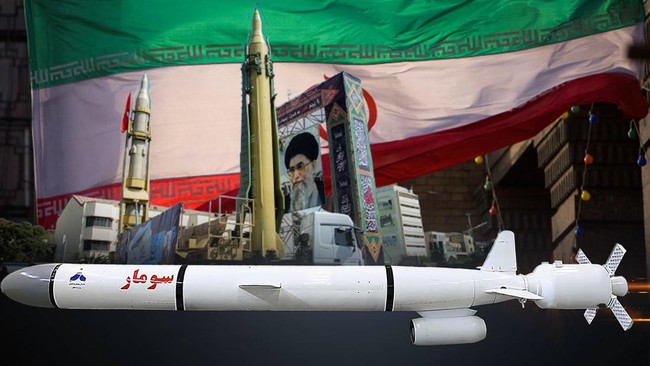
Tehran also has the potential to target more distant locations using its deadly missiles. The Iranian Foreign Ministry specifically highlighted US refuelling aircraft observed leaving Bulgarian territory, and warned that it could target the EU and NATO member state. ‘Iran has a legitimate right to target the point of origin and source of any act of aggression. Tehran has made clear that any action deemed to support US and Israeli military aggression against Iran constitutes, under international law, participation in the act of aggression,’ Baghaei said.
During the war, Iran has attacked 11 countries, a British military base in Cyprus, and islands in the Indian Ocean used by US forces. An attack on Bulgaria would mark a very significant escalation. ‘Iran will consider any country’s participation in or support for America’s economic war against the Iranian people as an act of war,’ Rezaei stressed.
Following the killing of Supreme Leader Ayatollah Ali Khamenei—who had previously banned nuclear weapons—by the US and Israel, the narrative among official Iranian circles has slowly shifted towards discourse on withdrawing from the Nuclear Non-Proliferation Treaty (NPT). Around half a tonne of highly enriched uranium that could be used to make weapons is currently still buried within Iranian territory, where US intelligence assesses Tehran is now increasingly restricting access to the storage sites.
The Iranian parliament is reportedly debating a bill to withdraw from the NPT. Rezaei also bluntly raised the possibility of his country beginning to assemble nuclear weapons. ‘The whole world says, “So the NPT has no effect?”. When America wages such a war, people ask: Why don’t we pursue our own nuclear weapons?’ he said.
Experts believe that Washington’s economic and military blockade will not make Iran abandon its main bargaining position of holding control over the Strait of Hormuz and demanding economic relief. Sina Toossi, a senior researcher at the Center for International Policy, highlighted Tehran’s resilience. ‘Iran retains its ability to distribute the losses imposed on it to the regional level by threatening energy flows, infrastructure and regional trade. The more comprehensive Washington tries to make the economic blockade, the more countries it needs to work with, and potentially the more actors Tehran will pressure in response,’ he said. ‘Build alternative routes where possible, while making clear that a total economic strangulation effort will not be cost-free for the region,’ he concluded.
Source: jawawa.id (https://jawawa.id/newsitem/iran-threatens-oil-catastrophe-and-nuclear-bombs-in-retaliation-against-us-sanctions-1787878256)
Originally published by CNBC Indonesia (https://www.cnbcindonesia.com/news/20260827162907-4-762835/ngeri-balas-sanksi-as-iran-ancam-kiamat-minyak-bom-nuklir), translated from Indonesian