
Iran Successfully 'Deceives' Trump, Trades Oil in Waters Off Indonesia
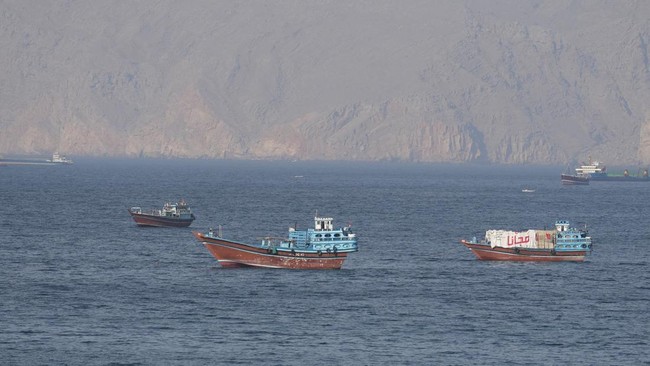
The Iranian oil tanker Humanity switched off its automatic identification system (AIS) while transiting the Outer Port Limits (EOPL) of Malaysia in the South China Sea last Saturday. The move is strongly suspected to be in preparation for a ship-to-ship transfer of crude oil cargo to an intermediary before shipment to China.
According to an Al Jazeera report on Thursday (30/7/2026), Iranian oil trading activity in the 1,200 square kilometre Malaysian EOPL area remains busy. These sales continue despite the war between the United States and Israel against Iran having lasted for five months, and the US naval blockade of Iranian ports being resumed since 14 July.
"Satellite data has recorded 62 vessels emitting false or inactive identities while moving between the Gulf, the EOPL, Hong Kong, and northern China since the start of this year. These vessels are part of an intermediary network facilitating the sale of Iranian oil to independent refineries in China," explained Ray Powell, Director of the SeaLight Maritime Security Monitoring Project at Stanford University.
Small-scale independent oil refineries in China, known as teapot refineries, are the main buyers of this discounted Iranian oil. Unlike China’s giant state-owned energy companies such as CNPC, Sinopec, and CNOOC, teapot refineries are relatively unexposed to the US financial system and are therefore more willing to risk sanctions.
The Malaysian EOPL area offers the advantage of calm waters and is located approximately 70 km offshore, historically making it a legal grey area. Although it lies outside Malaysia’s territorial sea, the area falls within the Exclusive Economic Zone (EEZ), which is difficult to patrol due to limited access and jurisdictional gaps. Maritime security expert Charlie Brown from YCAPS noted that on a typical day, up to 200 vessels may anchor in the EOPL area. Around half of the total vessels anchored there are estimated to have direct links to the Iranian oil trading network.
"From before the war through all phases of the current conflict, vessels out there remain anchored and conduct various ship-to-ship transfer operations. Sanctions have never stopped this trade; the only thing that physically halts the flow of oil is a military blockade," Brown stated.
In response to the rampant illegal activity, the Malaysian government amended its EEZ Act in June to take firm action against illegal anchoring, bunkering, and unauthorised cargo transfers. Nevertheless, satellite data on Thursday showed at least 18 Iranian-flagged tankers and 50 vessels subject to US or EU sanctions still operating in the EOPL.
The sale of Iranian oil to Chinese refineries is facilitated by China’s Cross-Border Interbank Payment System (CIPS), which enables transactions in yuan outside the US-monitored SWIFT network. Customs data shows Iran exported around 1.4 million barrels per day to China last year, although official Chinese customs reports disguised these imports as originating from Malaysia. China’s Ministry of Foreign Affairs has consistently rejected unilateral US sanctions and the use of extraterritorial jurisdiction, which it considers a violation of international law. Beijing even blocked US Treasury Department sanctions against five teapot refineries at the end of April to protect its domestic businesses.
"Last year Iran exported around 1.4 million barrels per day to China, but Chinese customs did not report any oil imports from Iran. At the same time, data reported Chinese imports from Malaysia far exceeding Malaysia’s own oil production capacity," said Erica Downs, Senior Researcher at Columbia University’s Center on Global Energy Policy.
US Treasury Secretary Scott Bessent stated that purchases of Iranian crude by Chinese refineries have actually fallen by about 40 percent since the war broke out. However, the existence of the black-market network in the Malaysian EOPL has proven successful in maintaining the remaining flow of Iranian oil exports to international markets.
Source: jawawa.id (https://jawawa.id/newsitem/iran-successfully-deceives-trump-trades-oil-in-waters-off-indonesia-1785426740)
Originally published by CNBC Indonesia (https://www.cnbcindonesia.com/news/20260730162846-4-755145/iran-sukses-kelabui-trump-berhasil-dagang-minyak-di-laut-depan-ri), translated from Indonesian