
Iran Struck Hundreds of US Facilities in the Middle East, Pentagon Reveals Heavy Losses
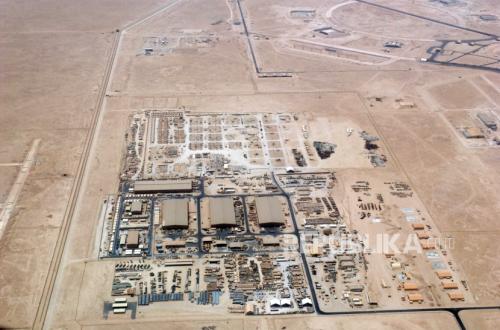
REPUBLIKA.CO.ID, JAKARTA — The Pentagon has for the first time released an official accounting of the damage to United States facilities and equipment as a result of the war with Iran. The report shows that Iranian strikes battered hundreds of buildings and structures at American bases scattered across at least eight Middle Eastern countries, while also draining part of Washington’s stockpile of critical munitions.
The special report was released by the Inspector General of the US Department of Defense on Monday (14/9/2026). Based on communications with US Central Command, or CENTCOM, the Pentagon’s watchdog stated that Iranian strikes during the first months of the war caused extensive damage to American military facilities.
“Iranian strikes damaged and destroyed hundreds of buildings and structures at US bases,” the report stated. The strikes were recorded as hitting US bases in Kuwait, Bahrain, Qatar, the United Arab Emirates, Saudi Arabia, Iraq, Oman and Jordan.
The report covers the period from the start of the war on 28 February until 30 June. Beyond the physical damage, the document acknowledges that the conflict has reduced American stocks of a number of critical munitions.
CNN previously reported that several strategic US assets, including missile defence radar installations, were destroyed in the early phase of the war. However, the inspector general’s report marks the Department of Defense’s first formal acknowledgement of the scale of the impact of those strikes.
The scale of Iran’s attacks has produced more than material losses. The Pentagon acknowledged that pressure from Iran and its proxy groups also forced CENTCOM to change patterns of American military operations that had been under way for years in the region.
CENTCOM relocated personnel, assets and storage facilities from a number of locations deemed increasingly vulnerable. These changes demonstrate that Washington can no longer treat some of its Middle Eastern bases as facilities relatively safe from direct attack.
One of the most visible changes concerned the medical evacuation system. US Army medevac helicopters were withdrawn from Iraq and Kuwait, meaning most medical evacuations must now be carried out overland towards local treatment facilities.
That situation risks lengthening the time taken to treat casualties in emergencies. In military operations, the ability to conduct rapid air evacuation has long been a crucial component of support for American troops stationed far from major medical facilities.
The most serious pressure was also felt in Bahrain. The US Navy’s regional headquarters in the country was reported destroyed as a result of Iranian strikes.
Acting US Navy Secretary Hung Cao previously described the facility as having been “pounded to smithereens” by Iran. The inspector general said the damage created major challenges for America’s ability to provide adequate naval bases and supporting ports.
The damage in Bahrain even altered America’s maritime logistics chain. Diego Garcia, an island located far out in the Indian Ocean, was subsequently used as one of the sea logistics hubs.
The consequences are far from trivial. The cycle for resupplying American troops and ships lengthened to approximately 14 to 18 days.
The disruption also led to periodic supply shortages. The military postal system in the region was likewise disrupted as American sailors had to endure long deployments in the Persian Gulf to support air strikes against Iran and the blockade of its ports.