
Iran Strengthens Control Over Social Spaces, Including Cafes
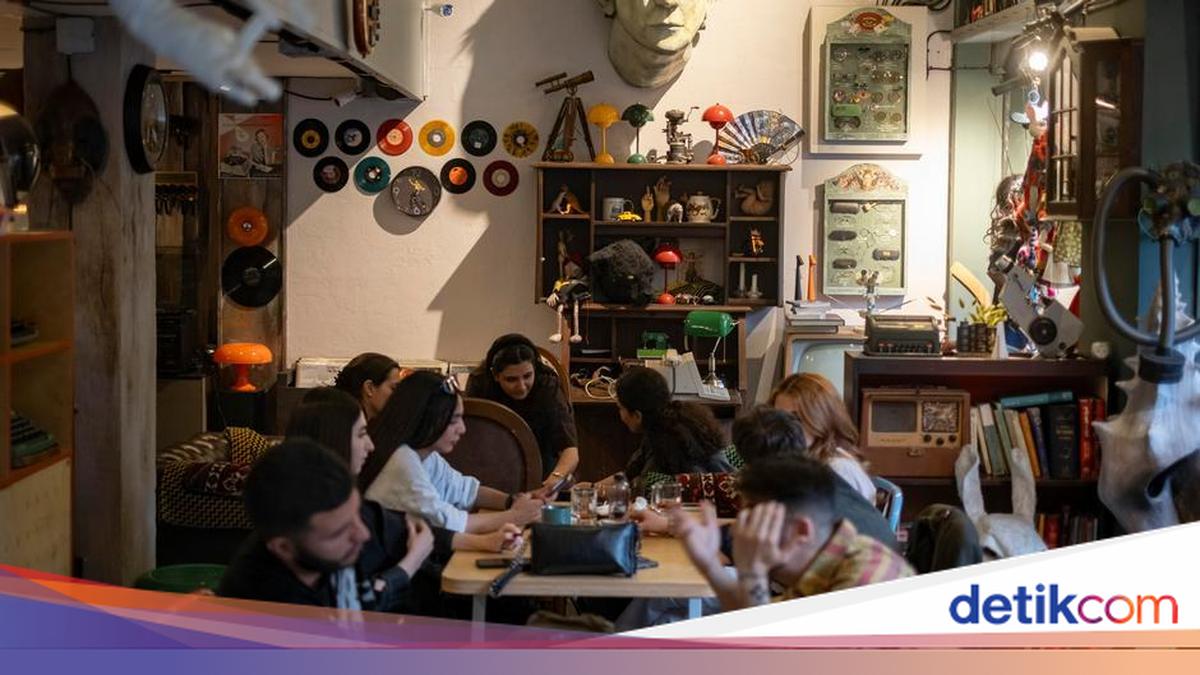
In recent months, Iranian authorities have tightened surveillance on cafes in the capital, Tehran. They are suspected of being breeding grounds for anti-government sentiment and facilitating protest actions.
According to the human rights organisation HRANA, at least seven cafes and restaurants were closed on 19 July alone due to alleged violations of mandatory hijab rules. Previously, several media outlets, including Javan, a newspaper affiliated with the Islamic Revolutionary Guard Corps (IRGC), described cafes as “gathering places for demonstrators” deemed a threat to “national security.”
Most recently, cafes in Tehran’s “Vanak Park” were sealed, resulting in at least 200 people losing their jobs due to the closures.
Tightening of social spaces
Authorities believe that cafes, due to their widespread presence and popularity, can play a role in organising mass protests. The government’s concerns are rooted in the recent wave of protests in Iran, which began on 28 December 2025 and evolved into the largest uprising in the country since the 1979 Islamic Revolution.
Saediniya, a prominent cafe chain with 10 branches in Iran, closed all its branches on that day as a form of support for the call for strikes. The chain was subsequently accused of conducting “propaganda against the state.” The Supreme Court of Iran has now upheld the sentence against Sadegh Saedinia, the owner of the chain, imposing a prison sentence of 12 years and 6 months, alongside the seizure of assets. He was arrested for supporting the protests, and all branches of his network were seized and closed by court order.
Other cafes, including “Lamiz” and “Voria,” faced similar fates. Voria is owned by a well-known Iranian footballer. Both were sealed by court order because they were deemed to be indirectly supporting calls for demonstrations. However, these closures are not limited to periods of active protest; the practice continues.
The rise of cafe culture
The number of cafes in Tehran has increased rapidly over the last decade, from approximately 300 in the early 2010s to as many as 4,000 today, according to various estimates. Experts link this growth to changes in urban lifestyles in recent years, viewing it not merely as the growth of a specific business type, but as a sign of broader social and cultural shifts within Iranian society.
“The rapid growth of cafes within society can, to a certain extent, be seen as a social response to living through prolonged crisis,” said Saba Alaleh, a clinical psychologist and psychoanalyst researching political and social issues, to the Persian-language service of DW. “In such situations, people are not just looking for a place to consume something or have fun. They are looking for a space to momentarily escape the pressures of daily life.”
“In this sense, the cafe becomes a third space. It is neither home nor workplace, but a space in between. There, people can momentarily detach from their daily roles and pressures, connect with others, and feel that life can still be lived reasonably and normally.”
This cafe trend is particularly popular among Generation Z, who bear the heaviest impact of uncontrollable inflation and the high cost of living in Iran. “The young people gathering in these cafes do not always come from wealthy families,” said Nasser, a cafe owner in Tehran, to DW. “In many areas of Tehran, middle-class youth also meet in cafes. Many of our customers belong to this group.”
Coffee with a political flavour
Even before the latest wave of national protests began late last year, the closure of cafes was already a common practice by the Iranian government. However, most of these crackdowns and closures were carried out under the pretext of enforcing mandatory hijab rules.
The protests that began in late December 2025 changed the situation. Cafes have increasingly become targets for various reasons. “They closed our cafe on the grounds that we serve customers not wearing hijabs. But that is just a pretext,” said Nasser. “Out there, on the streets of Tehran, women and girls have practically abandoned the mandatory hijab. But the government expects us not to allow them into the cafe.”
Maintaining control over social spaces
According to Alale_eh, the issue is no longer solely about policing women who do not wear the hijab. “Authoritarian governments generally attempt to control the flow of information, social interaction, and the organisation of citizens,” she stated. “Any space outside the direct supervision of the rulers that allows for the growth of trust, dialogue, and social bonds can weaken the government’s monopoly over social space.”
The expert noted that the crackdown on cafes and their patrons is part of the government’s effort to maintain its monopoly over social spaces. She emphasised that for security forces, even a group of young people sitting together casually can be viewed as the emergence of an independent social network outside formal power structures. “The more widespread and deep-rooted these independent networks become, the more difficult it is for the government to maintain exclusive control over public space,” said Alaleh.
Source: jawawa.id (https://jawawa.id/newsitem/iran-strengthens-control-over-social-spaces-including-cafes-1789102993)
Originally published by detikcom (https://news.detik.com/dw/d-8658086/iran-perkuat-kendali-atas-ruang-sosial-termasuk-kafe), translated from Indonesian