
Iran Says It Will Not Abandon Nuclear Technology at ‘Oppressors’ Demand
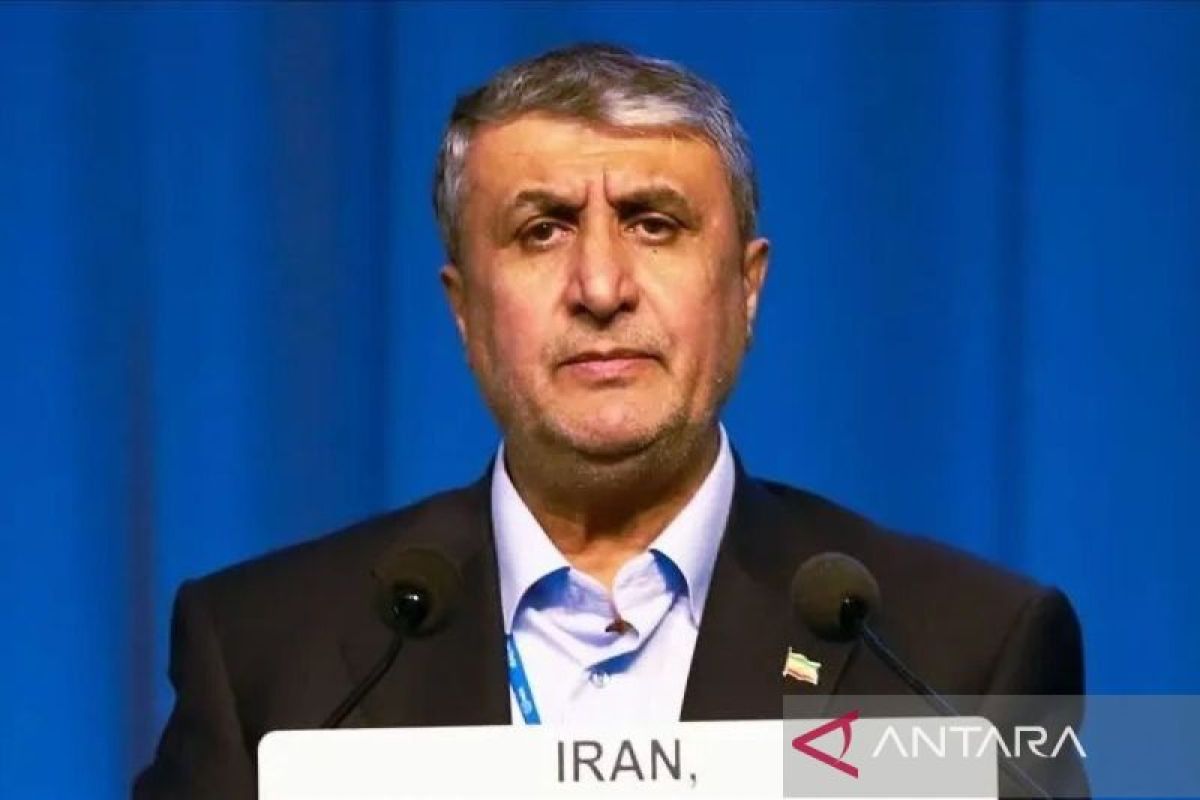
Tehran (ANTARA) – The head of Iran’s atomic energy agency has said the country will not abandon the development of its domestic nuclear technology simply because “oppressors” demand it.
Mohammad Eslami, head of the Atomic Energy Organization of Iran (AEOI), made the remarks while attending an international conference entitled “Ecocide, a Silent War Crime” in Tehran on Sunday (11 October).
Eslami stressed that the Iranian people should not lose their rights to their own scientific achievements merely because they refuse to submit to demands and policies imposed by others or to obey their orders, according to a statement published on the AEOI’s official website.
He said that despite facing sanctions, pressure, acts of sabotage and war for years, Iran had continued to make progress.
Eslami highlighted repeated threats by United States officials to attack Iran’s nuclear facilities using tactical weapons or even nuclear weapons. He stressed that the Iranian people would never surrender.
He also condemned US and Israeli attacks on Iranian nuclear facilities under the supervision of the International Atomic Energy Agency (IAEA), and expressed regret that the IAEA had failed to condemn the attacks.
Speaking on the sidelines of the same conference, AEOI spokesman Behrouz Kamalvandi said Iran would continue to pursue its national interests resolutely, the official Iranian news agency IRNA reported.
Kamalvandi stressed that Iran’s nuclear programme was entirely “peaceful and transparent” and remained under the IAEA’s continuous supervision.
On 28 February, Israel and the US launched joint attacks on Tehran and other Iranian cities. Iran responded with waves of missile and drone strikes targeting Israel and US bases and assets in the region. Iran also tightened its control over the Strait of Hormuz.
A ceasefire between the parties to the conflict was reached on 8 April. On 18 June, Iran and the US signed a memorandum of understanding (MoU) on ending the war on all fronts.
Under the MoU, the two countries were due to hold talks within 60 days, with a deadline of 17 August, to reach a final agreement on Iran’s nuclear programme and the lifting of sanctions. However, the two sides failed to make sufficient progress as tensions continued to rise.