
Iran Proposes Three Conditions to US to End War, Awaiting Trump's Response
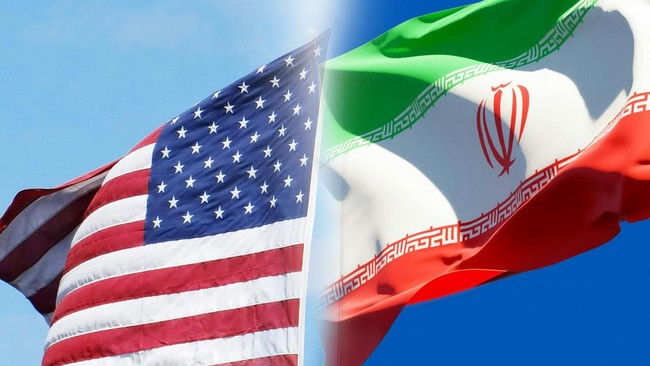
Iran has submitted a number of official conditions to the United States through Qatar, acting as a mediator, to end the war between the two nations. Tehran is currently awaiting a response from US President Donald Trump.
Mohsen Rezaei, Secretary of Iran’s Supreme National Security Council, stated that Qatar has conveyed Iran’s requirements to Washington in an effort to pave the way for ending the conflict. “We remain in contact with the Qatari mediator, who has conveyed our conditions to Washington with the aim of ending the war. We are awaiting President [Donald] Trump’s answer,” Rezaei said, quoting Al Jazeera on Sunday (20/09/2026).
Rezaei mentioned that Iran has proposed three main conditions to the US: the cessation of war on all fronts, the release of frozen Iranian funds, and the end of the naval blockade. “Our conditions are to end the war on all fronts, release our frozen funds, and end the naval blockade,” he stated.
According to Rezaei, it is in the interest of the US to accept these terms. He emphasised that Iran will not alter its stance due to threats from Washington. “It is in Washington’s interest to accept these conditions. Trump’s threats will achieve nothing. We are prepared to face a decisive war,” he asserted.
Qatar and Pakistan have been working to reopen negotiation channels between Iran and the US after the memorandum of understanding (MoU) between the two parties expired last month. Several countries in the region are also pushing for an end to the war, which began after the US and Israel launched attacks against Iran in late February. Those attacks resulted in the death of Iran’s Supreme Leader, Ayatollah Ali Khamenei.
Rezaei did not rule out the possibility of the US launching further attacks against Iran. According to Tehran’s military assessment, he noted that such a possibility remains very much open. However, he emphasised that Iran has prepared itself to face such a scenario.
Rezaei noted that Iran’s military strategy has undergone changes following the previous two rounds of conflict. Tehran is reportedly now focusing its military planning on US naval assets located from the Persian Gulf to the Gulf of Oman and the Arabian Sea. Meanwhile, targets further away, extending to the Indian Ocean, are said to be beyond Iran’s reach.
Rezaei also revealed that Iran recently conducted anti-ship missile tests with several warheads near US ships or aircraft carriers. According to him, the technology of these warheads still has the potential for further development. He warned that if a new attack occurs, Iran’s response will be carried out with great force.
The targets would not be limited to US military bases in the region, as seen in previous conflicts, but would also include US commercial interests and companies operating locally. When asked if the war would end soon, Rezaei stated that, in practical terms, the conflict is still ongoing. “In practical terms, the war is still ongoing,” he said.
However, he maintained that Tehran is now implementing a new strategy to accelerate the end of the conflict. “We are working based on a new strategy to end this war as soon as possible,” he added.
On the other hand, former Pentagon Director for Arabian Peninsula Affairs, David Des Roches, assessed that Washington is unlikely to view Iran’s requirements as a serious opening for negotiations. “At first glance, it may not look serious; they will view it as a surrender,” Roches told Al Jazeera.
Nevertheless, he noted a change in Tehran’s position. One notable point is that Iran no longer includes demands for war reparations that were previously submitted. “The first thing you notice is that he has removed the demand for reparations, which was previously put forward by Iran,” said Roches.