
Iran Opens University Doors to Hijab-Wearing Azerbaijani Students
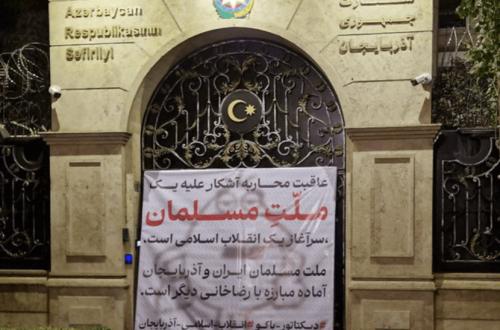
TEHRAN — The Iranian government has offered female students from Azerbaijan the opportunity to pursue higher education at Iranian universities without having to remove their hijab. The offer was made by Iran’s Minister of Science, Research and Technology, Hossein Simaei, amid controversy over school dress rules in Azerbaijan that have affected Muslim girls who wear headscarves.
In a video message released by the Iranian government on Thursday (22 October 2026), Simaei said the country’s universities were open to Azerbaijani women who wished to pursue education while maintaining their religious beliefs.
“As Minister of Science of the Islamic Republic of Iran, I declare that the doors of Iran’s universities are open to women from Azerbaijan who wish to study,” Simaei said, according to the Iranian government’s official website.
He said Iran could provide a welcoming environment for Muslim women who feel they must remove their hijab to exercise their right to education.
“We can be good hosts to the believing daughters of the Prophet who are forced to abandon their religious hijab in order to exercise their right to education,” he said.
The statement referred to controversy over school uniform rules in Azerbaijan, which has prompted protests by students, parents and community groups. Although the Azerbaijani government’s rules do not explicitly ban the hijab, their implementation in some schools has reportedly resulted in hijab-wearing girls being barred from lessons.
The dispute began after the Azerbaijani government tightened uniform requirements in state schools. On 21 September 2026, the Cabinet of Ministers issued Resolution No. 309, setting out rules on student clothing in line with the principles of secular education.
The rules prohibit additional clothing deemed to disrupt uniformity or conflict with secular principles. However, they do not explicitly identify the hijab as prohibited clothing.
In practice, some schools have interpreted the rules as a ban on headscarves. As a result, some girls have reportedly been told to remove their hijabs or have been denied entry to class.
Radio Free Europe/Radio Liberty reported on 14 October that similar complaints had emerged in Baku and other regions. Some students then boycotted lessons in solidarity with classmates affected by the rules.
Azerbaijan’s Interior Ministry said 37 people were detained in Baku on 12 October in connection with opposition to the new rules and alleged attempts to disrupt public order.
Human rights organisation Amnesty International called on the Azerbaijani government on 16 October to end restrictions that prevent girls from attending school because they wear a hijab. The organisation said excluding students on the basis of religious clothing violates their rights to education, freedom of religion and freedom of expression.
Azerbaijan is a Muslim-majority country, but its constitution separates religion and state and guarantees freedom of religion. The government has defended the school uniform rules as a way of upholding the secular character of state education.
For Iran, the hijab issue in Azerbaijan has also become a point of focus in bilateral relations. Iranian Foreign Ministry spokesman Esmaeil Baqaei previously said he hoped the controversy could be resolved through dialogue, respect for fundamental rights and an understanding of the two countries’ shared values.
Iranian lawmakers have also voiced concern over reports that hijab-wearing girls are being denied access to education. On 18 October, Mohammadreza Mohseni Sani, a member of the Iranian Parliament’s National Security and Foreign Policy Commission, said he had written to Sahiba Gafarova, Speaker of Azerbaijan’s National Assembly, to express concern about the matter.
The Azerbaijani government, however, continues to defend its uniform policy as part of its commitment to secular education. It is therefore unclear whether Iran’s offer will lead to more Azerbaijani women pursuing their studies there.
Simaei’s offer presents higher education as one option for women seeking to maintain their religious identity. It does not, however, resolve the underlying issue facing pupils in Azerbaijan: how to ensure they can continue their education in their own country without having to choose between their beliefs and attending school.