
Iran Offers to Reopen Strait of Hormuz in Four Days as Gulf States Pursue Major Deal with US
JAKARTA — Several Gulf states are pursuing a major diplomatic agreement to prevent war between the United States and Iran from breaking out again. Amid those efforts, Tehran has reportedly said it is willing to speed up the reopening of the Strait of Hormuz to within four days, after the economic sanctions it has made a condition are lifted.
The development may signal an important shift in negotiations that have been stalled for months by differences between Washington and Tehran. However, reopening the strategic shipping route still depends on agreement over sanctions, regional security and Iran’s nuclear programme.
The British newspaper The Guardian reported on Wednesday (28 October 2026) that several Gulf states are working on a draft peace agreement to prevent a renewed war between the United States and Iran. The draft includes reopening the Strait of Hormuz, efforts to resolve the Yemen conflict and the creation of a long-term security framework for the Middle East.
According to the report, Iran’s Deputy Secretary of the Supreme National Security Council, Ali Bagheri, said Tehran was willing to shorten the period for reopening the Strait of Hormuz from seven days to four after economic sanctions on Iran were lifted. The proposal remains part of the diplomatic process and has not been agreed to by the United States.
The change is one of the most concrete developments in the negotiations. Even so, the four-day offer does not mean Iran and the United States have reached an agreement, or that shipping will soon return to normal.
Washington is reportedly aware of the discussions but still wants further concessions from Iran. One concern for Western countries is access for international inspectors to Iranian nuclear facilities damaged in military strikes.
These differences in interests have prevented diplomacy from producing a resolution. Iran wants guarantees that sanctions will be lifted, while the United States and European countries are demanding steps to address their concerns about Tehran’s nuclear activities.
From Seven Days to Four
Iran’s willingness to consider a shorter timetable for reopening Hormuz has a lengthy diplomatic background.
In September 2026, Iran proposed a phased plan that would allow the strait to reopen after the United States met several conditions. These included ending the blockade of Iranian ports, easing sanctions on oil sales and providing guarantees that the ceasefire would continue.
The Associated Press previously reported that the proposal set out the resumption of shipping and the continuation of negotiations over a period of about a week. However, differences between the two countries meant no agreement was reached.
On 25 October, Iran’s ambassador to Pakistan, Reza Amiri Moghadam, again stressed that Tehran remained open to negotiations with Washington. He said Iran had conveyed an offer to reopen Hormuz through Pakistan if the United States lifted its naval blockade.
The statement shows that the main issue is not simply how long it would take to reopen the strait. The two sides still disagree over which actions should come first and how their implementation would be guaranteed.
For Iran, the removal of economic measures and restrictions on shipping is an important precondition for making concessions. Washington, meanwhile, wants assurances that a resolution over Hormuz will not set aside broader security concerns.
The shift from seven days to four is therefore better understood as a change in Iran’s negotiating position, rather than a diplomatic breakthrough that would, by itself, end the deadlock.
Saudi Arabia, Turkey and Pakistan Travel to Tehran
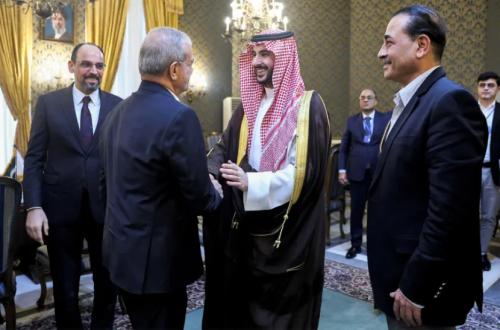
Efforts to find a way forward are also under way through regional diplomacy. On Monday (26 October 2026), senior officials from Saudi Arabia, Turkey and Pakistan visited Tehran to discuss regional security with Iranian officials.
The meeting was attended by Saudi Defence Minister Prince Khalid bin Salman, Pakistan’s Chief of Army Staff, Field Marshal Asim Munir, and Turkey’s intelligence chief, Ibrahim Kalin.
The Iranian delegation was led by Secretary of the Supreme National Security Council Mohsen Rezaei, with Foreign Minister Abbas Araghchi also participating.
A joint statement issued after the meeting said the four countries had agreed to continue dialogue to strengthen cooperation, including on regional peace and security.
The Associated Press reported that the talks took place amid concerns among Middle Eastern countries about a renewed conflict involving Iran, the United States and Israel.
Iranian President Masoud Pezeshkian welcomed efforts to expand regional cooperation and resolve differences among countries in the region. The position reflects Tehran’s desire to make its neighbours an important part of resolving the crisis.
However, the joint statement by the four countries did not announce an agreement on reopening the Strait of Hormuz or ending the Yemen conflict. So far, the outcome officially confirmed is a commitment to continue discussions.