
Iran May Escape War, but Faces Internal Collapse
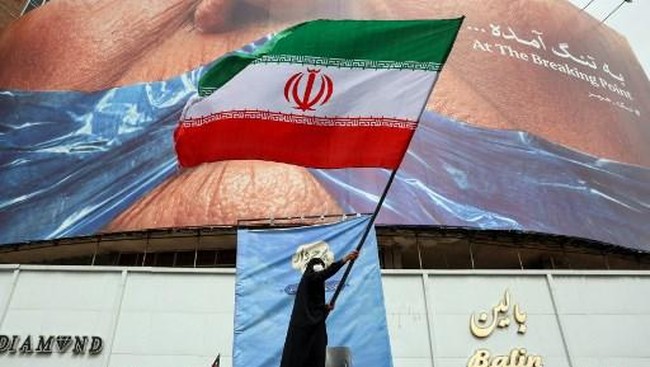
Iran faces significant challenges as it prepares to enter a period of peace following prolonged warfare. Amid hopes for the end of conflict, the nation is shadowed by threats of hyperinflation, an economic contraction of up to 10%, power outages, and rising public dissatisfaction that threatens to trigger new social unrest.
“The economic crisis and dissatisfaction regarding livelihoods are clearly increasing, even without precise statistics. We are witnessing unprecedented price surges due to maritime blockades and the impact of war,” said Fuad Habuna, a sociology professor at the University of Kurdistan, as quoted by The Guardian.
He also highlighted internet restrictions, which are said to have caused at least 2 million people to lose their jobs, directly or indirectly. Debates regarding Iran’s future direction are emerging in the public sphere. Some factions are pushing for greater openness post-war, while others believe Iran must strengthen economic self-reliance and national development after demonstrating resilience against external pressures.
However, economic recovery is expected to be difficult. Several economists estimate war losses at approximately US$270 billion, covering damage to infrastructure, schools, energy facilities, the steel industry, and the housing sector. Great hope is placed on the possibility of the United States easing sanctions under President Donald Trump. Nevertheless, many Iranian economists believe any potential aid will be insufficient to cover the scale of the economic losses incurred.
Economic pressure is intensifying as Iran’s food inflation reached 130% annually in May, the highest since World War II. Meanwhile, inflation for meat and poultry surged to 176%. This situation has raised concerns among health experts regarding rising cases of malnutrition, osteoporosis, and growth disorders due to decreased consumption of nutritious products.
Former Iranian Minister of Communications, Mohammad Javad Azari Jahromi, warned that the greatest post-war threat could come from the economic sector. According to him, inflation has the potential to become a new “bomb” hitting society through the rising cost of living and house rents. President Masoud Pezeshkian has repeatedly warned the public about the difficult times ahead, as the government attempts to maintain social stability while addressing war-damaged infrastructure.
In the energy sector, the government has denied reports that two-hour daily rolling blackouts will soon be implemented. However, Arash Najafi, Chairman of the Energy Commission of the Iran Chamber of Commerce, warned the public to prepare for the possibility of daily outages to ensure the continuity of national production.
On the other hand, the gradual lifting of internet restrictions has reopened space for public discussion. However, this move has sparked fierce debate among hardline politicians, some of whom have attempted to impeach the communications minister for being too lenient regarding information access.
In addition to economic pressure, civil liberties are also under scrutiny. Several reformist groups are urging the government to halt the execution of political prisoners and reduce repressive actions that are seen to deepen internal divisions. At least 22 political prisoners were reported executed between 17 March and 27 April.
Observers believe the greatest test for the current Iranian administration is no longer the ability to survive war, but the ability to manage peace. If economic sanctions continue and the flow of foreign investment, technology, and capital does not arrive, the war damage is feared to become a permanent condition, leaving the population trapped in a cycle of scarcity, exhaustion, and prolonged instability.