
Iran Losing Its Grip, Allies Begin to Defy and Lack Unified Command
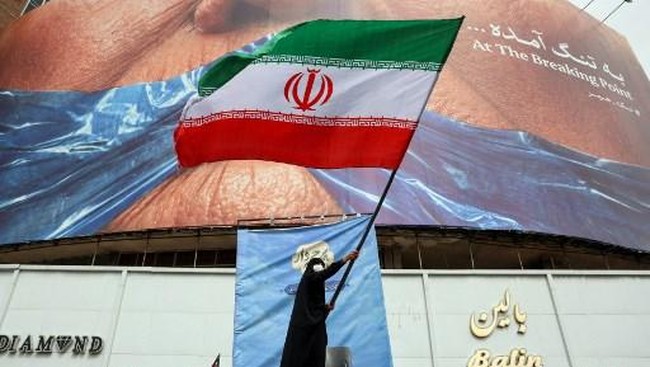
For years, Iranian officials have echoed the term ‘Axis of Disobedience’ (Axis of Resistance), referring to a network of allies from Beirut to Sana’a that would unite against a common enemy. However, when Iran was attacked twice in the last 15 months, each group instead made different decisions regarding their involvement in the conflict.
The Axis of Resistance may not be dead, but its brand is assessed to be larger than its actual operational strength. Iran’s strategy of supporting Arab militias began in the 1980s, when the Islamic Revolutionary Guard Corps (IRGC) sent forces to train Hezbollah fighters in Lebanon. These groups were viewed as a substitute for Iran’s relatively weak conventional military forces.
These militias served as a frontline defence, as well as a tool for projecting Iranian power without having to bring war directly to Iranian territory. However, this strategy has clearly failed to fulfil its defensive function. The Hamas attack on 7 October 2023 triggered a series of wars that ultimately made Iran itself a target of attacks. Hezbollah and Hamas are now drastically weakened.
The Bashar al-Assad regime in Syria has fallen, while the Iraqi government has ordered militia groups to disarm by October at the latest. A number of regime opponents hope that Iran will be forced to reduce its support for the militias, perhaps as part of an effort to reach a deal with the United States. Such a move is assessed as being able to trigger the collapse of the Axis of Resistance. However, that possibility is small.
The militias are indeed wounded, but still alive. In fact, Iran’s strategic reason for maintaining support for them is now even stronger. The problem is that the Axis of Resistance will also face difficulties in being rebuilt as a single entity. The ‘parent company’ in Tehran is running out of resources, while several of its ‘subsidiaries’ are poorly managed. The more likely possibility is that each group will continue to survive, but will increasingly act independently.
Some will become Iranian wards, strictly controlled but used in a limited capacity. Others may ‘graduate’ from the Axis of Resistance. Other groups may turn into ‘wild allies’—clients that have the option to seek new protectors. Ironically, Iran is likely to tighten control over the groups that have suffered the heaviest blows to their military capabilities.
Hezbollah: From Strong Proxy to Iranian Ward
Hezbollah was once Iran’s most feared proxy. Until 2023, the group possessed more than 100,000 rockets and missiles directed at Israel, as well as trained commando forces that gained combat experience in efforts to defend the Bashar al-Assad regime in Syria. Hezbollah’s charismatic leader, Hassan Nasrallah, killed by Israel in 2024, viewed himself not merely as an Iranian proxy. He was a supporter of Iran’s revolutionary ideology, but still sought to maintain a certain level of autonomy. Now, the situation has changed.
Nasrallah’s successor, Naim Qassem, is viewed as a mid-level management figure who is not very popular. Israeli attacks have also killed many of Hezbollah’s experienced commanders. The Lebanese government is demanding that Hezbollah surrender its weaponry, which is now far more limited. With many commanders dead, the IRGC has sent its own personnel to Lebanon to directly control the group. This situation has left Hezbollah with increasingly narrow room for manoeuvre, including when it eventually re-engaged in war with Israel in March. At the same time, Hezbollah’s popularity within Lebanon has also plummeted sharply.
For Iran, maintaining Hezbollah is now not solely because of what the group can still achieve, but because the loss of Hezbollah would be a major symbol of the weakening of Iranian influence in the region.
Houthi: An Increasingly Independent Ally
On the other hand, there are the Houthis, a group considered the most independent among Iran’s allies. The Houthis were originally a local rebel group in northern Yemen that emerged in the 1990s. It was only decades later that Iran provided large-scale financial and military assistance. This aid drastically increased their capabilities. From a group once dismissed as mere armed fighters, the Houthis now possess anti-ship missiles to disrupt shipping in the Red Sea and air defence systems capable of shooting down American Reaper drones.
However, the Houthis maintain their autonomy. Their involvement in the war after 7 October 2023 has fluctuated and is determined more by their own interests than by instructions from Tehran. The Houthis’ ability to produce their own weapons is also continuously increasing. They have even begun building their own alliances, including with al-Shabaab, a group affiliated with al-Qaeda that controls much of Somalia. Houthi delegations have also visited Russia and held talks with China.
Iran and the Houthis are likely to maintain shared interests. Both are equally hostile to the United States, Israel, and Saudi Arabia. However, having shared interests does not mean the Houthis will accept orders from Tehran.
Between Hezbollah and the Houthis, there are groups that are increasingly becoming ‘wild allies’. Many Shia militias in Iraq are products of the US-led invasion in 2003. Since then, Iran has poured weapons and money into Iraq to counter American interests. However, two decades later, the priorities of these groups have changed. Iran remains an ally, but their primary protector is now the Iraqi state, which has more than 200,000 militia members on its payroll. Some militias did indeed launch attacks against US bases at the beginning of the year.