
Iran Holding World Economy Hostage, Hot Potato in Trump's Hands
The deadlock in negotiations between the United States and Iran is considered more than just a routine diplomatic issue. In the eyes of several observers and former diplomats who were involved in the release of American hostages in Iran, the pattern currently used by Tehran resembles the hostage negotiation tactics the Islamic Republic has long employed.
A former US diplomat who was involved in negotiations for the release of Americans from Evin Prison assesses that Iran always views negotiations through the concept of ‘ownership’. He described the experience of dealing directly with Iranian security officials in various hostage negotiations.
‘They have something we want, and they will hold onto it until we are willing to pay a sufficient price,’ he wrote, as quoted from CNN International, Tuesday (9/6/2026).
According to him, this approach differs from Washington’s, which generally relies on economic pressure, sanctions, and political power to force opponents to meet demands. Conversely, Tehran seeks to increase its bargaining value by controlling assets or interests needed by the other party, then holding them until the desired concessions are obtained.
This pattern was clearly visible in the prisoner exchange agreement in September 2023. At that time, the US and Iran agreed to the release of five Americans detained in Iran. As part of the deal, Washington agreed to transfer $6 billion of Iranian funds, approximately IDR 108.57 trillion, from South Korea to Qatar through a special mechanism that could only be used for humanitarian transactions.
However, the situation changed drastically after Hamas’s attack on Israel on 7 October 2023. Washington subsequently restricted Iran’s access to these funds again, so that until now the funds remain unavailable for free use by Tehran.
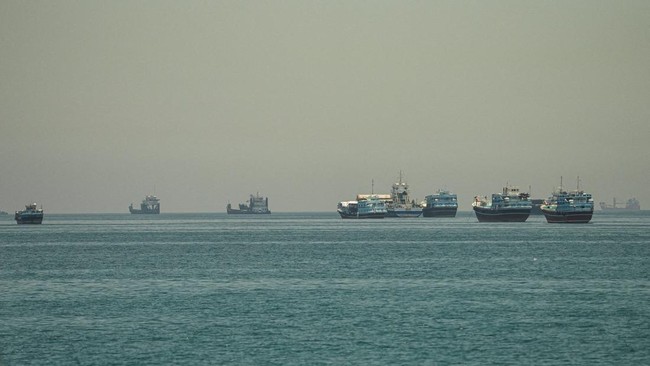
Now, according to the analysis, Iran is applying the same logic on a much larger scale. If previously the bargaining chip was detained US citizens, this time what is at stake is access to the Strait of Hormuz, one of the world’s most vital energy routes, which accommodates about a fifth of global oil trade.
This view is reinforced by a statement from the military advisor to Iran’s Supreme Leader, Mohsen Rezaei. He stated that the Strait of Hormuz will not be reopened until the US releases Iran’s frozen assets worth $24 billion, or about IDR 434.28 trillion.
‘You must release it. If Trump is serious about these negotiations, then this $24 billion is a test of trust. This is a test that America must pass,’ Rezaei said.
The demand includes the $6 billion fund that was previously part of the 2023 prisoner exchange deal. For Tehran, this demand shows that the current talks are viewed as a continuation of the same negotiation model, only with much higher stakes.
On the other hand, President Donald Trump’s administration is trying to reverse Iran’s bargaining position through more aggressive economic pressure, including efforts to suppress the country’s oil exports. This strategy aims to inflict greater economic losses on Iran than the gains it could achieve by maintaining the deadlock.
However, hardline figures who now hold significant influence in Tehran are believed not to be easily swayed. Iran assesses that the US faces mounting global economic pressure due to disruptions in energy trade and international shipping lanes, leading Washington to be seen as needing a deal more than Tehran does.
This condition leaves the US with increasingly limited options. Washington can continue to hold out while waiting for economic pressure to hit Iran, pay the demands put forward by Tehran to restore conditions before the conflict, or take military action to secure the strategic shipping lane. Each option, however, carries significant political, economic, and security risks.
As long as the balance of bargaining power remains unchanged, Iran is believed to continue holding onto its strategic assets. Consequently, negotiations between the two countries potentially remain deadlocked, without any meaningful breakthrough in the near future.