
Iran Grinds to a Halt, Traders Bankrupt as Citizens' Living Conditions Worsen
Iran Grinds to a Halt, Traders Bankrupt as Citizens’ Living Conditions Worsen
Prolonged internet shutdowns in Iran, implemented as a policy, are reported to be starting to slow the country’s economy. The impact of this digital outage has not only hit the macro business sector but has also left living conditions of civilians across the country increasingly precarious.
According to NetBlocks, a neutral watchdog of internet access, the estimated economic losses suffered by the Islamic Republic of Iran due to restrictions on internet access have surpassed an eye-watering figure of more than US$2.6 billion (about Rp46 trillion).
NetBlocks founder Alp Toker said the internet blackout’s impact extends beyond the digital economy, affecting the informal sector and independent businesses that have long underpinned household livelihoods. ‘There is a large impact, not only on Iran’s digital economy but also more broadly, including the informal economy, independent trade, and unofficial businesses,’ he said.
Iranian media outlet Donya-e Eqtesad even described the outage as a ‘silent earthquake’ that cripples the country’s economy, on a scale comparable to the impact of airstrikes by the United States and Israel. The newspaper estimates Iran’s economic losses at more than four quadrillion rials, or roughly US$2.5 billion (Rp44 trillion) at open-market rates.
SMEs Go Bust
The massive digital restrictions, initially imposed in response to geopolitical tensions and domestic security concerns, have now become a boomerang for the local trading sector. The majority of micro, small and medium-sized enterprises (MSMEs) in Iran have been badly hit by the loss of connectivity.
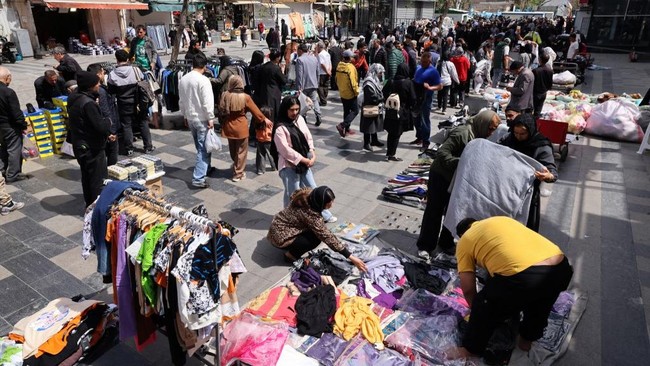
Amir, a clothing retailer in Tehran, said his line of business is now on the brink of bankruptcy. He had relied on global social media platforms such as Instagram to market products and reach customers. The internet blockade cuts Amir off from consumers and threatens the survival of his business.
People Cut Off
The digital paralysis that has persisted for months has also left Iranians isolated from the outside world. People struggle to access digital banking services, logistics transactions are disrupted, and communication with relatives abroad has been completely severed. The domestic economy, already strained by international sanctions, has been further worsened by the loss of the digital economy ecosystem.
Observers warn that if the government does not restore internet access promptly, the potential financial losses to the state will continue to swell and could trigger waves of mass bankruptcies in the private sector that depends entirely on information technology.
Iran has a population of around 90 million, with smartphone usage reportedly at 134%.
Women in Vulnerable Positions
Iran’s Vice President for Women’s Affairs, Zahra Behrouz Azar, warned that women are the group most affected by the internet blackout. She said that the majority of self-employed workers and small business owners in Iran are women who rely on e-commerce platforms and social media to sell goods and services.
Meanwhile, a senior official at the Tehran-based Chamber of Commerce, Industry, Mines and Agriculture of Iran said the internet ban has triggered a ‘large wave’ of unemployment. Industry actors had previously warned that internet disruptions were costing Iranian businesses between US$30 million and US$40 million per day.
Source: jawawa.id (https://jawawa.id/newsitem/iran-grinds-to-a-halt-traders-bankrupt-as-citizens-living-conditions-worsen-1779542212)
Originally published by CNBC Indonesia (https://www.cnbcindonesia.com/tech/20260522113851-37-737020/iran-lumpuh-total-pedagang-bangkrut-kondisi-warga-memprihatinkan), translated from Indonesian