
Iran Fracturing? IRGC Reportedly Begins to Strip Mojtaba Khamenei's Power
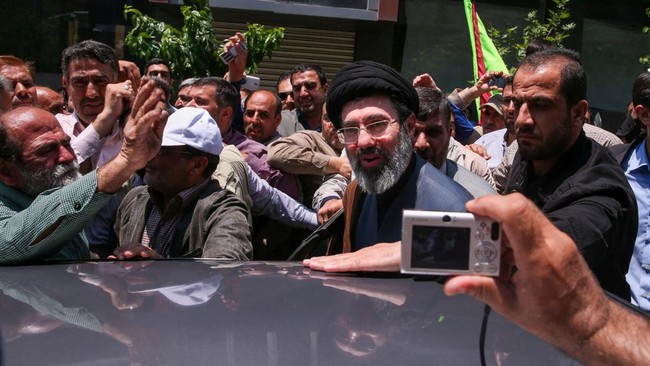
Iran’s power structure is reportedly experiencing a drastic shift after the Islamic Revolutionary Guard Corps (IRGC) took full control of the country’s strategic decisions amid the war against the United States (US) and Israel. Citing a Reuters report on Tuesday, this new order emerged following the death of Ayatollah Ali Khamenei, who had long held sole authority in Tehran.
Although the late leader’s son, Mojtaba Khamenei, has ascended to the throne as Supreme Leader, several internal sources describe his position as merely providing approval or legitimacy to decisions already formulated by IRGC generals. Mojtaba’s condition, suffering from severe injuries from an airstrike at the start of the war, has left him isolated and rarely appearing in public.
“Iranian citizens are very slow to respond. It seems there is no single decision-making command structure. Sometimes, it takes them 2 to 3 days just to respond,” said a senior Pakistani government official involved in peace mediation between Iran and the US, quoted on Wednesday (29/4/2026).
This military dominance in Iranian politics has been triggered by the wartime emergency, centralising power in the Supreme National Security Council (SNSC) and field commanders. Ahmad Vahidi, the IRGC commander, is mentioned as the most influential figure currently, directing combat strategies as well as ceasefire negotiations.
Analysts assess that Mojtaba’s current role is no longer command-oriented like his father’s, but rather focused on maintaining institutional consensus to keep the regime appearing solid. However, in practice, the influence of the clergy is being eroded by the dominance of the security sector.
“It is important to note that major agreements may pass through him, but I cannot imagine him daring to veto decisions of the National Security Council. How could he oppose those carrying out the war effort?” said Iranian analyst Arash Azizi.
On the other hand, negotiations with Washington remain at an impasse despite Iran proposing a new plan separating the nuclear issue from resolving the Gulf conflict. The US insists that the nuclear matter must be addressed from the outset, while the IRGC is reluctant to appear weak at the diplomatic table.
Former US negotiator Aaron David Miller describes this phenomenon as a fundamental shift in how Iran is governed, where the influence of “hard power” now far surpasses the “divine power” of the clergy.
“We have shifted from divine power to hard power. From the influence of the clergy to the influence of the Revolutionary Guard Corps. This is how Iran is ruled now,” Miller said.
To date, Iran’s Foreign Ministry has not provided an official comment on reports of this power structure fracture. However, Tehran officials have previously always denied any internal cracks in facing external pressures.