
Iran Delegation Walks Out, Peace Negotiations with US on the Brink
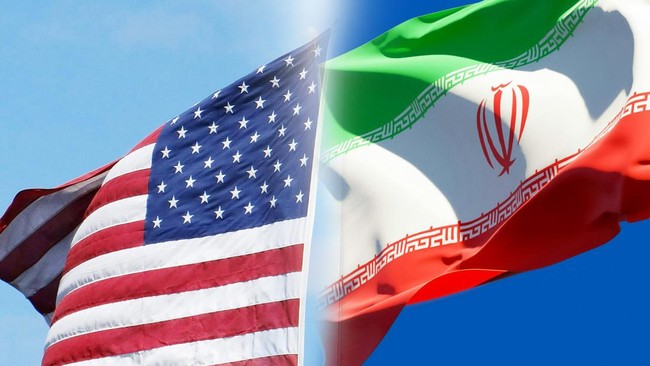
Crucial negotiations between the United States and Iran in Switzerland suffered a serious jolt after the Tehran delegation temporarily suspended talks and walked out of the negotiating table in protest against a series of threats made by US President Donald Trump. The move occurred as both countries were actually seeking to follow up on a memorandum of understanding signed the previous week to ease tensions in the Middle East.
The temporary suspension of talks has cast uncertainty over the future of the ongoing diplomatic process. It remains unclear whether the Iranian delegation’s walkout is a permanent step or merely a symbolic protest.
However, before leaving the face-to-face negotiations in Bürgenstock, Switzerland, on Sunday local time, both sides reportedly reached a draft agreement on a mechanism for the US to grant exemptions to sanctions on Iranian oil exports. The agreement on oil sanctions relief is one of the main conditions put forward by Tehran before discussions on Iran’s civilian nuclear programme can progress further.
Iranian officials claimed the sanctions exemption would be issued soon. They also mentioned progress had been made regarding efforts to unfreeze Iranian assets long held in foreign bank accounts.
Iran and the US signed a memorandum of understanding last week designed to end the blockade of the Strait of Hormuz, while paving the way for 60 days of negotiations on Iran’s civilian nuclear programme.
However, the negotiating atmosphere turned tense after various statements made by Trump on social media and in television interviews reached the negotiation site. The Iranian delegation deemed the threats unacceptable, considering them to endanger the personal safety of the negotiators.
According to the Iranian side, the memorandum of understanding signed by Trump and Iranian President Masoud Pezeshkian last week also included a non-aggression pact. Therefore, the threats issued by the US president were seen as contradicting the spirit of the newly reached agreement.
Trump’s harsh tone also contrasted with the approach displayed by US Vice President JD Vance. Vance had previously stated that he was directly tasked by Trump to open a new chapter in relations between Washington and Tehran through diplomatic channels.
The head of the Iranian delegation, Mohammad Bagher Ghalibaf, responded to the threats with a firm tone.
‘Do they not think that if their threats had any influence, they would not have reached the desperation they now face? We do not take American threats into account at all,’ Ghalibaf said, as reported by The Guardian.
Nevertheless, domestic political pressure in Iran also reportedly influenced the delegation’s decision to leave the negotiations. The negotiators faced demands from domestic political circles to demonstrate distrust towards Trump’s negotiating team.
The situation had previously become complicated after Iran announced the re-imposition of a blockade in the Strait of Hormuz in protest against continued Israeli attacks in Lebanon. Tehran accused Trump of allowing Israel to violate the memorandum of understanding signed the week before. According to Iran, the document explicitly calls for a cessation of hostilities on all fronts of the conflict. However, on Saturday, Israeli strikes in central and southern Lebanon reportedly killed more than 30 people.
Responding to these developments, Trump again issued a stern warning to Iran. ‘Iran must immediately stop their proxies in Lebanon who are paid handsomely to cause trouble,’ Trump wrote on social media. ‘If they do not, we will hit Iran again, very hard.’
In a 20-minute telephone interview with Fox News, Trump also hinted at the possibility of further action regarding the Strait of Hormuz. ‘We might take over the strait if necessary. If they don’t make a deal, we will charge a fee.’
When discussing the Strait of Hormuz, Trump even made a statement that Iran considered a direct threat against the negotiators. ‘You close it and you won’t have a country. You won’t even be able to return to your own country.’
The statement prompted a formal protest from Iran to the mediators. The Iranian delegation demanded that what they called acts of intimidation by Trump be brought under control immediately.
Amid the heating situation, JD Vance attempted to calm the atmosphere by highlighting the progress made in efforts to de-escalate the conflict in Lebanon. According to Vance, the path to peace is never smooth. ‘These things are always a little bit complicated.’
Unlike Trump, Vance adopted a more diplomatic approach towards Iran. ‘What the president has asked us to do is to turn a new page, to change our relationship with the Iranian people and to extend a hand to them, saying to the Iranian people that if their leadership is willing to stop being a driver of regional instability, if they are willing to abandon their long-term nuclear weapons ambitions, then the United States is ready to fundamentally change our relationship with your country,’ he said. ‘The question before us now is how much more can we achieve together? Can we turn a new page?’