
Iran Conditions War Compensation for Reopening Strait of Hormuz
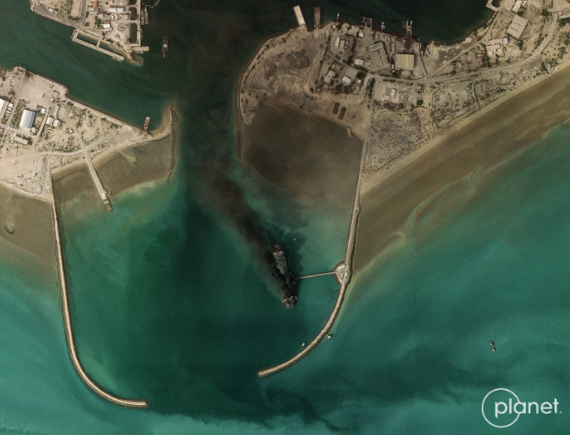
The Office of the President of Iran issued a statement on Sunday (5/4), stating that the Strait of Hormuz will only be reopened for international shipping if transit revenues are used to compensate for losses due to the war. Deputy Head of Communication and Information at the Office of the President of Iran, Mehdi Tabatabai, emphasised Tehran’s position via the social media platform X. He stated that the reopening of this strategic shipping route is highly dependent on compensation for the damage suffered by his country. “The Strait of Hormuz will be reopened only if a portion of the transit revenues is used to compensate for all the war damage imposed,” Tabatabai wrote in his statement. In the same post, Tabatabai launched a sharp criticism at the President of the United States (US), Donald Trump. He described Trump’s recent statements as a form of unfounded desperation and anger. Tabatabai accused Trump of being the actor behind the full-scale war now engulfing the Middle East region. “Trump hurls insults and irrational statements out of desperation and anger, while still boasting about the full-scale war he started in this region,” he asserted. The situation in the Middle East has been on high alert since the joint US and Israeli attack on Iran on 28 February. The massive attack reportedly killed more than 1,340 people, including Iran’s Supreme Leader at the time, Ali Khamenei. As a form of self-defence, Tehran retaliated by launching waves of drones and missiles targeting Israel. This counterattack also targeted areas in Jordan, Iraq, and Gulf countries that host US military bases. As a result of this escalation, Iran took a strategic step by restricting ship movements through the Strait of Hormuz, the main artery for global oil supplies. The closure or restriction of this route is feared to trigger a global energy crisis.