
Iran Claims Attack on US HIMARS Missile System in Kuwait
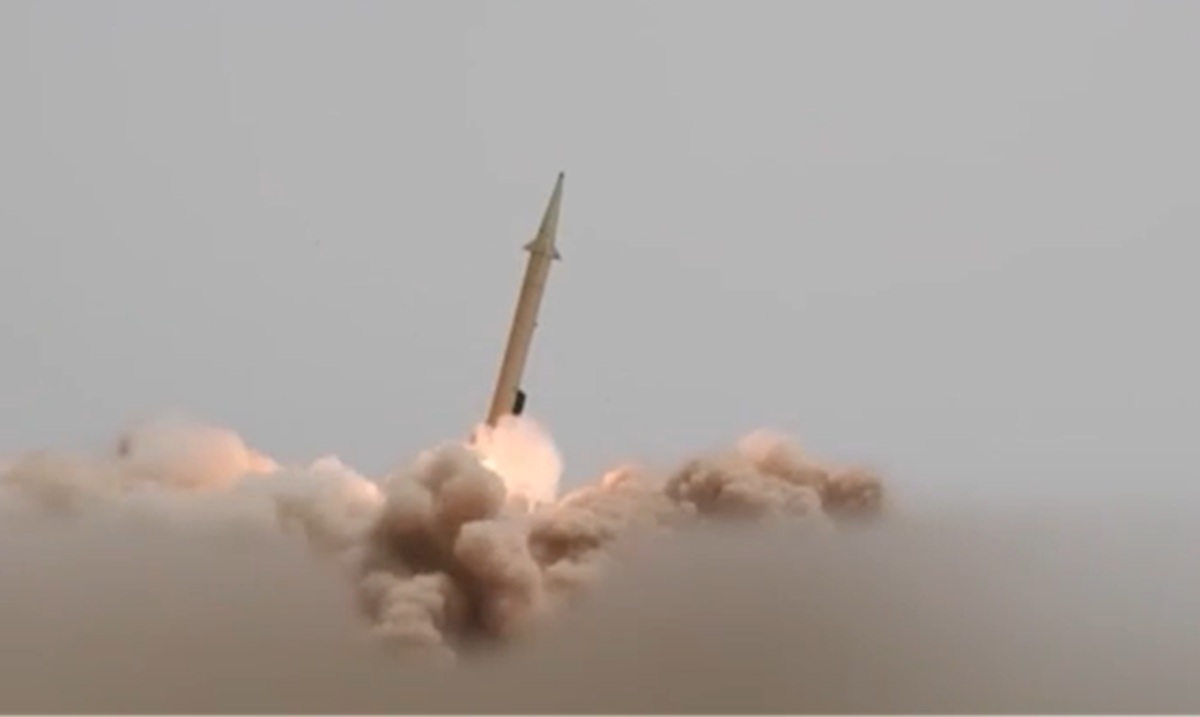
Iran has claimed to have launched an attack on the American High Mobility Artillery Rocket System (HIMARS) deployed at Camp Arifjan in Kuwait on Tuesday (21/7).
The attack was described as part of a military operation launched by Tehran in response to a series of American strikes over recent days.
In a statement broadcast on the state-run IRIB television, the Iranian military said the strike was the 18th phase of Operation Thunder, claimed as a reprisal against Washington’s military operations.
The state news agency IRNA, quoting a public relations officer of the Iranian Army, stated that the target of the attack was a HIMARS missile system belonging to the United States military at Camp Arifjan.
“The Army’s ground forces targeted the HIMARS missile system belonging to the US military stationed at Arifjan Base in Kuwait with surface-to-surface missiles,” the IRNA report said, as cited by Anadolu on Tuesday (21/7).
Camp Arifjan lies to the south of Kuwait City and is one of the United States’ principal military facilities in the Gulf region.
The base is used by various branches of the US military, including the Air Force, Navy, Marine Corps and Coast Guard.
HIMARS is a mobile rocket launcher system designed to relocate rapidly, enabling it to provide precision fire support against ground targets.
The Iranian military assessed that destroying the system would affect the United States’ combat capability.
“Targeting this system will weaken the enemy’s offensive and defensive capabilities and reduce its missile strength in carrying out acts of aggression,” the Iranian military statement said.
Amid rising escalation, Iranian President Masoud Pezeshkian said the clashes between Iran and the United States over the past ten days or so have developed into a wider conflict.
He said the situation has now turned into a full-scale war, signalling the growing intensity of the confrontation between the two countries.
Yet at the end of June, Washington and Tehran had reached a ceasefire agreement and signed a memorandum of understanding (MoU) aimed at ending the conflict through a peace process.
However, heightened tensions in recent weeks have caused the agreement to fail in suppressing renewed attacks between the two sides.
The situation in the Middle East has grown increasingly critical after Iran launched retaliatory attacks on US military facilities, triggering emergency alert status in Kuwait and Bahrain.
Kuwait’s electricity and water desalination facilities were once again targeted by Iran on Sunday (19/7). The second attack triggered fires and widespread damage.
Kuwait accused Iran of targeting civilian infrastructure after air strikes hit power stations, water facilities and oil refineries amid the escalation of the war.
Iranian missile and drone attacks damaged water desalination facilities in Kuwait, threatening the national drinking water supply amid heightened regional tensions.
Kuwait and Bahrain reported new drone attacks from Iran targeting military bases and civilian facilities amid tensions in the Strait of Hormuz.
US Secretary of State Marco Rubio accused Iran of using the Strait of Hormuz as a tool of global pressure and called for international contributions to shipping security.
Iran exported roughly 70 million barrels of oil worth up to Rp108 trillion during its ceasefire with the United States before Washington once again revoked sanctions relief.
Iran’s IRGC said two vessels experienced incidents in the Strait of Hormuz after passing through an unsafe lane under US escort. Tensions have risen despite the peace memorandum.
The United States deployed F-35 stealth fighter jets from the United Kingdom and F-16s from Germany to the Middle East following orders for new air strikes on Iran.