
Iran Between Hopes for Peace and Doubts After US Midterm Elections
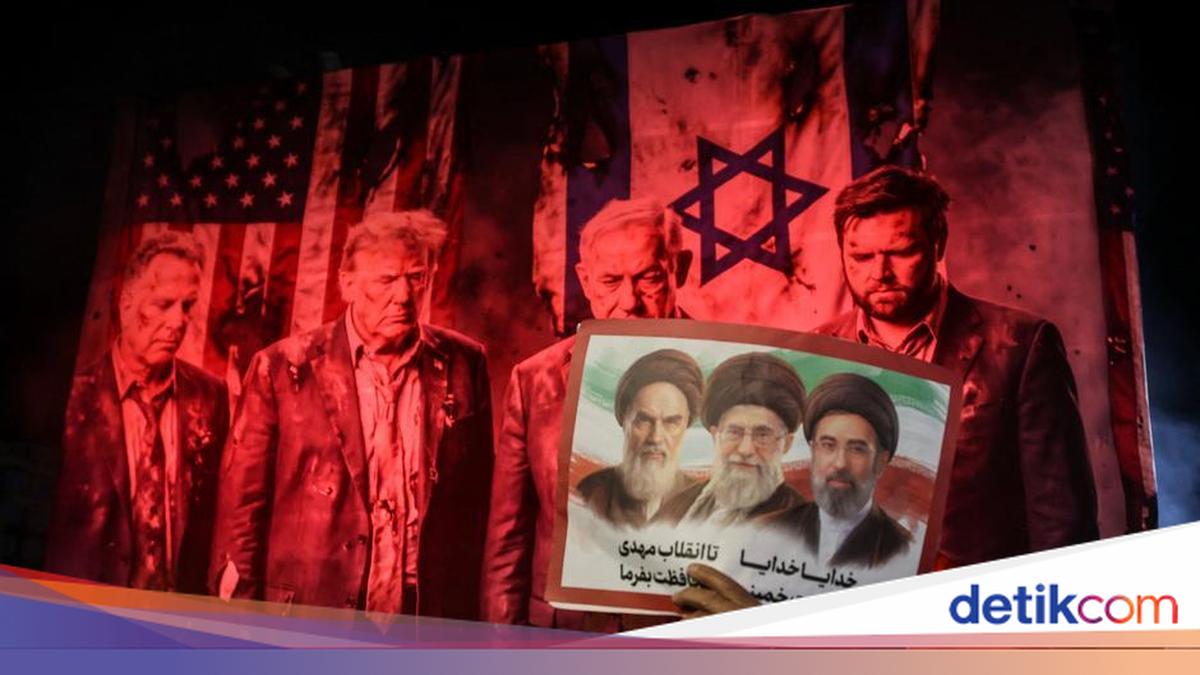
The defeat of the Republican Party in the US midterm elections will not change Washington’s hostility towards Iran. That was the message in a written statement by Mojtaba Khamenei, Supreme Leader of the Islamic Republic of Iran.
According to Khamenei, the hope that a shift in America’s political make-up would change the country’s approach to Iran is an illusion. The same applies to the belief that concessions from Tehran could ease Washington’s hostility.
“Iran will not change its position just because the Republicans have lost their majority,” Mohammad Sadegh Javadi Hesar, a journalist and politician from the reformist Etemad-e Melli party, told Deutsche Welle. Hesar, who has been detained several times for his critical views, said the decision to end the conflict remained in the hands of the United States. Iran, he said, would stand by its demands.
‘Regime change’ in America
Iranian Parliament Speaker and chief negotiator Mohammed Bagher Ghalibaf interpreted the election result as a public rejection of war in America.
“Americans have said no to war,” he wrote on the social media platform X. “And we support that message.”
Ghalibaf said the result was shaped not only by moral considerations but also by the rising cost of living faced by Americans.
Mohsen Rezaee, Secretary of Iran’s Supreme National Security Council, offered a similar assessment. He described the result as a political defeat for Donald Trump. According to Rezaee, Iran had inflicted a strategic defeat on the US president not only on the battlefield and in the Strait of Hormuz, but also in Washington.
He went further, warning that Americans would now have to bear the cost of the war. “Anyone who confronts Iran will pay the price, from the battlefield to their own doorstep,” he wrote.
Trump had previously described regime change in Iran as a war aim. The news portal Etelaat Online responded with a jibe: “Regime change has indeed taken place, but in America.”
The website, affiliated with Etelaat, Iran’s oldest newspaper still in publication, which has been running since 1926, raised a further question: after Trump’s political defeat, would Washington continue on a military path, or seek to break the deadlock through economic pressure and diplomacy?
From Carter to Trump
Mehr News Agency (MNA), which operates under Iran’s Islamic Propaganda Organisation, drew a historical parallel between Trump’s situation and Jimmy Carter’s fate in the early 1980s.
MNA recalled the hostage crisis at the US Embassy in Tehran in 1979, when Iranian revolutionary students held dozens of Americans hostage. The Carter administration then attempted to free them in a military operation in April 1980.
The operation failed. A few months later, Carter lost the presidential election to Ronald Reagan.
According to MNA, the failed operation proved that US military power could not resolve the Iran crisis at the time.
‘There’s no difference between an elephant and a donkey’
The Tasnim news agency, which is close to Iran’s Islamic Revolutionary Guard Corps, offered a more blunt interpretation. In its view, there is no fundamental difference between the Republican and Democratic parties.
“There’s no difference between an elephant and a donkey,” Tasnim wrote, referring to the symbols of the two US parties.
The agency said Trump’s defeat was also a personal one, rooted in the war against Iran.
To describe the relationship between the two parties, Tasnim quoted a Persian proverb: “The yellow dog is the brother of the wolf.” The implication, it said, was that Republicans and Democrats ultimately take similar positions towards Iran and countries they label “rogue states”.
Global impact
Hossein Alizadeh, a political analyst and international relations expert, said political developments in America always have repercussions beyond its borders.
“The United States is a superpower and a hegemonic force. What happens there therefore affects the whole world, from Mexico and Canada to the European Union, China and, of course, the Middle East,” he told Deutsche Welle.
Alizadeh served in Iran’s diplomatic service for 22 years before resigning in 2010 in protest against the regime. He has lived in Finland since then.
He said the likelihood of a major military escalation by the United States was relatively low. Although the Democrats are also hostile to the Islamic Republic, their approach differs from that of the Trump administration.
Where Trump relies more on pressure and confrontation, the Democrats tend to leave room for diplomatic compromise with Tehran. This approach was evident when Barack Obama’s administration reached the 2015 nuclear deal, which placed Iran’s nuclear programme under the supervision of the International Atomic Energy Agency (IAEA). Trump later unilaterally withdrew from the agreement during his first term.
Alizadeh said neither the Democrats nor America’s allies had ever genuinely supported a war against Iran. Instead, they had repeatedly warned of the risks it could bring.
He said those risks were now beginning to emerge. Iran’s effective closure of the Strait of Hormuz had disrupted one of the world’s most important oil-trading routes. The impact was spreading across countries through higher energy and fuel prices.
Even so, Alizadeh warned that the course of the crisis over the coming days remained difficult to predict.
Source: jawawa.id (https://jawawa.id/newsitem/iran-between-hopes-for-peace-and-doubts-after-us-midterm-elections-1794023487)
Originally published by detikcom (https://news.detik.com/dw/d-8742191/iran-antara-harapan-damai-dan-keraguan-usai-pemilu-sela-as), translated from Indonesian