
Iran Begins Discussions on Shipping Tolls in Strait of Hormuz, Costs Reach Rp 33.8 Billion
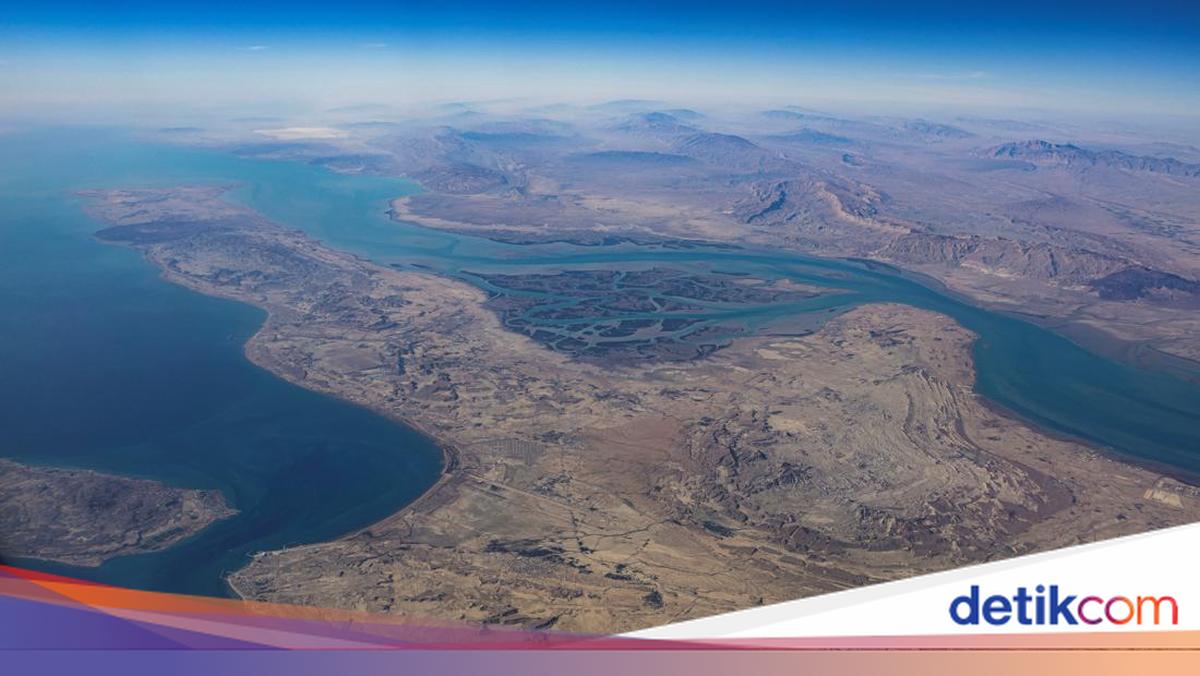
Iran is beginning to consider the implementation of special tariffs for ships crossing the Strait of Hormuz. This strategic shipping lane is currently used by around 20% of the world’s oil and gas distribution, but in recent weeks, it has experienced restrictions by the Iranian government in response to attacks associated with the United States and Israel.
According to detikFinance, due to the situation, nearly 2,000 ships have reportedly been held back near the narrow strait, located between Iran to the north and Oman and the United Arab Emirates to the south.
Quoting Al Jazeera on Sunday (29/3/2026), Iranian media reported on Thursday that parliament is discussing a draft law regarding the collection of fees from ships passing through the Strait of Hormuz. News agencies Tasnim and Fars stated that sources from the Parliament’s Civil Affairs Committee indicated the draft regulation has been prepared and will soon be finalised by the legal team of the Islamic Consultative Assembly.
“According to this plan, Iran must collect fees to ensure the security of ships passing through the Strait of Hormuz,” said an official as quoted.
“This is entirely reasonable. Just like in other corridors, when goods pass through a country, customs duties are paid. The Strait of Hormuz is also a corridor. We ensure its security, and it is reasonable for ships and tankers to pay customs duties to us,” the official added.
Value of the Levies
Although the toll fees are only being discussed in parliament, in reality, the shipping journal Lloyd’s List reported on Wednesday that the Islamic Revolutionary Guard Corps (IRGC) has been implementing a toll booth system to control ship traffic through the strait for some time.
In the last two weeks, 26 ships that crossed the strait have followed pre-approved routes under the IRGC’s ‘toll booth’ system, which requires ship operators to follow a verification scheme. These ships did not activate their AIS signalling systems.
Even an Iranian parliament member, Alaeddin Boroujerdi, told Iran International television channel that his country has imposed fees on several ships amounting to US$2 million or approximately Rp 33.8 billion (exchange rate Rp 16,900) to pass through the strait.
“Now, because war has costs, of course, we must do this and collect transit fees from ships passing through the Strait of Hormuz,” said Boroujerdi.
Iran has declared the Strait of Hormuz open to all parties except the US and its allies. In a letter sent to 176 members of the International Maritime Organization (IMO), Iran stated that non-hostile ships benefit from a safe route through the Strait of Hormuz by coordinating with the relevant Iranian authorities.
The non-hostile ships in question are those owned or associated with countries other than the US and its allies; they also do not participate in or support aggressive actions against Iran and fully comply with the stated safety and security regulations.
So far, after discussions with countries that Iran refers to as friendly nations, such as Malaysia, China, Egypt, South Korea, and India, some ships have been allowed to pass through the strait.
Still according to Lloyd’s report, at least two ships that have crossed the strait so far have paid toll fees in yuan, China’s currency. It was also reported that each transit is mediated by Chinese maritime service companies acting as intermediaries, which also handle payments to Iranian authorities.
However, according to the Indian government, it has not made any payments to Iran to secure safe passage for Indian ships through the strait.
“No permission is required to sail through the strait. There is freedom of navigation through the strait. Because it is narrow, only marked entry and exit lanes must be followed by shipping companies. The decision to sail or not to sail is entirely in the hands of the ship charterers and shipping companies,” said Rajesh Kumar Sinha, Special Secretary of India’s Ministry of Ports, Shipping and Waterways, on Tuesday, according to Indian media reports.
Sinha’s side also added that two ships carrying more than 92,600 tonnes of liquefied petroleum gas flying the Indian flag have transited and are scheduled to arrive in the subcontinent between Thursday and Saturday.
Source: jawawa.id (https://jawawa.id/newsitem/iran-begins-discussions-on-shipping-tolls-in-strait-of-hormuz-costs-reach-rp-33-8-billion-1774835480)
Originally published by detikBali (https://www.detik.com/bali/bisnis/d-8421016/iran-mulai-bahas-tarif-kapal-di-selat-hormuz-biaya-tembus-rp-33-8-miliar), translated from Indonesian