
Iran at a Crossroads Between War and Peace After Mecca Alliance Diplomacy
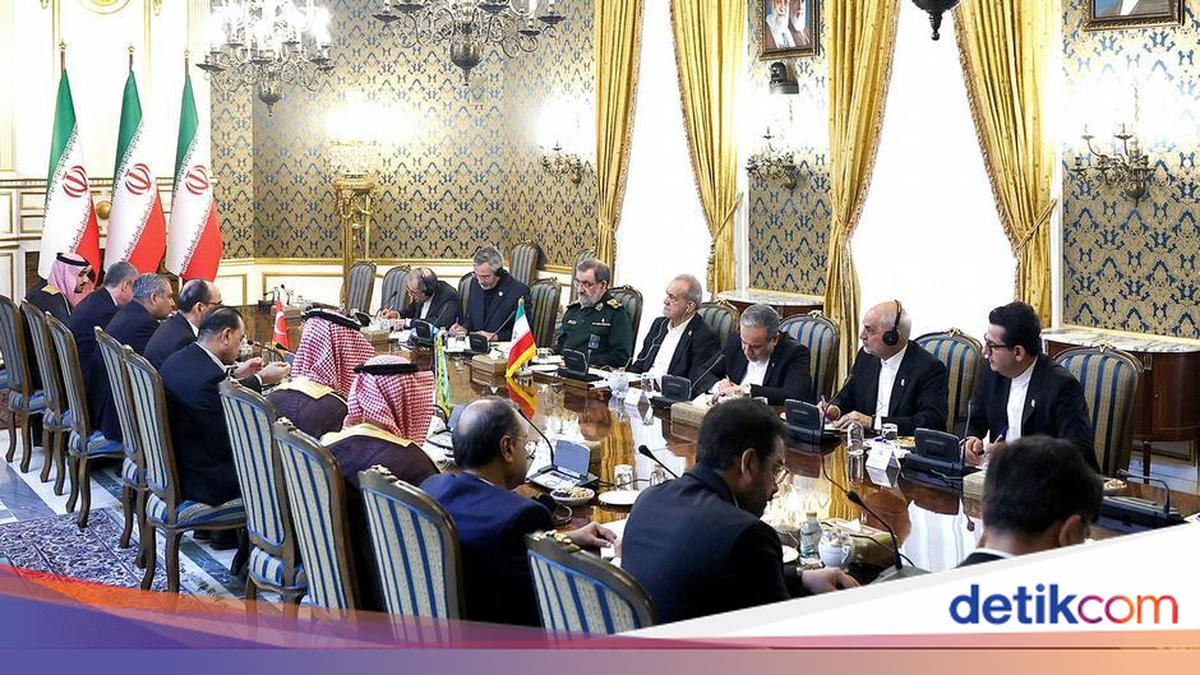
Fears of renewed war between Iran, the United States and Israel have prompted Saudi Arabia, Pakistan and Türkiye to intervene. The three countries sent senior envoys to Iran to ease tensions, although their diplomatic effort also carried a warning for Tehran.
The visit took place amid concerns that the United States and Israel were preparing a fresh attack on Iran after the US midterm elections on 3 November.
On Monday (26 October), Pakistan’s Chief of Army Staff Asim Munir, Saudi Defence Minister Khalid bin Salman and Türkiye’s intelligence chief Ibrahim Kalin travelled to Iran to meet President Masoud Pezeshkian and other senior officials.
The three represented the Mecca Defence Alliance, a military pact established by Saudi Arabia, Pakistan and Türkiye in the middle of this year.
The Saudi government said the visit aimed to open channels for negotiations and prevent a renewed military escalation. However, few details of the talks’ agenda have been made public.
A senior Pakistani official quoted by Reuters said the meeting discussed establishing a network of agreements to prevent aggression between countries in the region. The talks also covered US-Iran relations, Houthi attacks on Saudi Arabia, the situation in the Strait of Hormuz and the US naval blockade.
Another Pakistani official said Munir had also offered a way out of the conflict that could accommodate the interests of both Washington and Tehran.
Under the proposal, the three members of the Mecca Alliance, together with Qatar, would act as mediators. A Reuters source said US President Donald Trump had previously given Munir the green light to pursue a diplomatic solution.
Iran: Tehran meeting was positive
The Iranian government welcomed the meeting, describing the talks as having taken place in a very positive atmosphere, although no concrete agreement was announced.
“We had very good talks,” Mohsen Rezaei, head of Iran’s Supreme National Security Council, told state television.
“I feel a new atmosphere is beginning to emerge in the region,” he added.
Rezaei said regional security should be built by West Asian countries themselves, without outside interference.
The day after the meeting, Rezaei was reported to have met Iran’s Supreme Leader, Mojtaba Khamenei.
According to Iranian state media, Khamenei called for national interests to remain protected and for Tehran’s conditions for ending the war to be maintained. These include efforts to end what Iran describes as a state of “neither war nor peace”.
Meanwhile, President Masoud Pezeshkian continued his diplomatic schedule with a visit to Moscow to attend the Gas Exporting Countries Forum.
During the visit, he met Russian President Vladimir Putin and Qatar’s Emir Sheikh Tamim bin Hamad Al Thani. Their discussions included the war and the situation in the Strait of Hormuz.
For Iran, the series of diplomatic meetings demonstrates that the United States has not succeeded in isolating it from international relations.
Mecca Alliance: peace effort or warning to Iran?
Although presented as a peace mission, the simultaneous presence of three senior officials from Saudi Arabia, Pakistan and Türkiye could also be seen as a show of strength by the Mecca Defence Alliance.
Saudi Arabia has become increasingly concerned about attacks by the Iran-aligned Houthi group on critical infrastructure in its territory.
Under the Mecca Alliance agreement, an attack on any member by an outside party would be regarded as an attack on all members.
The visit to Tehran also took place on the same day that Egypt’s parliament approved military aid to Saudi Arabia. Egypt said it was ready to take “all necessary measures” to help the kingdom defend itself.
The move adds pressure on Iran amid the threat of fresh attacks by the United States and Israel.
“The simultaneous presence of three senior representatives sends a message that these countries are acting as a bloc,” Babak Dorbeiki, a London-based political analyst and former official at Iran’s Centre for Strategic Research, told DW.
For many years, Saudi Arabia has been known as one of Iran’s main rivals in the struggle for influence in the Middle East.
Riyadh has relied on its economic strength to contain Iran’s influence. In theory, however, through the new alliance Saudi Arabia could also draw on Pakistan’s nuclear capabilities and Türkiye’s conventional military strength.
Nevertheless, Dorbeiki said the Mecca Alliance was essentially formed to strengthen deterrence against threats, rather than to wage war.
The existence of the defence pact does not necessarily mean the three countries want a direct confrontation with Iran.
According to Dorbeiki, the alliance’s message can be interpreted in two ways. On the one hand, its members are offering a route to mediation to prevent conflict. But if tensions continue to rise, their position could also change.
Pakistan has itself spent months acting as an intermediary for communications between the United States and Iran. It has important ties with both countries and an interest in preventing the conflict from spreading.
An open war could also divert Pakistan’s attention from its existing security concerns, particularly those involving India.
Türkiye, meanwhile, is a NATO member. But Dorbeiki said it was highly unlikely to provide direct military support to Iran in a conflict with the United States.
Türkiye’s decision to send intelligence chief Ibrahim Kalin, rather than its foreign or defence minister, was also seen as reflecting a cautious approach.
Saudi Arabia pushes for a diplomatic settlement
Of the three Mecca Alliance members, Saudi Arabia faces the most immediate dilemma. Houthi attacks have damaged infrastructure and disrupted the country’s economy. But a wider war with Iran could also threaten the investment and development projects that underpin Riyadh’s economic strategy.
“For Saudi Arabia, both the current situation and a war with Iran would bring major losses,” Dorbeiki said. “That is why a diplomatic settlement is the more desirable path.”
Pakistan has spent months mediating between the United States and Iran. Its important relationships with both countries mean it has an interest in preventing the conflict from spreading.
An open war could also divert Pakistan’s attention from its existing security concerns, particularly tensions with India.
Although Türkiye is a NATO member, it is considered unlikely to provide direct military support to Iran against the United States.
Dorbeiki said Türkiye’s decision to send intelligence chief Ibrahim Kalin rather than its foreign or defence minister also showed that Ankara was taking a cautious approach to regional tensions.
Iranian diplomacy amid preparations for war
The Iranian government rejected the suggestion that the Mecca Alliance envoys’ arrival amounted to an ultimatum ahead of a possible military attack.
Ali Asghar Shafieian, a media adviser to Iran’s president, told DW that the visit could also be understood as an effort by the three countries to demonstrate closer coordination.
At the same time, the meeting underscored that Iran remained part of the region’s diplomatic process.
“We cannot conclude from this meeting alone that the visit was an ultimatum before an attack,” Shafieian said.
He also warned that diplomatic initiatives did not mean Iran was ignoring the possibility of renewed war.
He said that, just as the United States and Israel could strengthen their military readiness, Iran could do the same while continuing to leave room for negotiations.
“Just as they are using the opportunity to strengthen their military and defence capabilities, Iran is doing the same,” he said.
Shafieian added that a peace agreement remained possible as long as Iran’s political position and what Tehran calls its national dignity were respected.
Peace depends on Iran’s next steps
Amid the diplomatic efforts, Dorbeiki said Iran was continuing a strategy it had often used: prolonging negotiations without making an immediate, tangible commitment.
One of the main issues hanging over the talks is the activity of the Houthis in Yemen.
Iran has so far given no public assurance that Houthi attacks will stop, as Saudi Arabia hopes.
According to Dorbeiki, Iran may seek to use its influence over the group as leverage in negotiations.
That influence could be used to secure concessions, including an end to US military pressure or broader steps towards ending the war.
For now, the only visible outcome of the Tehran meeting is that all sides are willing to continue discussions.
There has been no diplomatic breakthrough and no guarantee that military tensions will ease.
But for Iran, keeping communication channels with regional countries open may be enough to show that it is still regarded as a diplomatic partner, rather than solely as an enemy.
Source: jawawa.id (https://jawawa.id/newsitem/iran-at-a-crossroads-between-war-and-peace-after-mecca-alliance-diplomacy-1793343151)
Originally published by detikcom (https://news.detik.com/dw/d-8730842/iran-di-persimpangan-perang-dan-damai-usai-diplomasi-aliansi-mekkah), translated from Indonesian