
Iran and Venezuela Tensions Flare Over Comments on US Threats
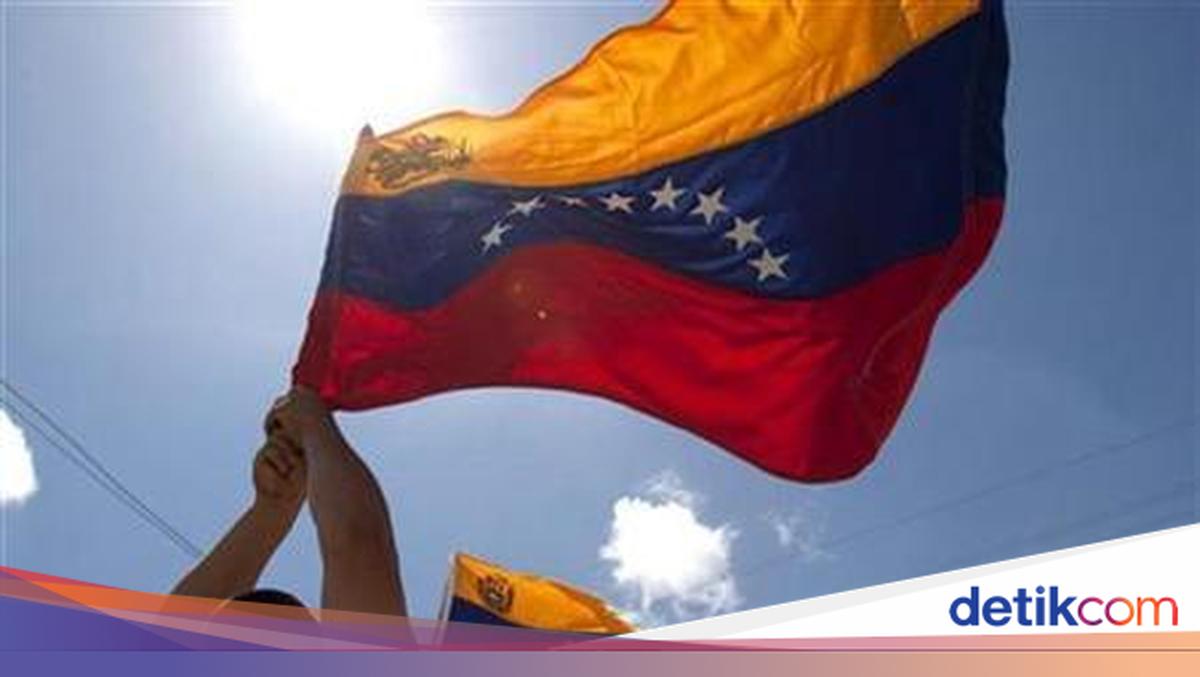
Iran has refused to bow to American military pressure and asserted that the country is not Venezuela. However, Venezuela has reacted angrily to the Iranian comments.
Initially, Iranian Foreign Minister Abbas Araghchi dismissed American claims that Tehran could be forced into submission through military pressure. Araghchi stressed that Iran is not Venezuela, and the situations of the two countries are very different.
In an interview with the Mehr News Agency, as reported by NDTV and The Times of India on Monday (20/7/2026), Araghchi compared the situation in Iran to that in Venezuela, where the US imposed a regime change through the capture of President Nicolas Maduro in a military operation last January.
Araghchi emphasised that Tehran does not have a single power system, so removing one leader would not trigger the collapse of the Islamic Republic. “This is not Venezuela, where when you capture one person, everyone becomes frightened and retreats,” Araghchi said, referring to Iran’s ‘mosaic’ power model that diversifies the decision-making process under unified leadership.
During the interview, Araghchi discussed the constant dangers he and other Iranian negotiators faced during peace talks with the US. He recounted a conversation with Steve Witkoff, the special envoy of US President Donald Trump for the Middle East, who served as the American negotiator. “I asked Witkoff, ‘Have you ever been in a meeting where you felt that at any moment the entire meeting could be bombed?’ They just stared at me blankly,” Araghchi said in the interview, which was also broadcast by Russian media RT.
“I said, ‘Have you ever been on the phone, and thought that, as people say, you could explode or be destroyed instantly? Have you ever, for example, when calling to check on your family’s condition, thought to yourself that this might be the last time you could do so?’ We experience things like that, yet we remain steadfast in our position,” he stated.
Araghchi stressed that despite constant threats, Iran refuses to surrender. He revealed that it was the US that first initiated contact with Iran for nuclear negotiations last year, and has continued to communicate periodically since then. “In response to the illegal and baseless demands to completely halt uranium enrichment, we fought back and remained firm. When they realised they could not achieve their goals through negotiation, they started a war,” he said. “You should speak to us in a different manner. You cannot threaten us, and you cannot bribe us,” Araghchi asserted.
Araghchi added that Washington offered the construction of power plants and infrastructure in exchange for certain concessions by Tehran. “I said no bribes, no threats. You can only threaten someone who feels fear. When we step forward, fully aware that anything could happen to us at any time, you cannot scare me,” he said.
The Venezuelan government summoned Iranian Ambassador Ali Chegini, a long-time ally of the country, on Tuesday (28/7) local time. The summons was intended to protest the Iranian authorities’ comments about Venezuela, which were deemed ‘disparaging and inappropriate’. “The Ambassador of the Islamic Republic of Iran to Venezuela was summoned to the Venezuelan Ministry of Foreign Affairs to receive a note of protest over the disparaging and inappropriate statements directed at Venezuelan institutions and authorities,” the Venezuelan Foreign Ministry said in a statement, as reported by AFP on Wednesday (29/7).
Venezuelan authorities did not elaborate further on which Iranian statements were considered disparaging and inappropriate. However, a video circulating online shows that Iranian Foreign Minister Abbas Araghchi recently said that Iran ‘is not Venezuela’ in the context of negotiations with the United States.
The rift between Caracas and Tehran could be a turning point for the two oil-rich nations. Historically, Venezuela and Iran have been staunch allies and trading partners, especially since the rise of President Hugo Chavez to power in 1999. Chavez, who championed anti-imperialist sentiment and hostility towards the ‘Yankee empire’, brought Venezuela closer to Iran and strengthened bilateral ties through their common enemy, the US.
Beyond ideological similarities, the two countries have forged various high-profile agreements in the fields of energy, mining, health, and education over the past 30 years. When Venezuela was hit by a severe economic crisis in 2020, Iran sent 1.5 million barrels of petrol because Caracas was unable to process its own crude oil. In 2025, Tehran sent more than two million doses of polio and hepatitis vaccines when Venezuela struggled to purchase medicines due to US sanctions.
However, the new Venezuelan government—formed after the US ousted the country’s leader, Nicolas Maduro, in a military operation last January—may seek to curry favour with Washington by adopting a different approach towards Iran.