
Iptu Motalip Litiloly: Maintaining Harmony in Nduga Through Community Trust
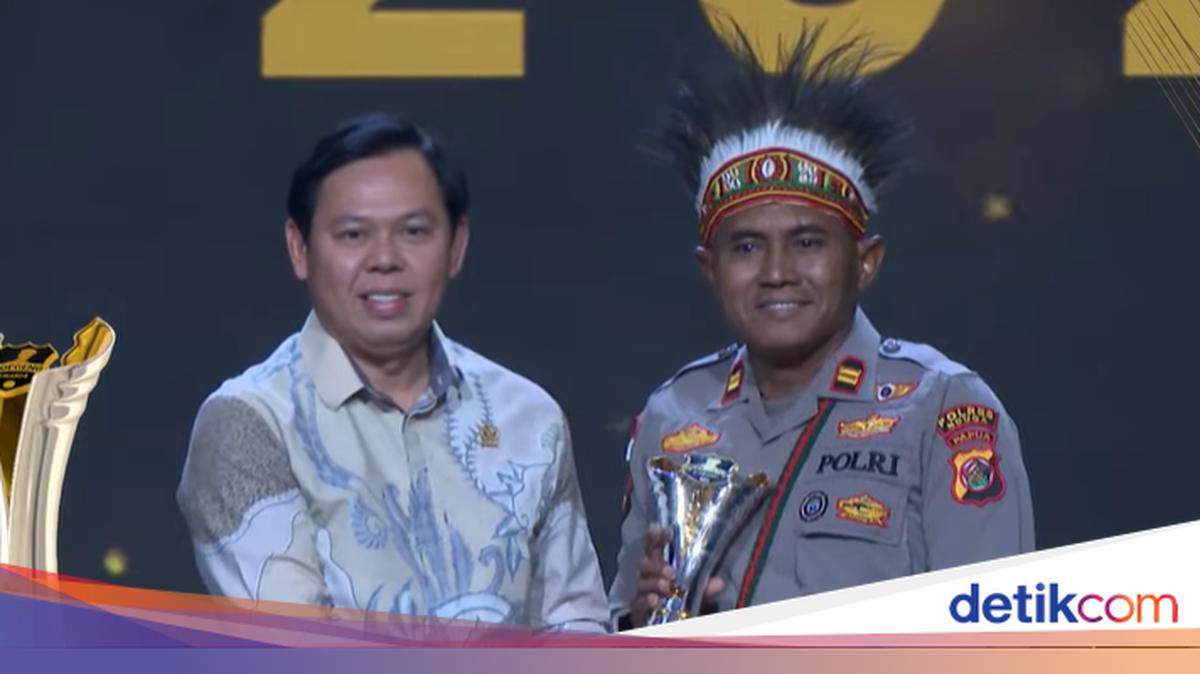
Police Inspector Motalip Litiloly, Head of Samapta at the Nduga Police Station, has received the 2026 Hoegeng Awards for Border and Remote Area Police. He is recognised as a figure capable of defusing conflicts in Nduga due to his close relationship with the local community.
The Hoegeng Awards 202 $ ext{6}$ ceremony was held at The Tribrata Darmawangsa, South Jakarta, on Friday (31/07/2026). The event was attended by the Chief of the Indonesian National Police, General Listyo Sigit Prabowo, and the Chairman of CT Corp, Chairul Tanjung, alongside various ministers and leaders of state institutions.
The award for the Border and Remote Area Police category was announced by the Hoegeng Awards 2026 Expert Panel, including former Acting Chairperson of the KPK, Mas Achmad Santosa. The trophy for Iptu Motalip Litiloly was presented by the Chairman of the DPD, Sultan Bachtiar Najamudin.
The selection process involved a panel of experts from various sectors of society, including Alissa Qotrunnada Wahid from the Gusdurian Indonesia Network, Putu Elvina from Komnas HAM, Mas Achmad Santosa, Gufron Mabruri from Kompolnas, and the Chairman of Commission III of the DPR, Habiburokhman.
Iptu Motalip’s work in Nduga is marked by his dedication to the people. Since being stationed in Nduga in 2012 as the Head of the Nduga Development Post, he has operated on the principle that the people of Nduga are his family, whom he must protect and serve.
Reflecting on his early years, Motalip recalled a period of instability following the death of a local regional representative in June 2012. He was tasked by the Wamena Police Chief to secure the area, a mission requested directly by the then-Regent of Nduga, Yairus Gwijang to ensure stability through local leadership.
Upon arrival, Motalip faced significant challenges, including deep-seated trauma among the local population following the 1996 hostage crisis. Residents were often fearful of uniformed and armed security personnel. To bridge this gap, Motalip adopted a strategy of approaching the community in civilian clothing and without weapons.
By visiting homes and engaging in daily social activities—such as sharing coffee and tobacco with locals—he gradually built the rapport necessary to mediate tribal disputes. His approach of integrating into the community fabric has been instrumental in maintaining peace in the sensitive region.