
IPS: Prabowo's economic strategy reflects mandate of 1945 Constitution's Article 33
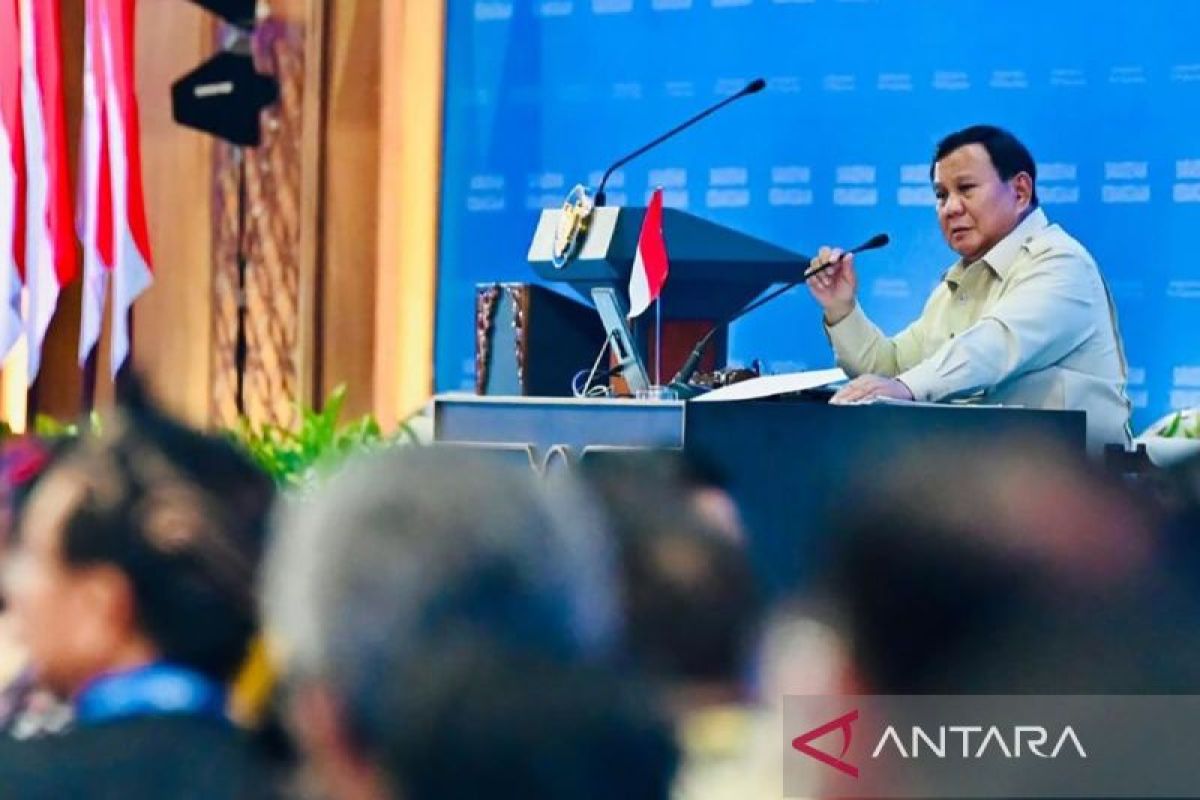
The Institute for Policy Studies (IPS) has assessed that President Prabowo Subianto’s economic strategy reflects the mandate of implementing Article 33 of the 1945 Constitution through a state-led growth approach. This model integrates industrialisation, investment, and the strengthening of economic sovereignty as a framework for national development. State-led growth is an economic model where the government actively directs development through direct intervention, capital investment, and ownership of State-Owned Enterprises (BUMN).
IPS researcher Indra Kusumawardhana stated that the strategy does not position industrialisation, investment, and economic sovereignty as conflicting choices, but rather as complementary instruments in strengthening national economic capacity. “President Prabowo’s economic direction is not merely about pursuing short-term growth, but about building national economic capacity as a constitutional mandate. The challenge is to ensure that state intervention genuinely yields productivity, deeper industrialisation, and stronger economic bargaining power,” Indra said.
The model is realised through strengthening downstream processing, accelerating investment, developing national industry, and managing strategic sectors to support more inclusive and sustainable economic growth. At the same time, the state maintains fiscal discipline, policy certainty, macroeconomic stability, and openness to global investment and technology, or a state-guided market.
IPS noted that the Indonesian economy is showing a positive trend, with GDP growth of 5.61 per cent year-on-year in the first quarter of 2026, higher than the 4.87 per cent recorded in the same period the previous year. Investment also grew, with realised investment reaching Rp498.8 trillion, while downstream investment contributed Rp147.5 trillion, or approximately 29.6 per cent of the total national investment. Despite this, IPS assessed that the quality of growth still needs strengthening.
IPS concluded that the success of the government’s economic strategy will be determined by its ability to maintain a balance between growth, stability, and economic sovereignty. To this end, the institute recommended that downstream investment be directed to produce tangible productive impacts, that government spending become more selective and productivity-based, and that the economic sovereignty strategy remain open to global investment and technology while safeguarding national interests.