
IPPGA Group Launches Playbook to Map Public Policy & Government Affairs Profession in Indonesia
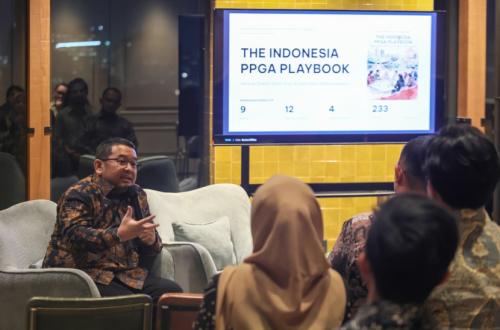
The Public Policy & Government Affairs (PPGA) profession in Indonesia is being encouraged to develop a more structured working map. The Indonesia Public Policy & Government Affairs (IPPGA) Group has launched The Indonesia PPGA Playbook as an initial foundation for mapping the knowledge, skills, and working methods of PPGA practitioners amid the dynamics of policy, politics, and business interests.
The Indonesia PPGA Playbook: Navigating Power, Policy, and Politics in Southeast Asia’s Most Complex Democracy consists of nine chapters and is equipped with operational appendices. The guide maps the knowledge and skills required by PPGA practitioners in reading the dynamics of public policy, politics, power, and business interests in Indonesia.
The launch stemmed from the need for a working map for the growing PPGA profession, which has not yet had a structured reference for knowledge and practice. IPPGA Group positions the guide as an initial step towards building a knowledge and skills centre for the PPGA profession in Indonesia.
A Public Policy & Government Affairs practitioner with more than 20 years of experience, Arief Budiman, said that strengthening the PPGA profession cannot be done by one group alone. According to him, the involvement of universities, government, and practitioners is necessary to build the profession more robustly.
“This profession has been a practice without a map for too long. We do not want to build it alone. We are open to collaborating with various stakeholders, especially universities, government, and the practitioners themselves, so that the PPGA profession can develop more strongly in Indonesia,” said Arief in a press release on Thursday (27/8/2026).
According to Arief, the involvement of the academic world is important for building the scientific foundation as well as preparing the regeneration of PPGA practitioners. He assessed that universities can serve as a space to introduce the profession to the next generation.
“Regeneration is an agenda that cannot be postponed. We need to ensure the next generation knows this profession, and universities are the most strategic meeting point for that,” he added.
Arief explained that PPGA does not only function when companies face problems with the government or policy risks. The function needs to operate earlier by reading changes in policy, politics, regulation, and various factors that can affect business continuity.
In the guide, the PPGA function is mapped through five interconnected pillars: profit, certainty, security, sustainability, and stability.
The profit pillar relates to PPGA’s contribution to business continuity and the creation of a conducive business climate. Meanwhile, the certainty pillar includes the ability to understand the direction of government policy, legislative and regulatory processes, and development planning.
The security pillar relates to protecting companies from legal, social, and political risks that could disrupt operational or investment activities. The sustainability pillar covers building reputation and long-term relationships with the public and government stakeholders.
Meanwhile, the stability pillar requires PPGA practitioners to be able to read national and regional political dynamics, the interests of various government actors, and global political and economic developments that could impact the business world.
“PPGA’s success cannot rest on one pillar. All five must work as a single unit,” Arief asserted.
According to Arief, the need for the PPGA profession will remain as long as there is interaction between the business world, public policy, and politics in a democratic system. Therefore, strengthening the profession requires the involvement of various parties.
“As long as the Government of the Republic of Indonesia stands, business and political policy will always interact. Therefore, this profession will always be needed. Its strengthening is a shared responsibility, not belonging to one industry group or one investment origin, whether domestic or foreign,” he concluded.
The Indonesia PPGA Playbook was compiled together with Aditya Sani and Ahsan Ridhoi. IPPGA Group stated that the guide will continue to be developed through peer review and collaboration with practitioners and other stakeholders, including government and political elements.
IPPGA Group is a community of Public Policy & Government Affairs practitioners in Indonesia focused on strengthening the profession, developing knowledge and skills, and regenerating the network of PPGA practitioners across industries.
Source: jawawa.id (https://jawawa.id/newsitem/ippga-group-launches-playbook-to-map-public-policy-and-government-affairs-profession-in-indonesia-1787824387)
Originally published by Republika (https://ekonomi.republika.co.id/berita/tkf7gh416/ippga-group-susun-peta-kerja-profesi-ppga-di-indonesia), translated from Indonesian