
IPO Dry Spell and Sluggish Stock Market: What Lies Ahead?
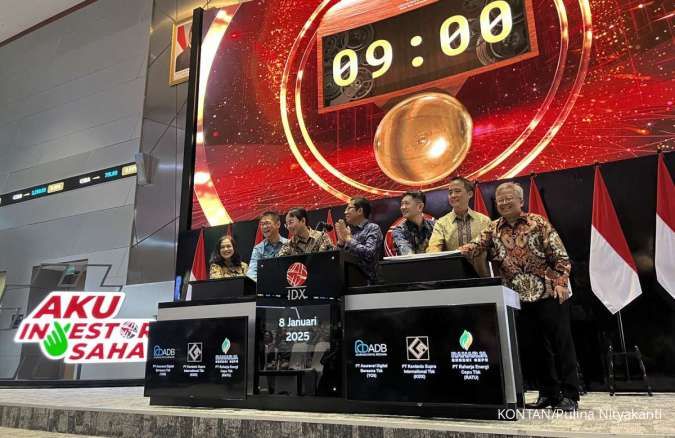
Indonesia’s stock market remains sluggish as mid-2026 approaches, with the Composite Stock Price Index (IHSG) experiencing a deep correction and a sparse IPO trend this year. According to data from the Indonesia Stock Exchange (BEI), only one company has gone public so far this year as of 22 May 2026 — PT BSA Logistics Indonesia Tbk (WBSA), raising Rp 0.30 trillion. Currently, 15 companies are in BEI’s listing pipeline, comprising four mid-sized asset firms and 11 large-scale asset companies. Despite this, BEI has repeatedly affirmed its target of 50 IPOs for 2026.
Parto Karwito, CEO of Infovesta Utama, explained that the decline in IPO trends in 2025 was due to MSCI evaluations, geopolitical conflicts, and macroeconomic conditions. Regulators (BEI and the Financial Services Authority) have also tightened IPO requirements, though the rules themselves have not been amended. “These conditions have left investors with limited options, able to invest only in the already declining secondary market,” he told Kontan on Friday (29 May 2026).
Rully Arya Wisnubroto, Head of Research and Chief Economist at PT Mirae Asset Sekuritas Indonesia, noted that the subdued IPO activity in 2026 reflects a more selective market regarding valuations, fundamental quality, and free float structure — indicating that demand for capital via the stock market has not disappeared entirely. “Compared to last year, the main issue now is not the number of potential issuers but a mismatch between sellers’ valuation expectations and investors’ cautious appetite in the secondary market,” he told Kontan on Friday.
However, this is largely due to a combination of market conditions, changing investor behaviour, and a significant reassessment of the quality of companies listed on the exchange in recent years. Causes include more selective investors, disappointing recent IPOs, suboptimal global and domestic market conditions, and declining private market valuations. Previously, many startups and growing companies hoped IPOs would serve as premium valuation liquidity events. However, public investors no longer want to pay high prices for mere ‘narratives’, causing IPO valuations to drop significantly. “As a result, many companies are opting to delay listings rather than proceed with low-valued IPOs,” he told Kontan on Friday (29 May 2026).
“This may be interesting in terms of story and public appeal, but it is not enough to automatically make it an attractive investment,” Rully said.
Edwin stated that if these two companies proceed with IPOs, they could be highly attractive due to strong brand awareness, high consumer engagement, and easily understandable domestic narratives for retail investors. For RANS, an IPO would likely focus on media narratives, entertainment ecosystems, creator economies, lifestyle, and consumer platforms. While corporate actions may generate buzz, the main challenges for celebrity-driven media companies are sustainability, monetisation, and reliance on public figures. Institutional investors typically focus on recurring revenue, EBITDA quality, cash flow, and scalability. “Whether it’s attractive depends heavily on valuation. If it’s overpriced just because of a big name, the IPO risk for RANS is high,” he said. “Moreover, Indonesia’s domestic consumption remains strong. If valued reasonably, Taman Safari has greater potential to attract long-term investors compared to hype-driven IPOs,” he added.
IPO Quality Declines
Rully noted that in recent years, IPO shares have typically performed strongly initially before weakening once the euphoria fades. According to Parto, IPO shares are better suited for short-term investments due to their low free float, which allows prices to rise in the initial days to attract more investors. For context, Infovesta calculations show that excluding PT DCI Indonesia Tbk (DCII), the average annual return for all IPO shares over the past five years was 31.19%. DCII was excluded due to anomalous returns. However, in the long term, company shareholders aim to sell their stakes at high prices, leading to declining IPO share prices.
The IPO system and processes are considered sound, but implementation and oversight remain lacking — such as transparency in allocation, nominee investors using borrowed names, and unrecorded crossing transactions during IPOs. “This results in low free float, prompting MSCI to impose sanctions,” he explained.
Edwin observed that most recent IPOs are better suited for momentum trading than long-term investment due to characteristics such as low free float, thin liquidity, concentrated ownership, aggressive valuations, and unstable profitability. “As a result, prices are easily manipulated — or ‘goreng’ — and investors are increasingly distinguishing between IPO trading and IPO investing,” he added.
IPOs that could positively impact the domestic stock market are those from ‘lighthouse’ companies. The market wants to see IPOs that enhance index quality, boost liquidity, and attract foreign inflows. Therefore, BEI and OJK, along with securities firms, must intensify IPO outreach to regions and provide intensive guidance to facilitate corporate actions. “There is no need to chase the number 50 (new issuers in 2026). The exchange must thoroughly conduct due diligence, tighten audits, and carry out surprise inspections,” he stated. Rully advised BEI to focus on ensuring new issuer quality rather than pursuing quantity this year. Realistically, achieving the 2026 IPO target will depend on market stability in the second semester and…