
Iperindo Urges Phased and Well-Socialised Rollout of B50 Biodiesel
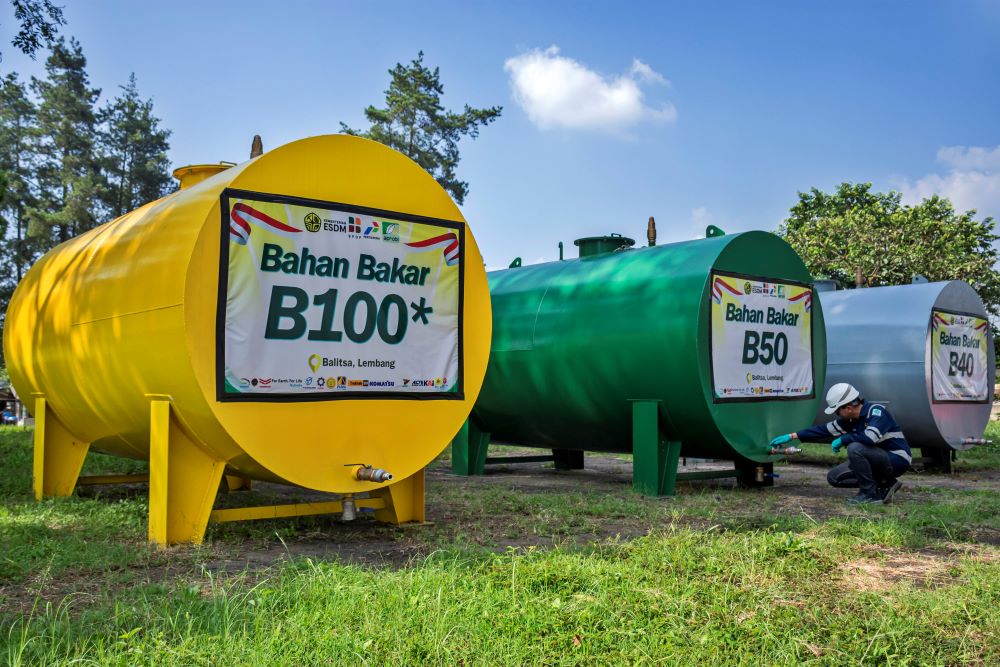
The Indonesian Shipping and Offshore Facilities Association (Iperindo) is requesting that the government expand the socialisation of B50 biodiesel implementation to the shipping industry and implement it gradually, rather than all at once across all vessels.
This step is considered vital so that industry players—including shipyards, ship owners, engine manufacturers, and spare part providers—have sufficient time to perform technical adjustments without compromising operational safety or the competitiveness of the national industry. Nevertheless, Iperindo maintains its support for the government’s policy to strengthen national energy security through the use of B50 fuel as part of the transition towards more environmentally friendly energy.
The implementation of B50 biodiesel is a strategic move to reduce dependence on fossil fuels while encouraging the use of new and renewable energy based on domestic resources. Anita Puji Utami, Chairperson of Iperindo, stated that the use of B50 is part of the effort to realise an energy transition towards more eco-friendly transport and industrial sectors within the framework of achieving energy independence.
However, Iperindo reminded that the implementation of B50 in the shipping industry has different characteristics compared to the land sector, as ships possess engine systems, operational patterns, and reliability requirements that are extremely high, necessitating special attention. Anita explained that not all engines currently installed on ships are designed to use fuel with a biodiesel content of up to 50%.
TECHNICAL ADJUSTMENTS
When B50 is implemented, these vessels will require various technical adjustments to ensure that ship operations remain safe, reliable, secure, and efficient. These steps will undoubtedly increase the operational costs to be borne by both shipyards and ship owners. In addition to maintenance costs, the use of B50 also has the potential to accelerate the lifespan of several components in the fuel system, meaning the replacement interval for spare parts may be shorter than when using conventional diesel.
Therefore, Anita noted, Iperindo proposes that the implementation of B50 in the shipping sector be carried out gradually to provide sufficient time for shipyards, ship owners, engine manufacturers, and spare part providers to make technical adjustments in accordance with applicable standards. “We hope the government can provide support to shipyard players who will be impacted by the increase in operational costs due to the implementation of B50,” she said.
Furthermore, Iperindo also proposed the provision of subsidies or price compensation for subsidised fuel for the shipping industry to help alleviate the additional costs of maintenance, accelerated spare part replacement, and the various technical adjustments required by the shipyard industry. According to Anita, such a policy would maintain the competitiveness of the national shipping industry amidst the process of an independent and sustainable energy transformation.
BIOFUEL TREATMENT
As information, the International Maritime Organization (IMO), through MEPC.1/Circ.795/Rev.9, differentiates the treatment of biofuels based on their blend levels. Biofuel blends up to 30% still follow the provisions of Regulation 18.3.1 MARPOL Annex VI, whereas blends above 30%, including B50, must meet additional requirements as regulated in Regulation 18.3.2 MARPOL Annex VI.
For marine diesel engines, the use of new fuel can only be carried out as long as it does not alter critical components controlling NOx emissions or the operational settings approved in the engine’s Technical File. If these conditions are not met, proof is required that the use of the fuel does not cause NOx emissions to exceed the required limits.
Source: jawawa.id (https://jawawa.id/newsitem/iperindo-urges-phased-and-well-socialised-rollout-of-b50-biodiesel-1782996764)
Originally published by Media Indonesia (https://mediaindonesia.com/ekonomi/906835/iperindo-minta-b50-disosialisasikan-lebih-masif-dan-diberlakukan-secara-bertahap), translated from Indonesian