
IPB University's Lobster 'Dederan' Innovation: A Solution for Downstreaming and Sustainable Aquaculture
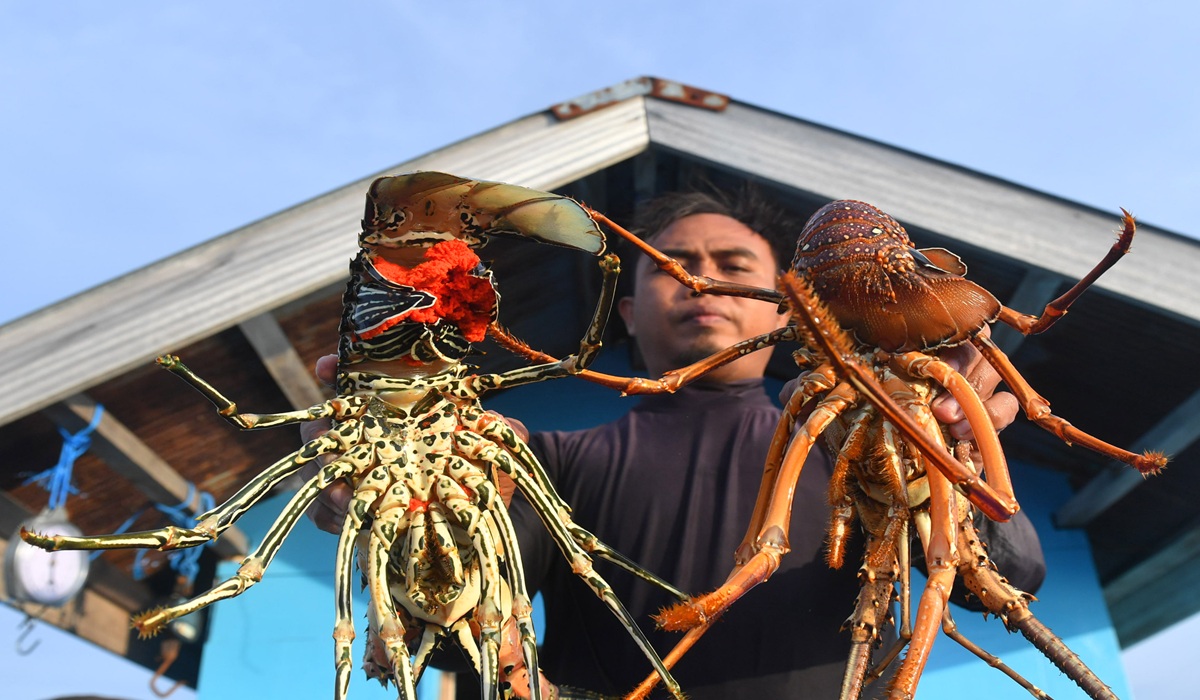
A researcher from the Faculty of Fisheries and Marine Sciences (FPIK) at IPB University, Dr Irzal Effendi, has introduced a new innovation in the national fisheries supply chain through the development of the ‘dederan’-sized lobster concept. The initiative is designed as an intermediate product aimed at strengthening the downstreaming of research whilst optimising the sustainable use of Pearl Lobster Seed (BBL).
To date, the lobster industry has tended to be polarised around two extreme segments: the sale of BBL or consumption lobsters weighing more than 150 grams. The presence of dederan lobsters, measuring 10 to 50 grams, is expected to fill a market gap that has so far been underexploited.
“Based on the scientific review we conducted, we are trying to promote a new product called the dederan lobster. Going forward, we hope there will be production of consumption lobsters derived from community grow-out,” said Dr Irzal.
The concept is underpinned by scientific facts concerning the lobster life cycle in the wild, where mortality rates are very high during the larval to seed stage due to predation. With a controlled aquaculture system, particularly rearing on a seabed-based system, the survival rate (SR) can be increased significantly.
Research data show that to reach a size of 20–30 grams, lobsters require around 140 days of rearing. The IPB University team has currently achieved an SR of 71 per cent and is targeting continuous improvement until 2027.
From a business perspective, IPB University’s studies show that dederan lobster farming is highly economically viable. With a Revenue Cost (RC) Ratio of 1.28, the venture promises profits for growers. The average selling price of a 50-gram dederan lobster reaches Rp26,676 per head, whilst the ideal price of seed has been capped at a maximum of Rp18,000 to remain competitive for catching fishermen.
International market potential also remains wide open, particularly to Vietnam and China. Dr Irzal noted that at certain moments, such as ahead of the Lunar New Year, the price of pearl lobster can even break through Rp950,000 per kilogram due to dwindling natural supplies.
IPB University is not only focused on technology but is also promoting a community-based development model. Several regions, such as Simeulue, Kaimana and South Halmahera, have expressed interest in collaborating on training programmes.
“The key really lies in human resources. That is why we want to build community capacity so that people can become good lobster farmers,” Dr Irzal concluded.
Through refinements in feed technology and farming management, this innovation is expected to become a new pillar of Indonesia’s blue economy.