
IPB University Students Gain Insight Through SNI Goes to Campus Programme
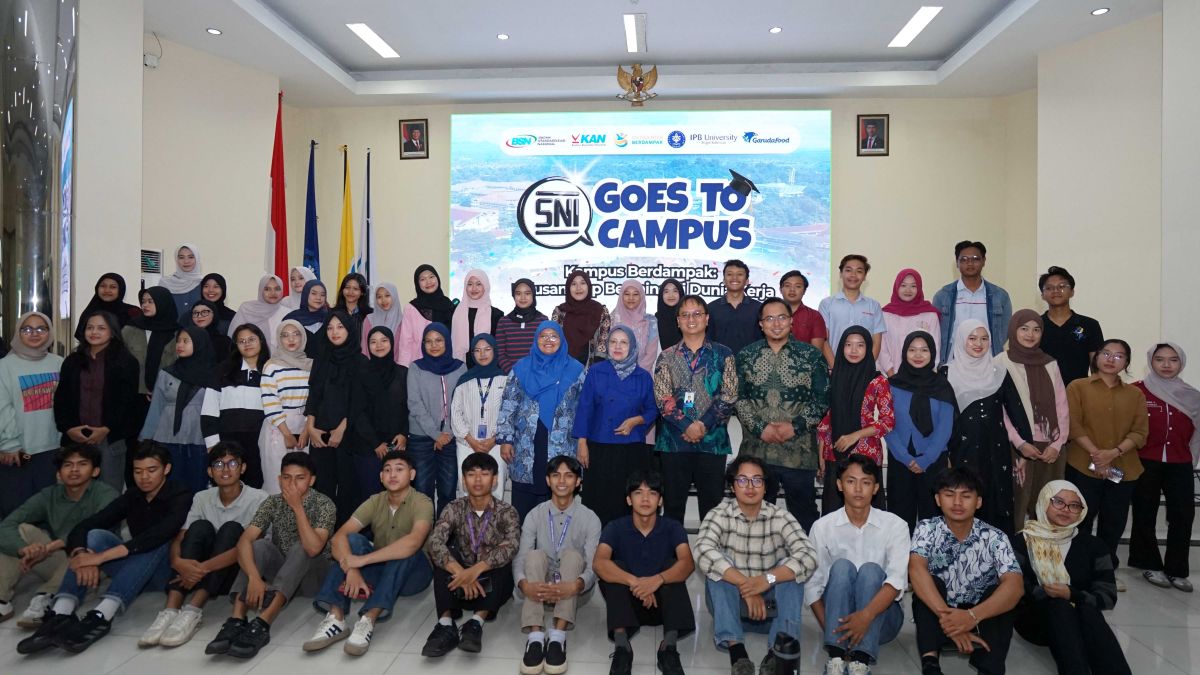
PT Garudamed Putra Putri Jaya Tbk (Garudafood) is committed to supporting the strengthening of national standardisation and sustainable food governance in Indonesia. This step is realised through the company’s active participation in the national ‘SNI Goes to Campus’ programme, organised by the National Standardisation Agency (BSN) at IPB University.
The ‘SNI Goes to Campus’ programme at IPB University represents a strategic synergy between BSN, the Ministry of Higher Education, Science, and Technology, and Garudafood as a key national industry player. This cross-sector collaboration is scheduled to continue across various universities throughout Indonesia in 2026, aiming to produce a young generation that is quality-conscious and highly competitive.
In an academic forum attended by hundreds of Food Technology students at IPB University on Thursday, Garudafood presented Bangun Raharjo, Head of Q-SHE & MFG Innovation, as the keynote speaker. The presence of management representation aimed to share empirical experience and best practices regarding the implementation of Indonesian National Standards (SNI) within the production chains of large-scale food and beverage industries.
In his presentation, Bangun Raharjo emphasised that SNI is not merely a regulatory obligation but has become an embedded part of the company’s work culture. “Standards are not just about meeting requirements and regulations, but about building discipline, consistency, and trust so that they become a daily work culture. Therefore, we believe that students who understand the importance of standardisation from an early age will be better prepared to enter the industrial world, subsequently contributing to safe, high-quality, and competitive products,” stated Bangun Raharjo.
As a demonstration of commitment to a culture of quality, Garudafood has voluntarily applied SNI to its biscuit product category since 2014, even though regulations did not yet mandate it. This move reflects the company’s belief that standardisation is a long-term investment to maintain quality consistency, increase consumer trust, and strengthen the competitiveness of national products in the market. Furthermore, this forum serves as an important momentum for Garudability to promote education regarding food safety and product standardisation to the academic community.
It was emphasised that the higher education sector plays a crucial role as an agent of change in spreading awareness of safe, high-quality food products that possess clear traceability systems, ensuring that everything from raw material origins to distribution processes can be identified.
In her opening remarks, Prof. Dr. Ir. Yulin Lestari, Director of Education Transformation and Learning Technology at IPB University, emphasised the importance of integrating standardisation aspects into the higher education curriculum as a strategic effort to enhance graduate readiness for the workforce.
Nindya Malvins Trimadya, Head of the BSN Standardisation Dissemination and Conformity Assessment Working Team, expressed appreciation for the industry’s participation in the ‘SNI Goes to Campus’ programme. According to her, the involvement of the business world plays a vital role in bridging the understanding of standardisation with real-world industrial practices.
“The involvement of companies like Garudafood proves that the application of standards is not just a laboratory matter, but touches all aspects of business operations. This is a message that students need to receive as early as possible,” she said.
Currently, Indonesia possesses over 13,000 active SNIs, yet the level of implementation among small and medium-sized industries still requires further encouragement, making campus-based education a strategic and targeted approach. This step aligns with Garudafood’s long-term commitment to implementing sustainable corporate governance. Through targeted public education, Garudafood is committed to creating a responsible and transparent industrial ecosystem, while supporting the national agenda for sustainable food security.